Many travelers walking through Hanoi's Old Quarter will notice a small temple tucked into a street corner, surrounded by shops and the steady flow of people.
That is Bạch Mã Temple.
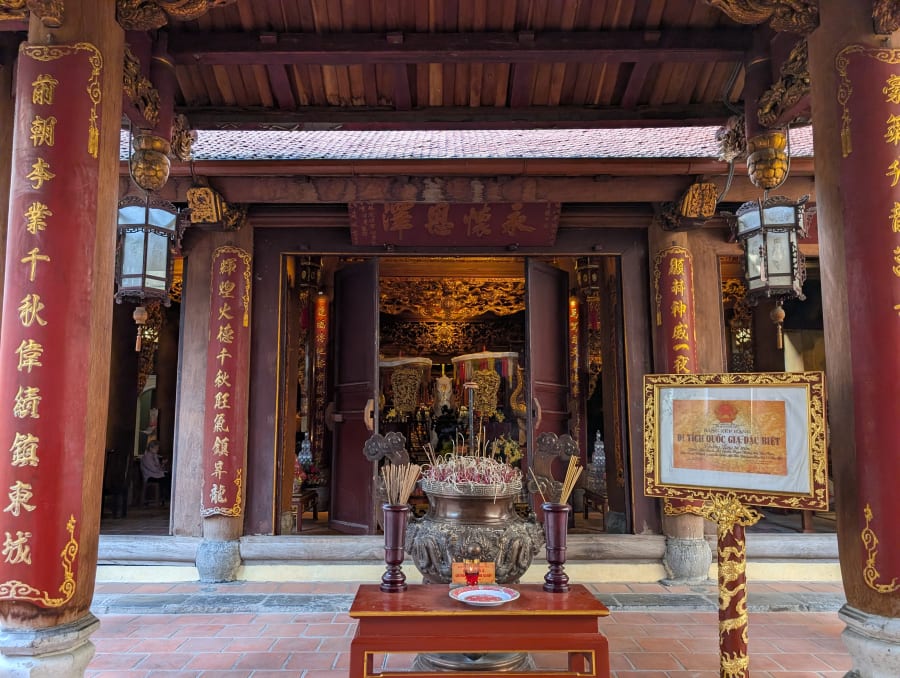
And you may not know that three other temples join this one to form four temples guarding the four directions of ancient Thăng Long - a sacred system known as Thăng Long Tứ Trấn, or the Four Guardians of Thăng Long. From here on, this article will simply call them the Four Guardians.
📍 Thăng Long or Hanoi? Thăng Long is Hanoi's old name. In this article, "Thăng Long" refers to the ancient capital and its historical space, while "Hanoi" refers to the modern city of today - and the gap between these two spaces is exactly the key to understanding why these four temples sit where they do.
But here is the strange part: Bạch Mã is known as the "guardian of the East" of the ancient citadel of Thăng Long. So why does it now sit in the middle of the Old Quarter, rather than at the edge of the city?
The answer comes down to a simple fact: Hanoi today is far larger than Thăng Long ever was. And Bạch Mã is not the only temple that has been swallowed into the heart of the city.
I Once Tried to Visit All Four Temples
I actually planned to visit all four of these temples back in early 2020, during a trip up north.
The plan didn't work out. When I arrived at Bạch Mã, the temple was under renovation.
Six years later, in 2026, I finally had the chance to return.
The Four Guardians of Thăng Long
| Direction | Temple | Modern Hanoi |
|---|---|---|
| East | Bạch Mã | Old Quarter, Hoàn Kiếm |
| West | Voi Phục | Ba Đình |
| South | Kim Liên | Đống Đa |
| North | Quán Thánh | Ba Đình, near West Lake |
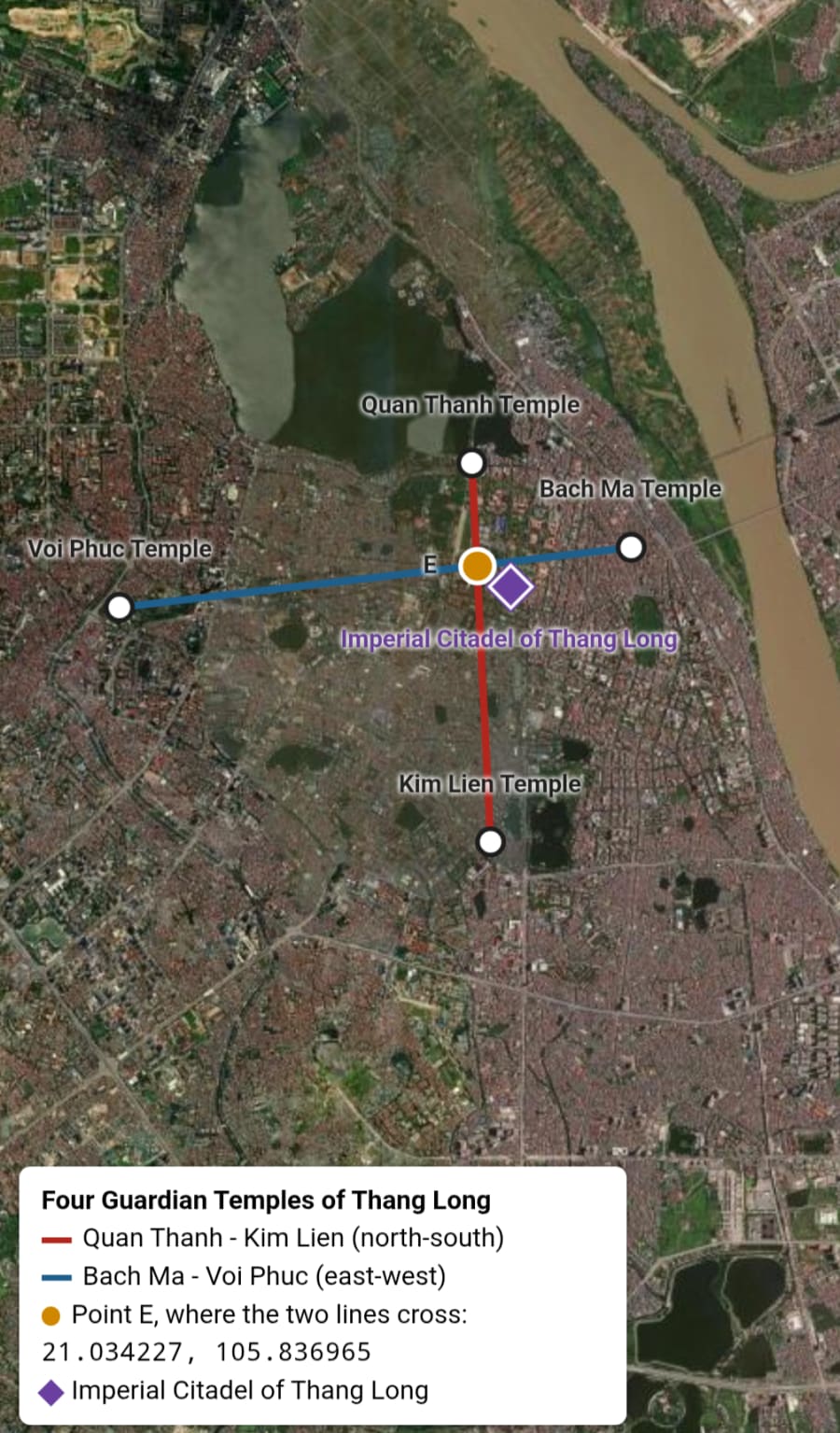
Viewed separately, these are four old temples scattered across Hanoi. Viewed together, they become a map of ancient Thăng Long.
Why Did Thăng Long Need Four Guardians?
Thăng Long was an imperial capital.
In traditional belief, the space of a capital city was never just about palaces and city walls. The four cardinal directions - East, West, South, North - carried their own meaning within traditional cosmology. Placing deities at each of the four directions reflects a belief in protection, and in a relationship between sacred space and the capital itself.
At the heart of this sacred geography was the imperial citadel. Around it, four guardians watched over the four directions.
The Four Temples
East - Bạch Mã
Located at 76 Hàng Buồm Street in the heart of the Old Quarter, Bạch Mã Temple worships Long Đỗ - the tutelary deity of Thăng Long. It is one of the oldest of the Four Guardians, with roots tracing back to the Đại La citadel era, before the Lý dynasty. According to legend, when King Lý Thái Tổ moved the capital from Hoa Lư to Thăng Long in 1010 and began building the citadel, he came to pray at the temple of Long Đỗ for assistance - and later had the temple restored and rebuilt.
The eastern guardian now sits in the middle of one of Hanoi's busiest historic neighborhoods, where the line between sacred space and everyday commerce has all but disappeared.
West - Voi Phục
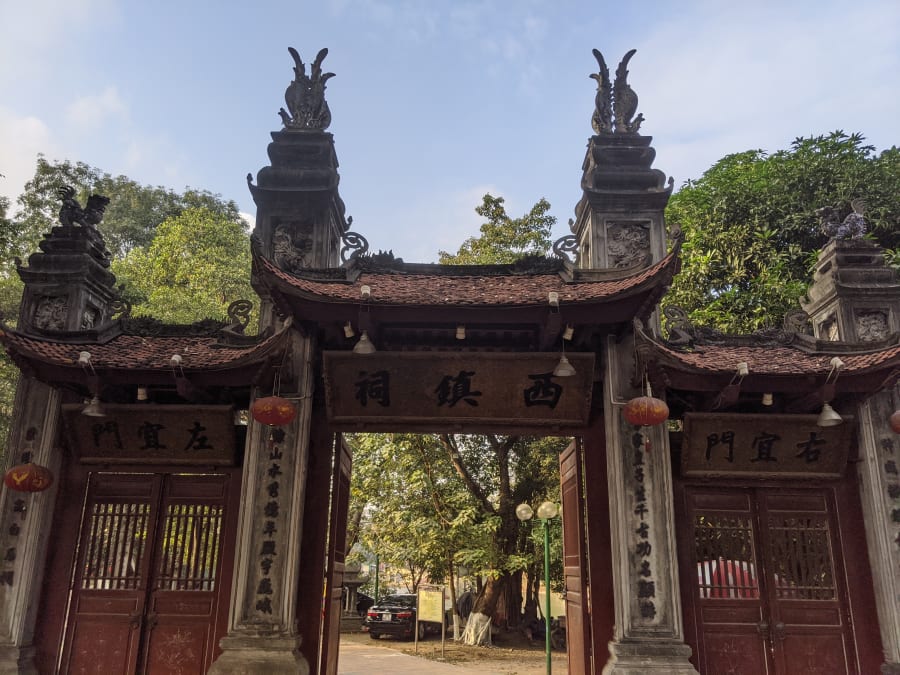
Voi Phục Temple, also known as Thủ Lệ Temple, guards the West and sits in today's Ba Đình district. It is dedicated to Linh Lang Đại Vương, a historical figure credited with helping defend the kingdom.
South - Kim Liên
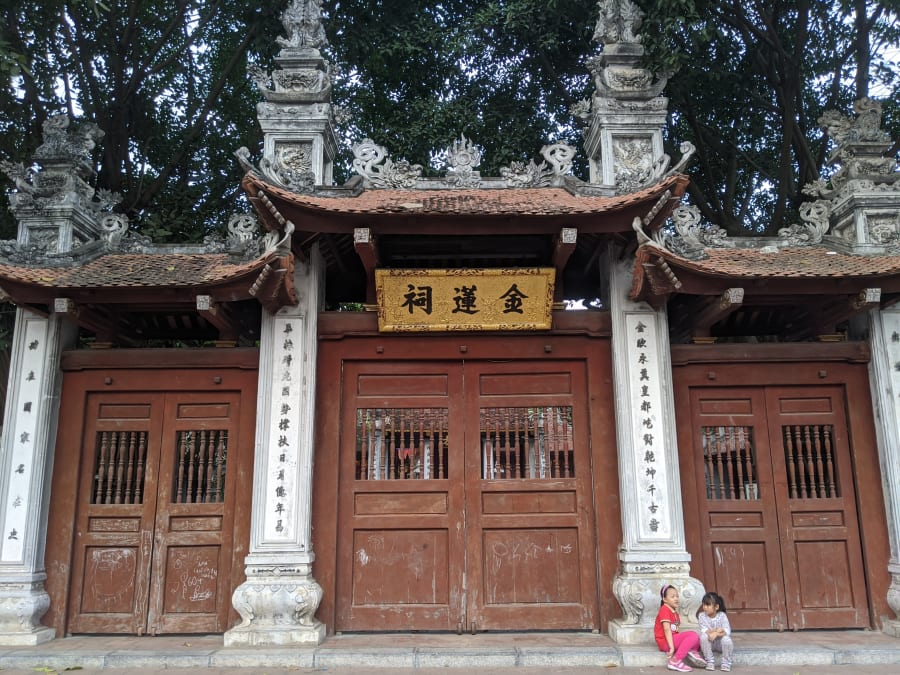
Guarding the South is Kim Liên Temple, built on a raised mound in the Đống Đa area. It is dedicated to Cao Sơn Đại Vương.
North - Quán Thánh
Near West Lake, Quán Thánh Temple (also called Trấn Vũ Quán) guards the North. It is dedicated to Huyền Thiên Trấn Vũ, a powerful protective deity associated with the northern direction, represented by a large bronze statue in the inner sanctuary - regarded as the symbol guarding Thăng Long's northern flank.
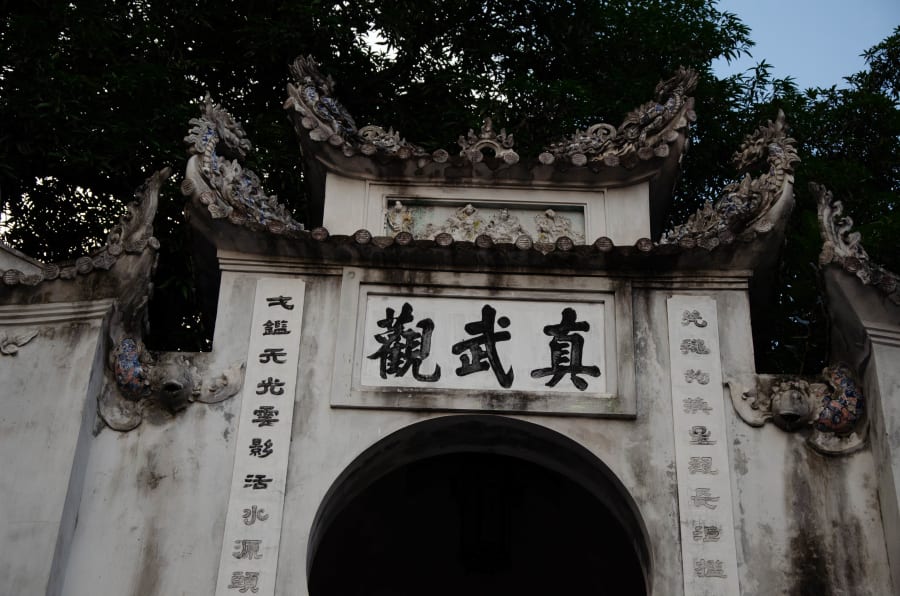
The Ancient Citadel Was Much Smaller Than You'd Think
This may be the most surprising part of learning about the Four Guardians.
Place a map of ancient Thăng Long beside a map of modern Hanoi, and the difference is striking: the imperial citadel sat at the heart of the ancient capital, with four guardian temples associated with its eastern, western, southern, and northern directions - a modest urban footprint compared to Hanoi today.
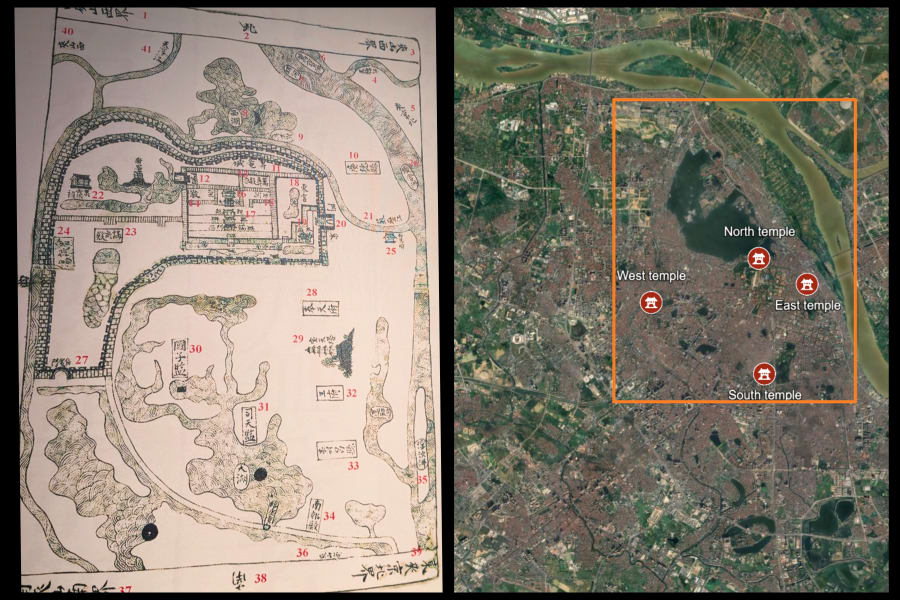
The temples never moved.
The city grew around them.
Over the centuries, Hanoi expanded in every direction. Areas that once sat at the outer edge of Thăng Long's urban space are now deep inside the modern city. That is why these four temples now feel like they sit "deep within" Hanoi.
The Imperial Center
Return to the Thăng Long Imperial Citadel - the center of this entire system.
It would be a stretch to say the four temples meet at one exact point, or form a perfect geometric shape around the citadel. What can be said is the relationship between them: at the center stood the imperial citadel, the seat of royal power. Around it, four guardians marked the sacred directions of the capital.
The citadel → Bạch Mã → Voi Phục → Kim Liên → Quán Thánh. By now, the full picture has come into view.
The Four Guardians Are Still Part of Religious Life Today
The Four Guardians are not simply four monuments for tourists to check off a list.
Many people in Hanoi still visit all four temples in a single journey, particularly around the Lunar New Year, as well as on the first and fifteenth days of the lunar month.
A traditional sequence is followed by many: Bạch Mã → Voi Phục → Kim Liên → Quán Thánh - East, then West, South, North. But this is a folk custom, not a strict religious requirement - worshippers are free to adjust it based on their own circumstances and time.
What Do the Four Guardians Tell Us About Hanoi?
Zoom out from the four temples, and this stops being simply "four places to visit."
It reveals Hanoi as a city built in layers of time, stacked on top of one another. The same place can simultaneously be an ancient sacred space, a piece of imperial geography, a historic neighborhood, a modern urban environment, and a living space of religious practice today.
The map of modern Hanoi still holds, within it, the invisible map of ancient Thăng Long.
Experiencing the Four Guardians Today
If you get the chance to visit all four temples, try picturing this place a few hundred years ago, right in the middle of today's Hanoi.
No crowded streets, no high-rises, no traffic noise. Just a much smaller capital, with four temples standing at its four directions. Those temples were once regarded by the people of Thăng Long as the guardians of their capital and their lives.
If you want to visit all four, you can follow the traditional sequence (Bạch Mã → Voi Phục → Kim Liên → Quán Thánh) to experience it within its cultural context, or plan your own route based on location and time.
But in Hanoi's religious life, the four guardians are still here - deities believed to watch over and protect this land and its people.