You spent a month researching Hà Giang. Read every review, watched every TikTok, locked in the itinerary, booked the tour, bought the bus ticket.
On travel day, at the bus station, they hand you a ticket showing your destination as: Tuyên Quang.
You arrive, and the hotel address you booked earlier now shows up as... Tuyên Quang too.
Don't panic. You're not the only one confused - plenty of Vietnamese people are still confused by this too.
What Happened to Vietnam's Provinces?
On June 12, 2025, Vietnam's National Assembly formally adopted a resolution reorganizing the country's provincial-level administrative units, reducing the number from 63 to 34, consisting of:
- 28 provinces
- 6 centrally governed cities: Hà Nội, Hải Phòng, Đà Nẵng, Huế, Cần Thơ, Ho Chi Minh City
The new administrative units officially began operating on July 1, 2025. 52 former provinces/cities were reorganized and merged into 23 new provincial-level units, while 11 provinces/cities remained unchanged: Hà Nội, Huế, Lai Châu, Điện Biên, Sơn La, Lạng Sơn, Quảng Ninh, Thanh Hóa, Nghệ An, Hà Tĩnh, Cao Bằng.
The reason: streamlining the administrative apparatus by shifting to a two-tier local government model (province and commune level), eliminating the district level - creating administrative units large enough to plan the economy, infrastructure, and tourism more effectively.
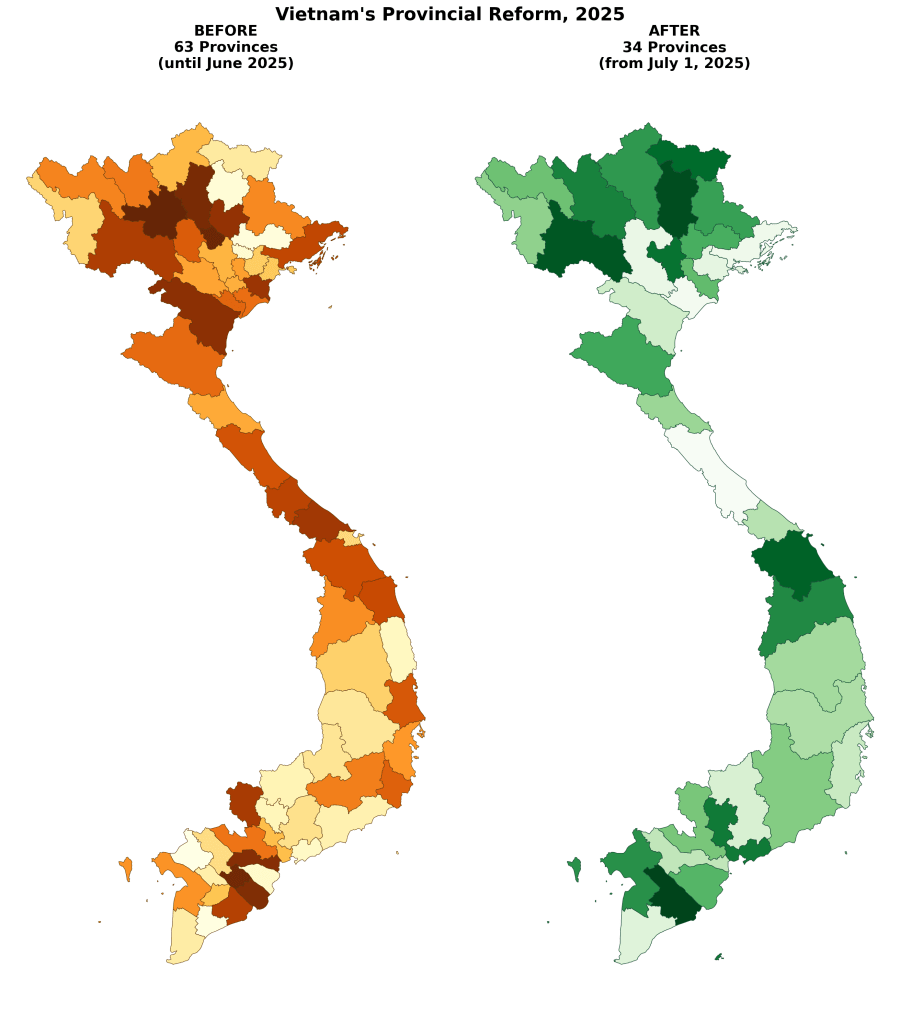
The 6 Centrally Governed Cities
| City | Status |
|---|---|
| Hà Nội | Unchanged |
| Huế | Unchanged |
| Hải Phòng | Merged with Hải Dương |
| Đà Nẵng | Merged with Quảng Nam |
| Cần Thơ | Merged with Sóc Trăng + Hậu Giang |
| Ho Chi Minh City | Merged with Bình Dương + Bà Rịa-Vũng Tàu |
Vietnam's 23 Newly Merged Provinces and Cities
The Ministry of Agriculture and Environment's Department of Survey, Mapping and Geographic Information is the body responsible for the official 1:1,000,000-scale administrative map reflecting these changes.
| Provinces Merged | New Name | Administrative Center |
|---|---|---|
| Kiên Giang An Giang | An Giang | Rạch Giá |
| Bắc Ninh Bắc Giang | Bắc Ninh | Bắc Giang |
| Bạc Liêu Cà Mau | Cà Mau | Cà Mau |
| Cần Thơ Sóc Trăng Hậu Giang | Cần Thơ | Cần Thơ |
| Quảng Nam Đà Nẵng | Đà Nẵng | Đà Nẵng |
| Đắk Lắk Phú Yên | Đắk Lắk | Buôn Ma Thuột |
| Đồng Nai Bình Phước | Đồng Nai | Biên Hòa |
| Tiền Giang Đồng Tháp | Đồng Tháp | Mỹ Tho |
| Gia Lai Bình Định | Gia Lai | Quy Nhơn |
| Hải Dương Hải Phòng | Hải Phòng | Thủy Nguyên |
| Bà Rịa-Vũng Tàu Bình Dương HCMC | Ho Chi Minh City | Ho Chi Minh City |
| Hưng Yên Thái Bình | Hưng Yên | Hưng Yên |
| Ninh Thuận Khánh Hòa | Khánh Hòa | Nha Trang |
| Lào Cai Yên Bái | Lào Cai | Yên Bái |
| Lâm Đồng Đắk Nông Bình Thuận | Lâm Đồng | Đà Lạt |
| Hà Nam Nam Định Ninh Bình | Ninh Bình | Hoa Lư |
| Vĩnh Phúc Phú Thọ Hòa Bình | Phú Thọ | Việt Trì |
| Kon Tum Quảng Ngãi | Quảng Ngãi | Quảng Ngãi |
| Quảng Bình Quảng Trị | Quảng Trị | Đồng Hới |
| Tây Ninh Long An | Tây Ninh | Tân An |
| Bắc Kạn Thái Nguyên | Thái Nguyên | Thái Nguyên |
| Hà Giang Tuyên Quang | Tuyên Quang | Tuyên Quang |
| Bến Tre Vĩnh Long Trà Vinh | Vĩnh Long | Vĩnh Long |
Source: Resolution on the Reorganization of Provincial-Level Administrative Units 2025, adopted by Vietnam's National Assembly.
The bold rows are where confusion strikes hardest: the province keeps its old name, but the administrative center sits in the other former province's city. Take Gia Lai - the name still sounds familiar, but the seat of government is now in Quy Nhơn.
Why the New Administrative Addresses Can Be Confusing
This isn't just a province renaming exercise. Vietnam simultaneously shifted to a two-tier local government model (province and commune level), eliminating the district level - meaning your home, hotel, or homestay address may have changed at the ward/commune level too, not just the province.
What About Google Maps?
Don't rely on Google Maps to have it all sorted out - at least not during this transition period.
After the new administrative system officially began operating on July 1, 2025, Google Maps kept showing old data in many areas for months. According to Tuổi Trẻ News, it wasn't until March 18, 2026 - over 8 months later - that Google Maps started rolling out the new provincial boundaries in some areas, though the update was reported as incomplete and inconsistent nationwide, with Google relying on both government data and user feedback to validate the changes.
However, this rollout is happening gradually and is not yet fully synchronized - some addresses still display old data during this transition.
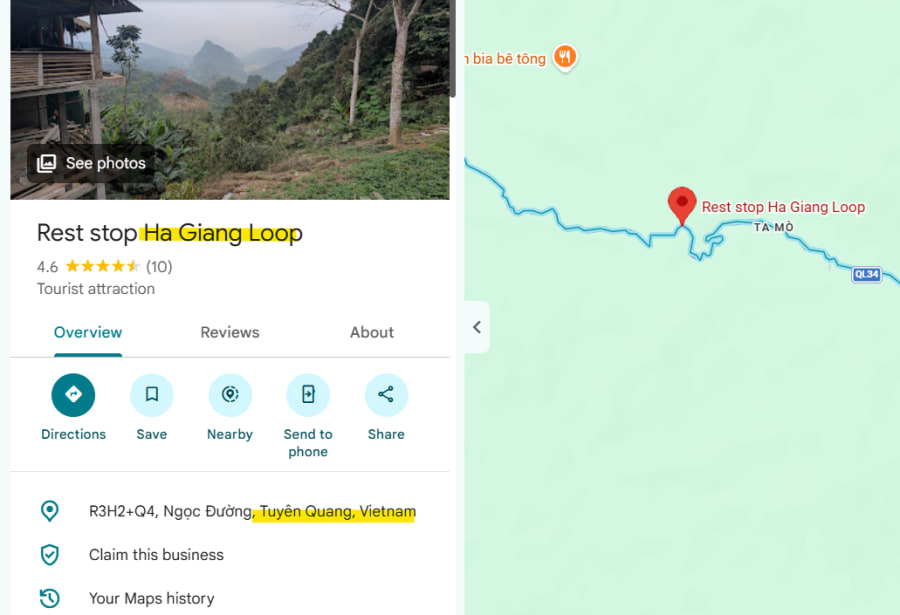
If an address on Google Maps still shows the old name, that doesn't necessarily mean it's wrong.
What to Do If an Address Doesn't Match
If the province or ward name on your booking doesn't match what you see on Google Maps, don't panic. Just ask your hotel, driver, host, or local contact to confirm which naming system they're using.
You can simply ask:
"Is this the old address or the new address?"
Or, more specifically:
"Could you give me the old and new versions of this address?"
If you're showing someone an address on your phone, you can also ask:
"Is this address still correct after the administrative changes?"
This is especially useful when booking hotels, arranging airport transfers, taking buses, or giving an address to a driver.
If possible, save both versions of an address on your phone - for example: "Hotel ABC - [new province] - formerly [old province]." Having both names on hand cuts down on a lot of confusion when calling a car or checking into a hotel.
One note: don't try to work out a new address just by using the province table above. That table is for general context - when it comes to real-world communication, always have your hotel, host, or local contact confirm directly, since the changes go all the way down to the ward/commune level, and guessing on your own is an easy way to get it wrong.
Don't Confuse the New Province Name With Your Destination
This is the most dangerous mix-up in this whole article - because it can put you on the wrong bus, not just show you the wrong address.
Hà Giang now belongs to Tuyên Quang Province. So if you tell a driver or bus company you're going to "Tuyên Quang," they may well understand that as Tuyên Quang City - the former provincial capital - rather than Hà Giang City, which is where you actually want to go.
These two places are not close. Tuyên Quang City and Hà Giang City are about 150-165 km apart by road, and given the current mountainous terrain (before the Tuyên Quang-Hà Giang expressway is completed), the drive can take roughly 3-4 hours. Mix up the province name, and you could lose half a day heading in the wrong direction.
If you're actually heading to Hà Giang or the Hà Giang Loop, say the destination name explicitly:
"I'm going to Hà Giang City, in Tuyên Quang Province - not Tuyên Quang City."
Even better: send the driver your exact hotel or pickup address and ask them to confirm it before you pay or depart.
General rule for booking transport: don't book using only the new province name.
- ❌ "Tuyên Quang"
- ✅ "Hà Giang City, Tuyên Quang Province"
- ✅ "[Hotel name], Hà Giang City, Tuyên Quang Province"
How SoloInVietnam Handles the Transition
Because this "half old, half new" situation is going to last a while, SoloInVietnam currently keeps the old province names in our maps and content, so you're not caught off guard when searching on Google or asking for directions in person. Where a specific address matters, we'll try to list both the old and new names side by side, so you can cross-reference either way.
What Changed for Popular Destinations?
- Hà Nội: unchanged.
- Ho Chi Minh City (Saigon): still named Ho Chi Minh City, but the boundaries now extend to include Bình Dương and Bà Rịa-Vũng Tàu - population up 1.47x, land area up 3.29x. If you're heading to Vũng Tàu or Bình Dương, administratively you're still in "Ho Chi Minh City."
- Hạ Long (Quảng Ninh): unchanged.
- Cát Bà: still part of Hải Phòng, but Hải Phòng has now merged with Hải Dương, and the administrative center moved to Thủy Nguyên.
- Hà Giang: no longer its own province - absorbed into Tuyên Quang.
- Sa Pa: still listed under Lào Cai (name unchanged), but the administrative center moved to Yên Bái.
- Phú Quốc: the former Kiên Giang now goes by An Giang, with the administrative center at Rạch Giá.
- Hội An: merged into Đà Nẵng.
- Đà Lạt: still named Lâm Đồng, now merged with Đắk Nông and Bình Thuận (including Mũi Né/Phan Thiết) - and Đà Lạt itself is the new administrative center.
- Nha Trang: still named Khánh Hòa, now with Ninh Thuận added, and Nha Trang is the administrative center.
- Phong Nha: the former Quảng Bình now goes by Quảng Trị, with the administrative center at Đồng Hới.
Why Vietnamese People Still Use the Old Names
Many Vietnamese people, when you ask for directions, will still instinctively use the old place names. Not because they don't know or don't want to use the new ones - simply because they haven't caught up yet. Imagine your home address has been etched into your memory for 30-40 years, then suddenly it changes overnight - nobody's going to remember that instantly.
I'm the same way. When someone asks where I'm from, I still use the old name. It's the name I grew up with, the one I've used for most of my life, so it still feels more natural to me.
And I think a lot of Vietnamese people are the same. They'll probably keep using the old names for a while, simply because those are the names they've known for years. So if, on the road, you ask a local for directions and they mention a name you've never seen on the new Google Maps, don't be surprised. Just remember the table above, and you'll find your way.