Most travel guides cover the basics: dress modestly at temples, don't stick chopsticks upright in your rice bowl.
That's a start. But it's nowhere near the full picture.
There are dozens of things Vietnamese people will notice, feel uncomfortable about, and sometimes find genuinely offensive - and never say a word to your face about it. This guide covers the rest.
Mistakes are sorted by how much they actually matter:
- 🔴 Avoid - Will genuinely offend locals
- 🟡 Be aware - Won't cause a scene, but people will notice
- 🔵 Bonus points - Do this and Vietnamese people will be seriously impressed
At Religious Sites
Most travelers already know the basics here. But a few things still get missed.
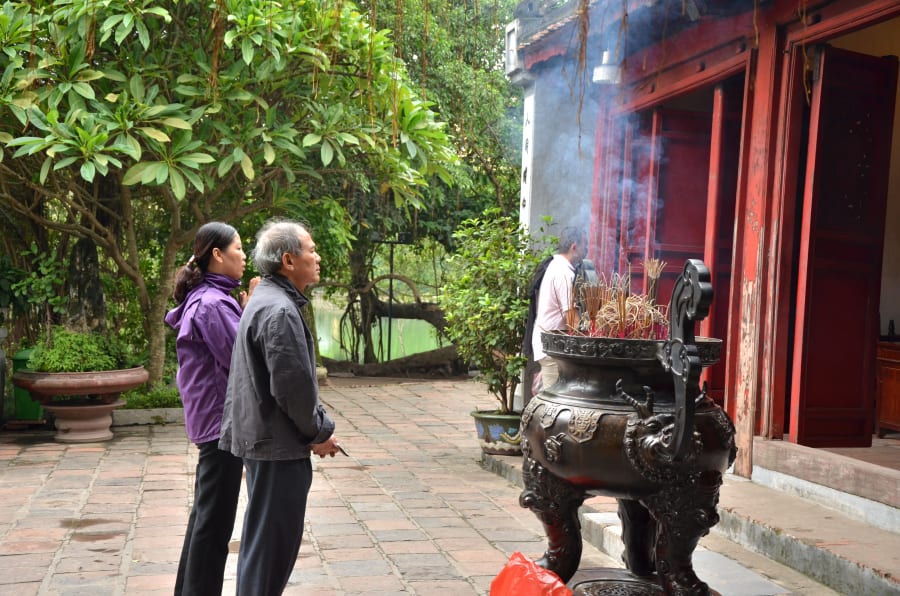
🔴 Wearing revealing clothing at temples, pagodas, and shrines
Bare shoulders, short skirts, shorts above the knee - this is the most common mistake and also the one taken most seriously. Many pagodas now keep loaner clothing at the entrance, but don't count on it. Bring a sarong or lightweight layer in your bag.
🔴 Pointing at Buddha statues or altars
Altars are sacred spaces. Standing too close, pointing directly at them, or blocking someone mid-prayer are all forms of disrespect - even if completely unintentional.
🟡 Taking photos without checking first
Especially when someone is actively praying. Nobody will confront you, but ask or at least observe the room before raising your camera.
Food and Eating
This is the section most foreign travel sites get wrong - and where visitors make the most mistakes when invited into a Vietnamese home.
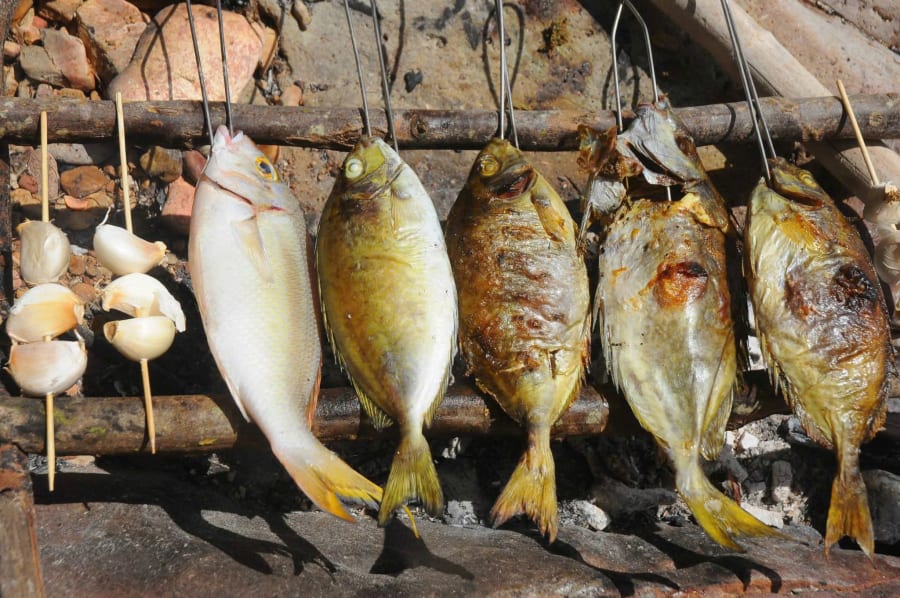
🔴 Flipping a whole fish
In southern coastal communities and the Mekong Delta, flipping a whole fish at the table is seriously taboo - connected to old beliefs about boats capsizing. If you want the meat from the underside, remove the bones instead of flipping the whole fish over. This isn't a nationwide rule, but across the Mekong Delta and coastal Central Vietnam, a lot of people hold to it firmly.
🔴 Sticking chopsticks upright in a rice bowl
This image is directly associated with funeral offerings for the dead. Don't do it at a normal meal, under any circumstances.
🟡 Pouring a drink for yourself first
At a Vietnamese drinking table, you pour for others before yourself - especially if anyone older than you is present.
🟡 Wait for the eldest person at the table before eating
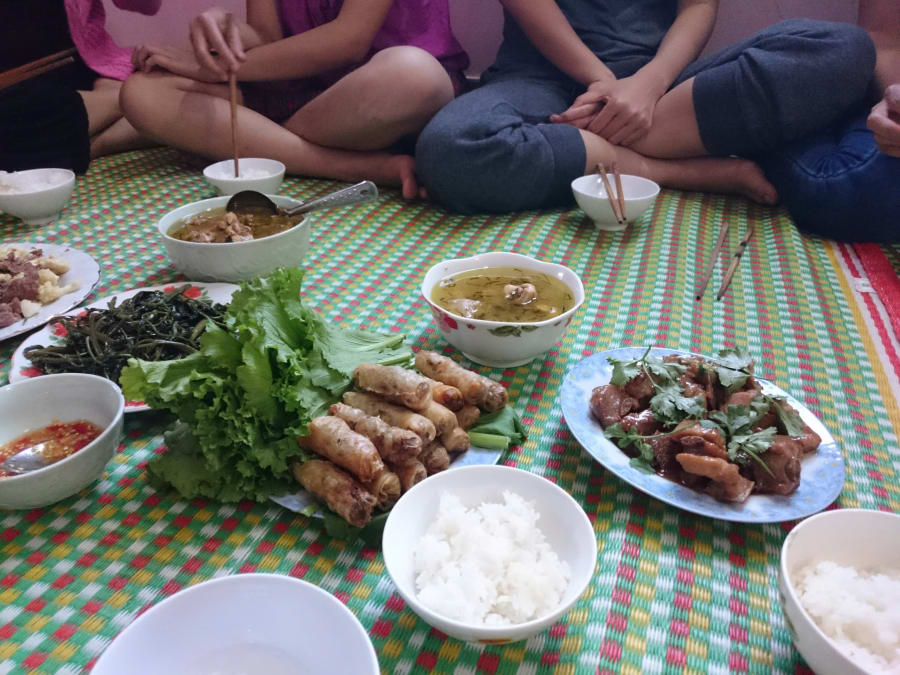
In a family meal or when invited to someone's home, the oldest person at the table typically eats first. Diving in the moment the food arrives reads as rushing.
🔵 Say "mời" before eating
Before eating, Vietnamese people naturally say mời - roughly meaning "please, go ahead" - as a small invitation for everyone at the table to eat together. You don't need the full formal phrase. A simple mời with a small nod toward the table is enough, and locals will immediately notice that you know the custom.
Note: Northerners tend to observe this more formally. In the South, people are generally more relaxed about it.
Clothing
🔴 Wearing áo dài without trousers
The áo dài has become a popular photo experience for visitors, especially in Hội An - renting one, walking the old town, taking photos. Completely fine. But the áo dài is designed to be worn over long matching trousers. Without them, the outfit is considered incomplete - and to many Vietnamese people, disrespectful toward a garment that carries real cultural weight.
If you're renting an áo dài, the shop will provide matching trousers. Wear them.

🔴 Wearing swimwear away from the beach
Bikinis and open boardshorts are fine at resort beaches. But walking into a local market, a street food stall, or a residential area in swimwear is something Vietnamese people find genuinely disrespectful.
🟡 Wearing overly sheer or revealing clothing in non-beach areas
Lightweight and breathable clothing makes complete sense in Vietnam's heat. But very sheer fabrics that clearly expose underwear - or outfits that read as beachwear in a market or temple town context - tend to draw quiet, uncomfortable attention, particularly from older generations. Vietnamese culture outside of nightlife districts remains relatively conservative about this, even if nobody says anything to your face.
🟡 Going shirtless at restaurants, markets, or shops
Shirtless on the beach - normal. Shirtless walking into a pho shop or corner store - not okay.
Note: You'll see Vietnamese men shirtless around their own homes or familiar neighborhoods. In public spaces, a shirt is expected.
National Symbols and Pride
🔴 Sitting on or stepping on border landmarks
Vietnam's easternmost point is marked by a distinctive double-pointed pylon - one of the country's most photographed geographic landmarks. Similar markers exist at the southern and northern extremes. To foreign visitors, these are interesting photo spots. To Vietnamese people, they represent national sovereignty and territorial pride. Posing on top of one, sitting on it, or resting your foot on it - even casually - will make people around you very uncomfortable.

🟡 Watch your framing when photographing border landmarks
Even the angle matters. Avoid framing shots where you appear to be leaning heavily on the marker, straddling it, or treating it as a casual prop. Check your shot to make sure it looks respectful before posting.
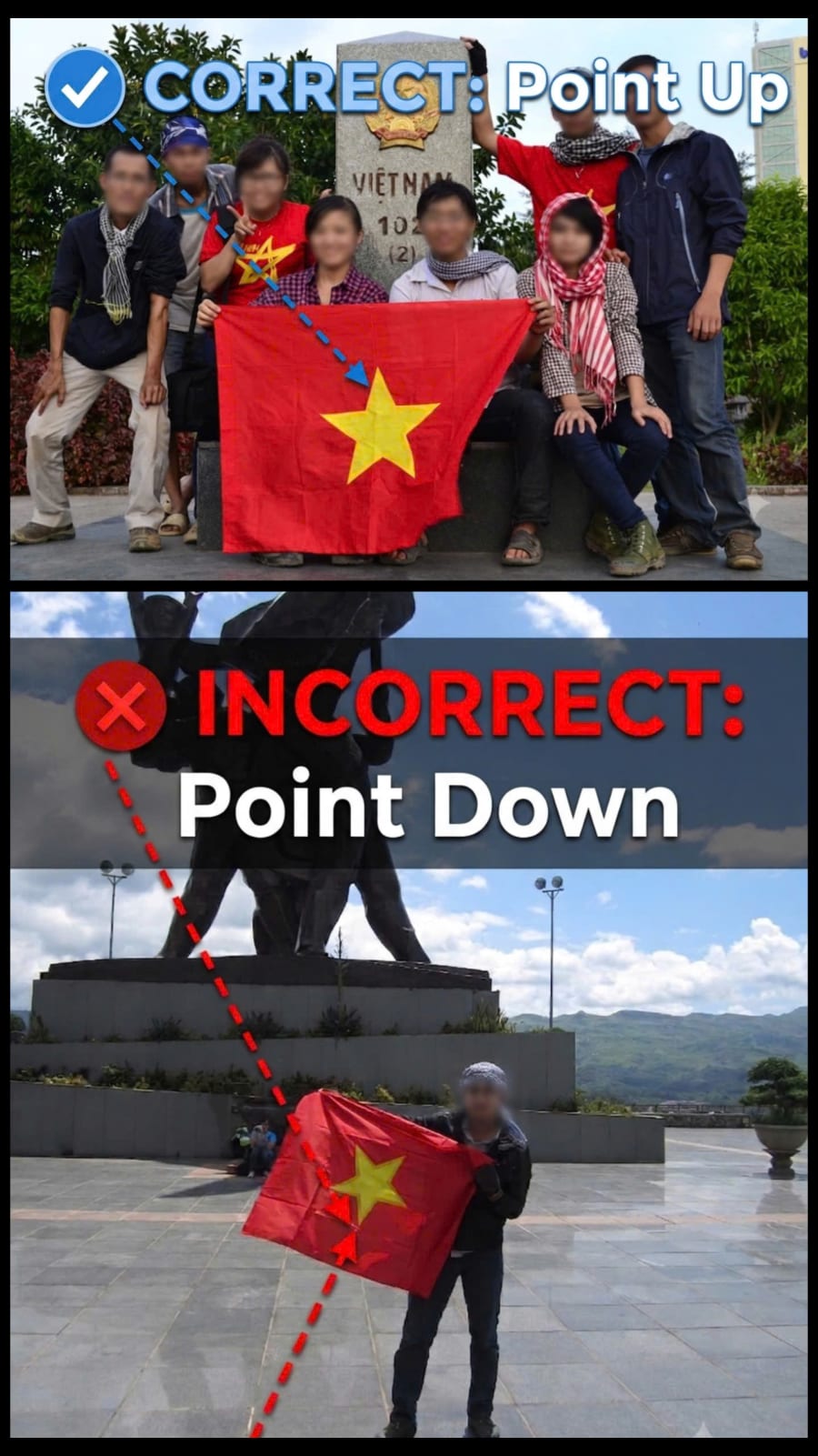
🟡 Vietnamese flag upside down
It looks nearly identical at a glance, but the Vietnamese flag has a fixed orientation: one point of the five-pointed star must point straight up. If you're holding a flag or using one as decoration, check the direction. Many Vietnamese people will catch this even when you don't.
Buying and Selling
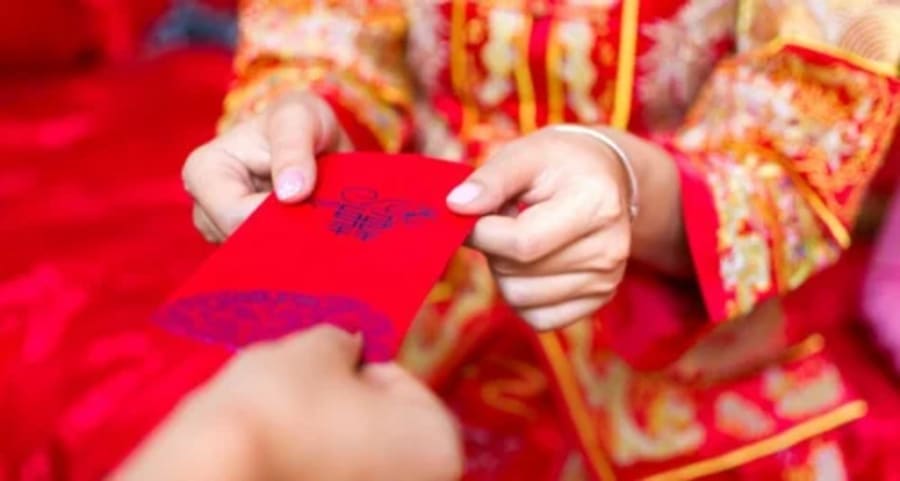
🟡 Handing money or objects with one hand
Using both hands when giving or receiving anything - money, a business card, a gift - signals respect. This matters especially when dealing with older people.
🔵 Receiving change or items with both hands
If you receive something from a Vietnamese person with both hands, they'll recognize immediately that you understand local culture.
When Visiting Ethnic Minority Homes
If your travels take you into highland villages - whether in the Central Highlands or the northern mountains - there are a few things that matter a lot and almost never appear in travel guides.
🟡 Remove your helmet or hat before entering
For many ethnic minority communities, the main post of the house or the kitchen area is considered a sacred space - where spirits reside or ancestors are honored. Walking straight in wearing a dusty road helmet or keeping a hat on indoors is seen as bringing bad energy in, or a sign of disrespect. Take it off before you step inside.
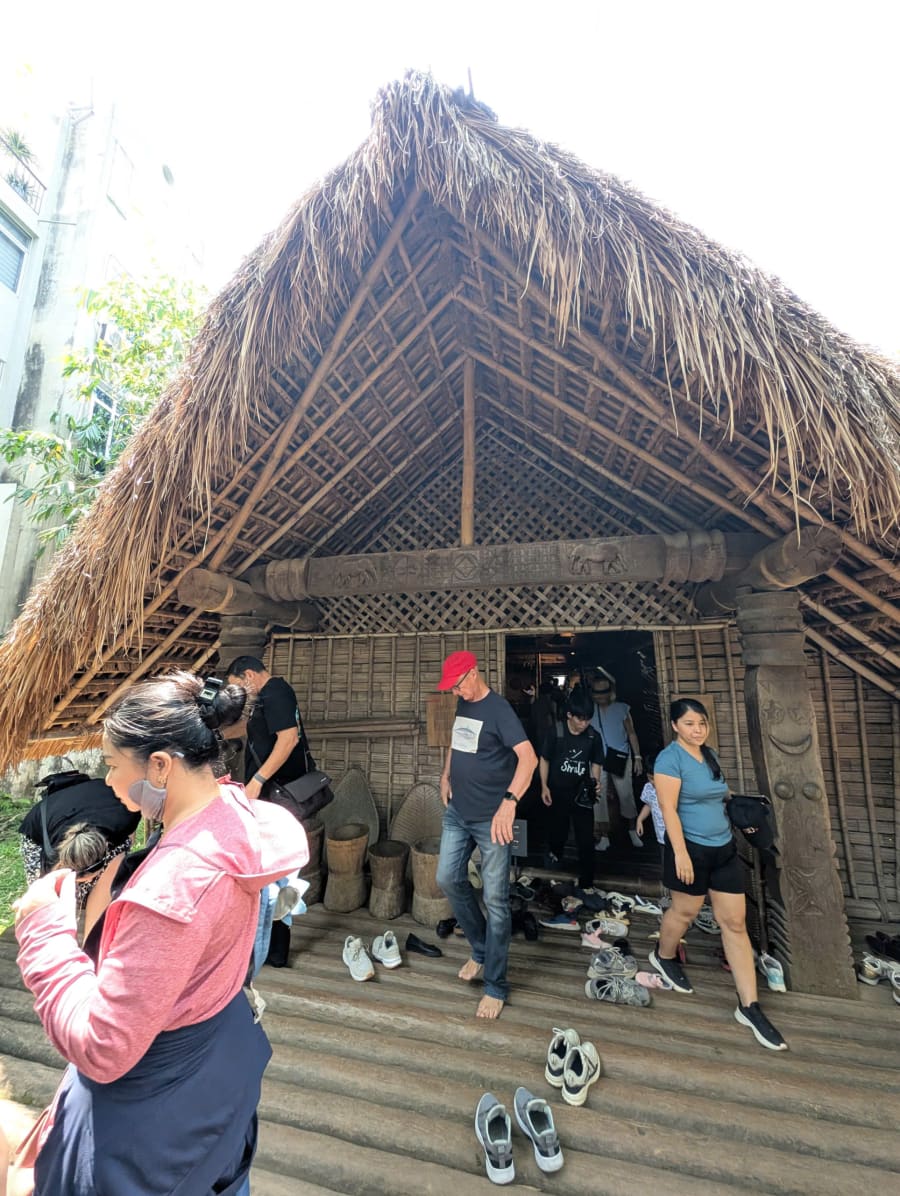
🟡 Remove your shoes before entering a traditional house
Foreign visitors frequently miss this. The floor of a traditional ethnic minority home is where the family eats, sleeps, and lives - directly on the surface. Shoes stay at the entrance, not inside. Look for footwear already left at the door or base of the steps and follow the same pattern.
Folk Beliefs - Especially in the Mountains
This is the section almost no foreign travel resource covers - but if you're trekking with local guides or traveling with Vietnamese friends into the highlands, knowing this will prevent a lot of unnecessary tension.
These aren't social rules - they're folk beliefs that many Vietnamese people, especially in mountain regions and rural communities, take seriously. You don't have to believe in them. But respecting them costs nothing.
🟡 Don't call people by their real names deep in the forest
According to beliefs held by many ethnic minority communities and highland Vietnamese, calling someone by their real name deep in the forest can "summon spirits" or cause that person to get lost. Your guide may use nicknames or avoid calling names entirely - don't find it strange.
🟡 Don't count people out loud
Counting the group aloud - especially in remote or isolated places - is considered bad luck. If you need a headcount, do it silently.
🟡 No whistling or horn-blowing at night
In Vietnamese folk tradition, these sounds are believed to attract spirits or snakes after dark. Common belief across rural and mountain areas.
🔵 Avoid three-person photos
A widespread folk belief: in a group photo of exactly three people, the person in the middle will have bad luck. If you invite two Vietnamese friends to pose with you, don't be surprised if someone hesitates.
One Last Thing
Vietnam is a relationship-based culture. Most people will forgive almost any mistake if they can see that you're genuinely trying to be respectful.
Nobody expects you to know all of this from day one. But showing that you made the effort - removing your shoes without being asked, waiting for the eldest to eat first, using both hands when receiving something - goes further than you might expect.
The list above isn't meant to make Vietnam feel like a minefield. It's meant to help you move through it like someone who actually belongs there.