Discovery and Opening
Paradise Cave (Động Thiên Đường) was discovered in 2005 by Hồ Khanh, a local man from Sơn Trạch commune who was logging in the forest when he noticed cool air blowing from a crevice in the rock and remembered the spot. Later that year, an expedition from the British Cave Research Association led by Howard Limbert surveyed the cave and confirmed it as one of the longest and most spectacular dry caves in Asia: 31.4km long (still not fully explored), 30-150m wide, averaging 60-80m high with some chambers approaching 100m. The cave opened to the public in 2010 after a concrete access road, a wooden boardwalk, and a lighting system were built.
The Underground Palace
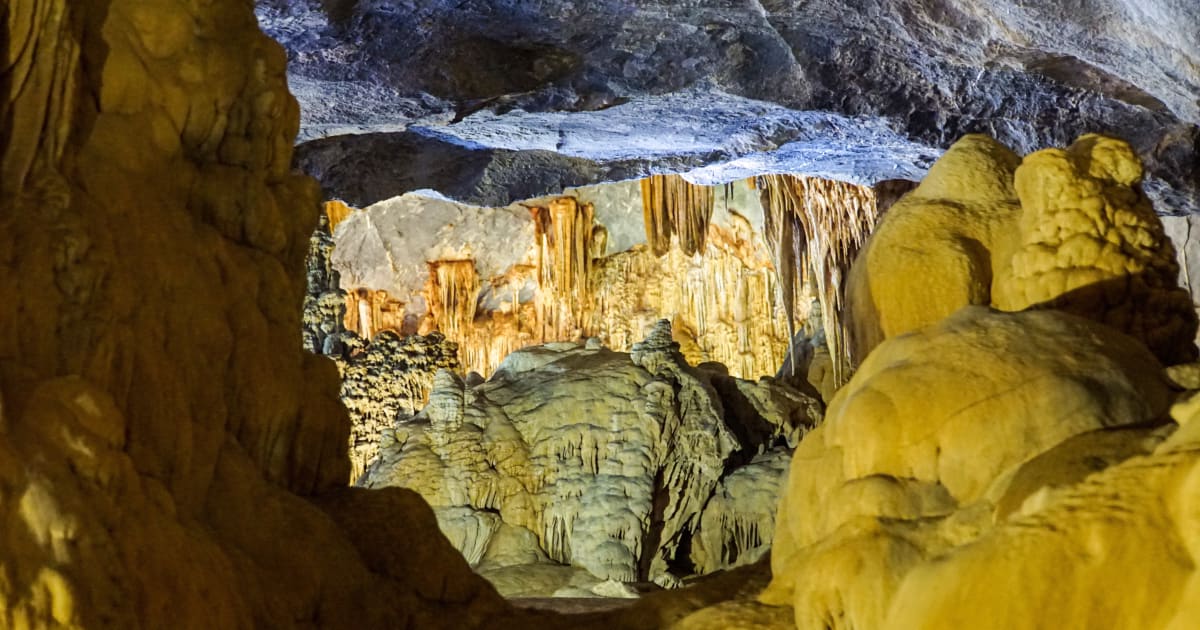
Known as the 'underground palace' for its scale, Paradise Cave differs from neighbouring Phong Nha Cave in one key way: it has no underground river, so the space stays dry and airy throughout rather than requiring a boat. Stalactite and stalagmite formations here are celebrated for resembling specific figures under the lighting - Buddhist immortals, Avalokiteśvara statues, and Champa-style towers - giving the cave a temple-like atmosphere distinct from its dramatic geology. Cave temperature stays a stable 18-22°C year-round, a natural relief from Quảng Bình's summer heat outside.