Menu
Destinations→Locations→Blog→Map→About→
Temple

Tran Temple (Den Tran), Nam Dinh

Trần Temple in Nam Định honours the 14 Trần emperors and their generals, including Trần Hưng Đạo - three temples built on the site of the Trần dynasty's Thiên Trường residence, famous for the Khai Ấn seal festival on the night of the 14th of the 1st lunar month.

Temple of the 14 Trần Kings · Khai Ấn Seal Festival · Shrine of Trần Hưng Đạo · Ironwood Halls on Lotus Bases · Vietnamese Folk Religion · Vietnamese Traditional Architecture

Tran Temple (Den Tran), Nam Dinh
Best months

For quiet sightseeing, go in Mar - May, after the Tết pilgrim rush, when late-spring weather is warm and pleasant, or in Nov - Jan, when northern winter is dry and cool and the temples feel still and solemn. The Khai Ấn (seal-opening) festival on the night of the 14th to the 15th of the 1st lunar month (usually February) is the most important event of the year - spectacular but extremely crowded. The annual Trần Temple festival, around the 15th-20th of the 8th lunar month with the main commemoration of Trần Hưng Đạo on the 20th, is also very busy; avoid it if you just want to look around.

Best time of day
Weekdays, between 6:30 AM and 6:00 PM. Arrive before 5:00 PM so you have time to see all three temples.
Entry fee
Free. During festivals, parking fees can be charged above the official rate without clear tickets - ask the price first.
Opening hours
6:30 AM - 6:00 PM daily. Hours change on festival days, including the Khai Ấn festival.
Address
Trần Thừa street, Nam Định ward, Ninh Bình (formerly Lộc Vượng ward, Nam Định city, Nam Định)
Crowds
Calm on ordinary weekdays; extremely crowded at Khai Ấn (1st lunar month) and the 8th lunar month festival
Difficulty
Easy; on festival days expect long walks from distant parking
Safety
Watch for pickpockets in festival crowds
Accessibility
Flat, spacious grounds; festival crowds make movement difficult
Seasonal
Mar - May and Nov - Jan are quietest; the Khai Ấn festival is usually in February

What Makes Trần Temple Special

Trần Temple (Đền Trần) is a complex of temples on Trần Thừa street in Nam Định ward, now part of Ninh Bình province (formerly Nam Định). It honours the 14 emperors of the Trần dynasty and the generals and officials who served them - the dynasty remembered for its 'Đông A spirit' and for defeating the Mongol-Yuan invasions three times. Today it is one of northern Vietnam's busiest pilgrimage sites, especially at the start of the lunar new year.

The temples stand on the site of Thiên Trường, the Trần dynasty's ancestral seat and a second capital after Thăng Long. When Emperor Trần Thái Tông came to the throne, he built a residence here where retired emperors (Thái thượng hoàng) lived and worked after passing the throne to their sons. In 1258, when the Mongols invaded, the Trần court and people withdrew here, leaving Thăng Long empty, and later defeated the invaders.

The dynasty's ancestral temple was destroyed by Ming troops in the 15th century; the present Trần Temple was built on its foundations in 1695 and has been restored and expanded many times since.

The Khai Ấn Seal Festival

According to tradition, the Khai Ấn (seal-opening) ceremony dates back to the Trần dynasty: after victory over the Mongol-Yuan, Emperor Trần Thái Tông held a banquet at Thiên Trường on the 14th of the first lunar month to reward those who had defended the country. Today, the festival begins on the night of the 14th with incense offerings and palanquin processions, and the most sacred moment is the seal-opening at Thiên Trường Temple at the hour of the Rat (11 PM). The seal is printed with four characters, 'Tích phúc vô cương' - 'accumulate boundless blessings' - a reminder to live virtuously.

Many people come to ask for a seal print hoping for promotion or career success, but its original meaning was a prayer for national peace and prosperity, and for everyone to be safe and lucky - blessings earned by doing good. In past years the festival became notorious for crushing crowds and seals being bought and sold; the organisation has been tightened up in recent years.

How to Get to Trần Temple

Ninh Bình province has no airport, so fly to Hanoi and continue by road or rail. Trần Temple is about 90 km from Hanoi, roughly two hours by car via the Pháp Vân - Cầu Giẽ expressway. Coaches and limousine vans from Hanoi cost about 100,000-150,000 VND per person. About 10 trains a day run from Hanoi to Nam Định station, from around 100,000 VND one way.

On festival days, the main road is closed and visitors have to park far away and walk; many locals approach from the Chợ Lợn side instead.

What to Expect at Trần Temple

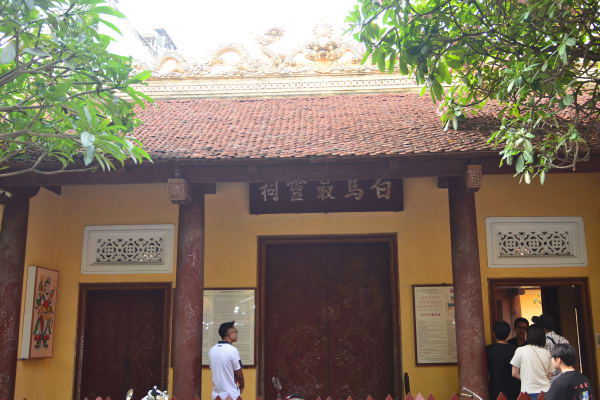
From the three-entrance gate, the main axis leads to Thiên Trường Temple in the centre, with Cố Trạch Temple to the east and Trùng Hoa Temple to the west. The grounds are green and spacious, and a full visit takes 30-60 minutes.

  • Thiên Trường Temple (Upper Temple): built on the foundations of the Trần ancestral temple and Trùng Quang palace, with 9 buildings and 31 bays framed in ironwood, with tiled roofs and brick floors. The front hall (5 bays, 13 m long) honours the Trần officials, its 12 main and 12 side columns resting on finely carved lotus-shaped stone bases. The middle hall honours the 14 Trần emperors, with three thrones in front as the place of worship; the rear sanctuary honours the four ancestors of the Trần clan and their wives in the central bay, and royal consorts on either side. The incense hall has altars for Trần generals and civil and military officials.
  • Cố Trạch Temple (Lower Temple): built in 1894-1895, it honours Supreme Commander Trần Hưng Đạo (Trần Quốc Tuấn), his family and trusted generals, with side halls for civil and military officials.
  • Trùng Hoa Temple: built in 2000 on the site of the old Trùng Hoa palace, it holds 14 bronze statues of the Trần emperors, along with civil and military officials.

On ordinary weekdays it's calm and peaceful. At the Khai Ấn festival and in the 8th lunar month, it can be packed - hot, sweaty, chaotic, with parking lots full and worshippers sitting all over the courtyards. Common complaints are pushy, overcharging offering stalls at the gate, parking fees above the official rate, limited signage and some areas that look run-down for such a famous site. Several visitors find the architecture fairly ordinary compared with other temples; the main draw is the spiritual and historical significance.

Two festivals a year

Khai Ấn: night of the 14th to the 15th of the 1st lunar month, with the seal-opening at 11 PM at Thiên Trường Temple. Trần Temple festival: around the 15th-20th of the 8th lunar month, with the main commemoration of Trần Hưng Đạo's death anniversary on the 20th, featuring palanquin processions and traditional rites.

Travel Tips for Trần Temple

For a quiet visit, come on a weekday outside festival season and combine Trần Temple with nearby sites such as Phủ Dầy and Cổ Lễ Pagoda. If you want to see the Khai Ấn festival, go prepared for huge crowds, long walks and late nights, keep valuables close and stay patient.

Based on real traveler experiences and commonly mentioned advice from multiple visitors.

  • Visit on a weekday outside festival season
  • Arrive before 5:00 PM to see all three temples
  • Check prices at offering stalls before buying
  • Dress neatly and modestly, and keep your voice down in the worship areas
  • Wash your hands at the automatic taps on the right before entering the worship area
  • The temple discourages burning lots of votive paper; don't pick flowers or break branches to take home
  • If you're unsure how to make offerings, ask the temple staff
  • Read the signs at each altar - they explain who is worshipped where
  • At festivals and on crowded days, watch your belongings for pickpockets
  • Offering stalls at the gate can overcharge - check prices before buying, or bring your own offerings
  • On festival days, the main road is blocked and you'll be made to park far out and walk a long way in the sun. Regular visitors approach from the Chợ Lợn side
  • For a quiet visit, avoid the Khai Ấn festival and the 8th lunar month festival

Common questions from travelers who've visited this place.

Is there an entrance fee at Trần Temple?
No, entry is free. Parking and offerings are paid separately - ask the price first.
What are the opening hours?
6:30 AM to 6:00 PM every day. Hours change on festival days, including the Khai Ấn festival.
What is the Khai Ấn ceremony?
A seal-opening ceremony traditionally dating back to the Trần dynasty. It begins on the night of the 14th of the 1st lunar month, and the most sacred moment is the opening of the seal at Thiên Trường Temple at 11 PM.
What does the Trần Temple seal mean?
It isn't really about promotion or career success. The custom began as a prayer for national peace and prosperity and for every household to be safe and lucky. The seal reads 'Tích phúc vô cương' - accumulate boundless blessings - a reminder that lasting good fortune comes from virtue.
How do I get to Trần Temple from Hanoi?
It's about 90 km, roughly two hours by car via the Pháp Vân - Cầu Giẽ expressway. Coaches cost about 100,000-150,000 VND, and about 10 trains a day run to Nam Định station from around 100,000 VND.

Explore more things to do like this around Vietnam