Overview
Things to Know
Gallery



About This Place
What Makes Hang Rai Special
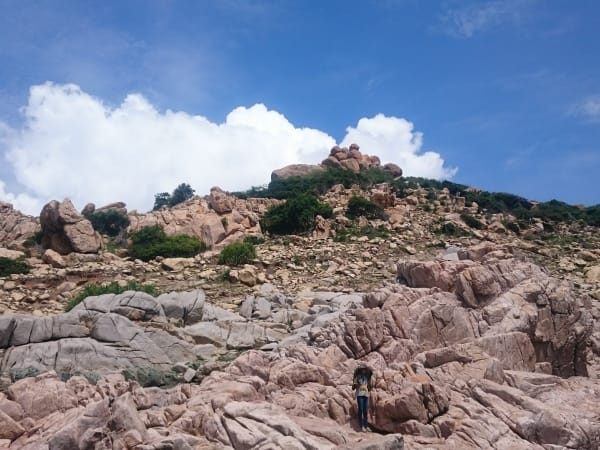
Hang Rai is a section of coastline within Núi Chúa National Park in Ninh Thuận province, around 35km northeast of Phan Rang along Provincial Road 702. The name is said to come from the otters (rái cá biển) that historically sheltered in the rock caves - though there are no otters to see on a visit today. The defining feature of the place is geological: ancient coral formations thousands of years old, exposed as the sea level shifted, now forming a landscape of jagged rock platforms, natural arches, stacked boulders, and tide pools. Waves hitting the flat rock faces generate white water that flows over the stone surface like a waterfall - one of the visual effects the site is known for. At sunset, the same formations turn deep red and purple. The water alongside the rocks is clear and blue-green. It is one of the most photogenic natural scenes in southern Vietnam and, relative to the effort required to reach it, still genuinely quiet.
How to Get There
Getting There
Hang Rai is in Thôn Thái An, Vĩnh Hải commune, Ninh Hải district, approximately 35km northeast of Phan Rang - Tháp Chàm city centre via Provincial Road 702. By motorbike from Phan Rang the journey takes about 45-50 minutes. Ninh Thuận has no commercial airport; the nearest is Cam Ranh Airport in Khánh Hòa. From there, take a bus or taxi to Phan Rang first. Hang Rai is part of the Vĩnh Hy - Hang Rai - Vườn Nho coastal route - most visitors combine all three sites in a single day from Phan Rang.
What to Expect
On the Ground
The coastline at Hang Rai is defined by ancient coral rock formations - stacked, eroded into caves and arches, and covered with the texture of thousands of years of wave action. At low tide, walking the rock platforms reveals tide pools with marine life and views along the exposed reef. When waves hit the flat rock faces, white water spills across the surface in cascades before draining back into the sea. The water adjacent to the formations is clear and calm enough for swimming and snorkeling on good days. The landscape shifts completely at golden hour - the rocks that read as grey-brown in midday sun turn vivid red and purple as the light drops. There are no facilities on the rock formations themselves; basic services are at the entrance area.
Travel Tips
Tips
Hang Rai rewards visitors who time it right - low tide for the rock walking and tide pool exploration, late afternoon for the light on the formations. The dry season (January to August) gives the most reliable sea conditions and best visibility. Outside these months, particularly September to December, the monsoon brings rough seas and the site loses most of its appeal. Phan Rang is the natural base for the area, with Vĩnh Hy fishing village as a closer overnight option if you want an early morning start at the rocks.
Insider Tips
Based on real traveler experiences and commonly mentioned advice from multiple visitors.
FAQ
Common questions from travelers who've visited this place.
What is the entrance fee?›
How do I get to Hang Rai from Phan Rang?›
What is the best time to visit?›
Nearby Locations
Explore more things to do like this around Vietnam