Menu
DestinationsLocationsBlogMapAbout
landmark · heritage · cultural · ha noi

Hanoi St. Joseph's Cathedral

Hanoi St. Joseph's Cathedral is a neo-Gothic French colonial church built between 1884 and 1886 at the heart of the Old Quarter - the oldest church in Hanoi and one of the earliest Western-style buildings in Vietnam, its twin 31.5-metre towers a defining landmark of central Hanoi.

Gothic CathedralFrench ColonialOld Quarter IconActive Parish
Get Directions
Best Time to Visit
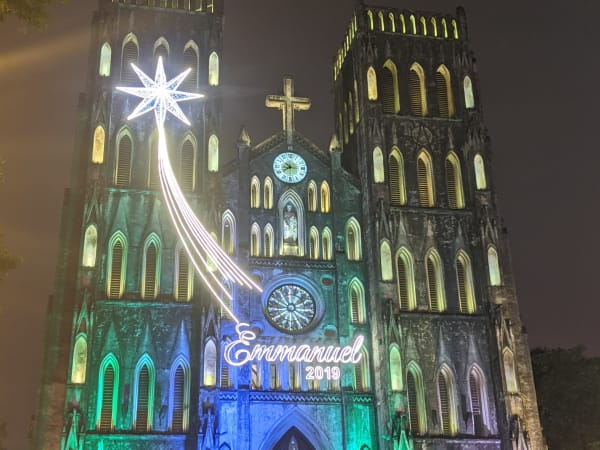
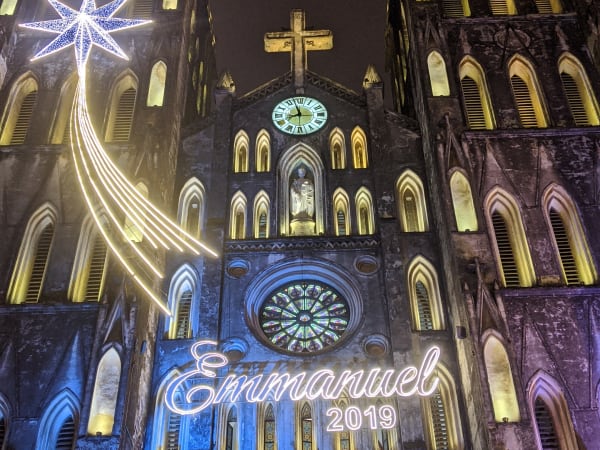
Sep - Nov (autumn) is often cited as the most pleasant season, alongside Christmas Eve for its unique atmosphere despite the crowds. Within a day, there are three good windows: early morning (5-7 AM) to avoid harsh sun, late afternoon (5-6 PM) for the best natural light, or evening (7-9 PM) when the cathedral is lit up and the surrounding streets are at their liveliest
Entry Fee
Free (donations accepted)
Opening Hours
Exterior accessible 24/7. For interior viewing, the front gate is usually closed, but a back gate is generally open during visiting hours: roughly 8:00-11:00 AM and 2:00-8:00 PM Monday-Saturday, and 7:00-11:00 AM or 3:00-9:00 PM on Sunday - aim to visit before 5 PM if you specifically want to look around outside of a mass. Mass times have varied across sources and can change, but recent schedules cite around 5:30 AM and 6:15 PM on weekdays, 6 PM on Saturday, and several Sunday services between 5 AM and 8 PM (including some in French) - confirm current times locally rather than relying on a fixed schedule
Address
40 Nhà Chung, Hoàn Kiếm, Hà Nội
Crowds
Busiest around mass times, especially Sunday, and extremely crowded on Christmas Eve. The square and surrounding cafes are liveliest in the evening, particularly on weekends
Accessibility
Free to enter; the exterior and square are accessible at all times. Interior access outside mass is generally via a side door rather than the main entrance - ask locally if it's not obvious
Seasonal
Sep-Nov (autumn) is often considered the most pleasant season for a visit. Christmas Eve (24 December) draws exceptional crowds for midnight mass; 19 March (Saint Joseph's feast day) also brings a special ceremony

What Makes Hanoi St. Joseph's Cathedral Special

Hanoi St. Joseph's Cathedral (Nhà thờ Lớn Hà Nội, formally Nhà thờ Chính tòa Thánh Giuse) is the oldest church in Hanoi and the seat of the Roman Catholic Archdiocese of Hanoi. It stands on land once occupied by Báo Thiên Pagoda, a major Buddhist temple dating to the Lý dynasty and a significant religious site through the Lý and Trần periods - though historians note that surviving records of exactly how and when the pagoda was cleared for the cathedral are inconsistent with one another, so the popularly cited version of events is worth treating as the traditional account rather than settled fact. Construction of the cathedral, led by Bishop Paul-François-Marie Puginier, began in 1884, following an earlier temporary wooden chapel on the same site - funded partly through two lottery ticket sales the Bishop was eventually permitted to run after French colonial authorities twice refused the idea, raising around 30,000 francs toward a total cost of roughly 200,000 francs. Sources differ on the exact completion date, with the first mass commonly cited as either Christmas Eve 1886 or Christmas 1887 - a discrepancy worth being aware of rather than a settled fact. Modelled on Notre-Dame de Paris, the neo-Gothic cathedral runs about 64.5 metres long and 20.5 metres wide, with twin bell towers rising 31.5 metres above the surrounding Old Quarter streetscape - visible from several blocks away and giving it a scale that still feels incongruous against the low-rise fabric around it. The cathedral remains an active Catholic parish, with masses held multiple times daily. The square in front of the main entrance has become one of the social centres of the Old Quarter, particularly in the evenings when the surrounding cafes fill and the lit facade creates a distinctive backdrop.

Getting There

The cathedral is located in the Hoàn Kiếm district of Hanoi's Old Quarter, approximately 500 metres southwest of Hoàn Kiếm Lake, at the meeting point of Nhà Thờ, Lý Quốc Sư, and Nhà Chung streets. From the lake, walk west along Hàng Trống street and turn left onto Nhà Thờ street - the cathedral is at the end of the street. City buses 1, 2, 9, 14, and 36 all stop within walking distance around Hoàn Kiếm Lake. The surrounding area is pedestrian-friendly and most Old Quarter hotels are within walking distance. Grab or taxi from anywhere in central Hanoi takes under 10 minutes.

On the Ground

The exterior of the cathedral is the main attraction for most visitors - the neo-Gothic facade with its twin towers, stained glass rose window, and iron gate is one of the most photographed facades in Hanoi, with a bronze statue of the Virgin Mary out front. The interior, when accessible, contains original 19th-century stained glass windows imported from France, a rib-vaulted ceiling, fired-clay tile flooring, and walls originally finished with a traditional plastered-paper technique ('giấy bổi') rather than modern render - a mix of largely European design with some traditional Vietnamese construction touches. A statue of the Virgin Mary and child stands out front, though sources disagree on whether it's bronze or carved stone. The square in front of the cathedral is lined with cafes and small shops selling religious goods, and has a lively social atmosphere particularly in the late afternoon and evening - it's also where Hanoi's well-known 'trà chanh nhà thờ' (cathedral lemon tea) culture is centred, a favourite hangout for local youth. The surrounding streets of Nhà Thờ and Nhà Chung are among the more pleasant walking streets in the Old Quarter, and nearby lanes are known for street food like bánh gối and phở Lý Quốc Sư.

Tips

The cathedral is best visited as part of a broader Old Quarter walking tour rather than as a standalone destination - its historical and architectural significance is the main draw, and a visit itself is typically brief. What makes it genuinely worth a stop is the contrast it offers: a still, solemn structure standing right against the flexible, sometimes overwhelming rhythm of the streets around it - cafes, street food, and crowds of people living ordinary life right up against a 19th-century cathedral. It's a legible, easy-to-fit-into-any-itinerary anchor point in a neighbourhood where small streets, shopfronts, and the church facade all sit close together, which makes it a genuinely useful stop rather than just another famous name to check off. The Christmas period (particularly December 24) transforms the square into one of the most atmospheric public gatherings in Hanoi, with thousands of locals and visitors filling the area around midnight mass - worth experiencing if visiting in December, but plan for serious crowds. 19 March, the feast of Saint Joseph, is another day with a special ceremony worth knowing about if your visit lines up. Respectful, modest dress is expected to enter during services.

Based on real traveler experiences and commonly mentioned advice from multiple visitors.

Check current mass and visiting hours locally or with the parish rather than relying on a fixed schedule - times have varied across sources and do change
Come in the morning for the best light and quieter streets, or in the evening to experience the square's cafe culture and lively local atmosphere
Pair a visit with the surrounding Old Quarter streets - Nhà Thờ and Nhà Chung in particular are known for their cafes and street food, including the area's famous lemon tea culture
The cathedral interior isn't limited to mass times only - a side door (rather than the main entrance) generally allows viewing during broader visiting hours too, though exact times can shift, so it's worth checking locally rather than assuming
The main front gate is usually closed - look for the back gate instead if you want to go inside outside of mass. Weekend front-facing photos can get quite crowded, so a weekday or early morning visit is easier if you want the facade to yourself
Budget 30 minutes to an hour for photos and people-watching in the square; longer if you're attending mass, depending on which service and how long it runs
Dress rules are enforced and posted at the entrance: no short skirts, shorts, tank tops, or spaghetti straps; no hats; no flash photography; no smoking; no food or drink; and keep noise down. In August 2025, a photo shoot involving a well-known Vietnamese DJ and her crew was asked to leave the grounds after drawing attention for its styling - a reminder that these rules are taken seriously rather than treated as optional suggestions
If you want to see it during an active mass, arrive a few minutes early and be unobtrusive - photography during the service itself isn't appropriate
The square in front of the cathedral (Nhà Chung street) is one of the best people-watching spots in the Old Quarter - the surrounding cafes fill up on weekend evenings, and the area is well known locally for 'trà chanh nhà thờ' (cathedral lemon tea), a genuine Hanoi youth-culture institution
Christmas Eve draws enormous crowds to the square for midnight mass - the atmosphere is extraordinary but the area becomes extremely packed from around 10pm
The surrounding streets of the Old Quarter are best explored on foot - the cathedral makes a natural starting or ending point for a walking circuit through Hoàn Kiếm district, and nearby streets are known for bánh gối, phở Lý Quốc Sư, and other local specialties
The best exterior photography light is in the morning before the surrounding streets get busy
Modest dress (shoulders and knees covered) is expected, especially if entering during a service

Common questions from travelers who've visited this place.

Is there an entrance fee?
No, entry is free, though donations are accepted. The exterior and square are accessible at all times.
Can I see the interior outside of mass times?
Generally yes - a side door (rather than the main entrance) typically allows interior viewing during broader visiting hours beyond just mass, though exact hours can vary, so it's worth checking locally or asking on arrival.
What's the best time to visit?
Early morning (5-7 AM) avoids harsh sun, late afternoon (5-6 PM) has the best natural light, and evening (7-9 PM) is when the cathedral is lit up and the surrounding streets are liveliest. Sep-Nov is often considered the most pleasant season. Christmas Eve is extraordinary but extremely crowded from around 10pm onward.
Can non-Catholics visit and take photos inside?
Yes - non-Catholic visitors are welcome to look around, sit in the back rows during a service, or even attend respectfully, though only baptised Catholics should go up for Communion. Dress modestly, keep quiet, and avoid flash photography or photographing people closely during prayer.
Explore more
ha noi - Full Guide
View destination guide →