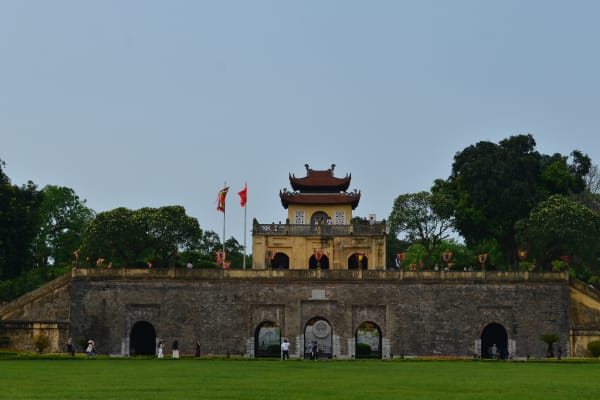
Lam Kinh is where Lê Lợi raised the banner of the Lam Sơn uprising (1418-1428) against the Ming occupation. After his victory in 1428, he became Emperor Lê Thái Tổ and ruled from Thăng Long (Hanoi), founding the Later Lê dynasty, which lasted nearly 360 years. In his home region of Lam Sơn he built a capital known as Lam Kinh, or Tây Kinh (the Western Capital, as opposed to Đông Kinh in Hanoi), to honour his ancestors and serve as the resting place of the Lê kings.
The site covers about 200 hectares and follows the classic principle of 'backed by mountains, facing water': Mount Dầu to the north, the Chu River and Mount Chúa to the south, Phú Lâm forest to the east and Mount Hương and Hàm Rồng to the west. Old forest and centuries-old trees surround the halls and tombs, so it feels more like a quiet royal garden than a busy imperial city.
History of Lam Kinh
When Lê Lợi died in 1433, he was brought back to Lam Kinh for burial, and a large complex of temples and tombs was built to honour the emperors, grand empresses and empresses dowager and to host royal ceremonies. In 1448, Emperor Lê Nhân Tông ordered the halls and temples restored, completed in early 1449, and in 1456 he named the three main halls Quang Đức, Sùng Hiếu and Diễn Khánh.
Lam Kinh was listed as a national historical relic in 1962 and became a special national relic in 2013. Much of what you see today is restored or reconstructed, including the main hall.