Menu
DestinationsLocationsBlogMapAbout
📍 nature · ly son

Lý Sơn Garlic Fields

Lý Sơn's garlic fields cover both the main island and Đảo Bé, grown in volcanic ash and white sand that gives the island's famous purple garlic its distinctive strong flavour. February to March is harvest season - the most photogenic time, with garlic drying in the sun across the island. November to January for young green fields.

🧄 Vietnam's Garlic Capital🌾 Volcanic Soil Farming📸 Landscape Photography🌿 Harvest Season Feb - Mar
🧭 Get Directions
Best Time to Visit
📅 Feb - Mar (harvest season - garlic fully grown, drying scenes everywhere). Nov - Jan for young green fields and tall areca palms.
Entry Fee
🎟️ Free
Opening Hours
🕐 Open 24/7 (farming fields - respect crops and stay on paths)
Address
📌 Lý Sơn Island (both Đảo Lớn and Đảo Bé), Quảng Ngãi
👥Crowds
Feb - Mar harvest season is the most visited period. Nov - Jan is quieter. The fields themselves are never crowded - they're spread across both islands and most visitors see them as backdrop rather than destination.
🚶Accessibility
Fields visible from roads across both islands. No entrance fee or formal access point. Elevated views from Núi Thới Lới and Núi Giếng Tiền. On Đảo Bé, fields start at the ferry pier.
🌤️Seasonal
Sep - Oct: planting season, fields being worked. Nov - Jan: young green shoots, areca palms, quieter island - good for photography without harvest crowds. Feb - Mar: full harvest, garlic drying everywhere, most photogenic and most visited. Apr - Aug: fields bare or fallow after harvest.

What Makes Lý Sơn Garlic Fields Special

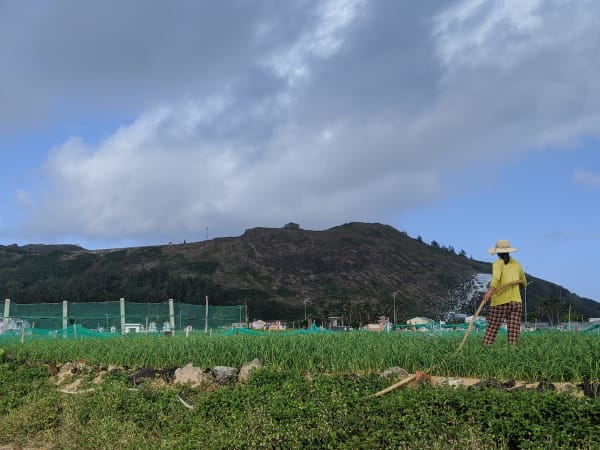
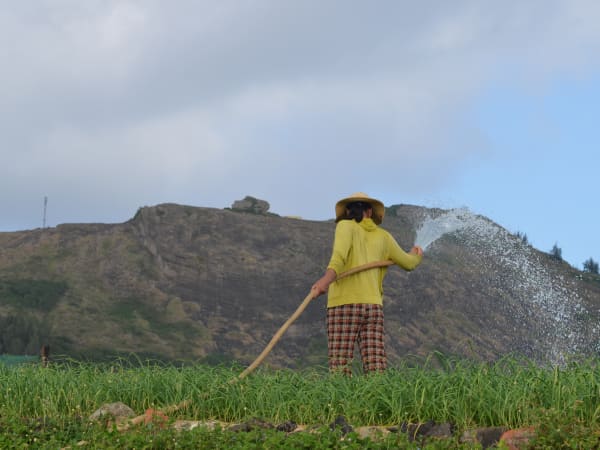
Garlic fields cover much of the flat land on both Lý Sơn islands - Đảo Lớn and Đảo Bé - grown in a soil composition found nowhere else in Vietnam: a mix of volcanic ash and white sand that gives the island's purple garlic its distinctive strong, slightly spicy flavour. Lý Sơn is known across Vietnam as 'Vương Quốc Tỏi' - the Kingdom of Garlic - and the crop is central to both the island's economy and its identity. The fields are visible from almost everywhere on the island, including from the ferry pier on Đảo Bé where the green rows stretch into view as you dock. Garlic is planted in September and harvested in February and March; between planting and harvest, the fields move through distinct stages - young green shoots in November and December, full-grown rows in January and February, and the harvest bustle of March when dried garlic is spread to cure across rooftops, roads, and open ground across the island.

🚗 Getting There

The garlic fields are distributed across both islands and visible from the road throughout. On Đảo Lớn, the fields are most concentrated in the An Hải area on the eastern side. On Đảo Bé, the fields start immediately at the ferry pier. The best elevated views are from Núi Thới Lới summit and Núi Giếng Tiền on Đảo Lớn - both give a wide-angle perspective over the full patchwork of fields. There is no single entrance point; the fields are farmland visible from public roads across both islands.

👀 On the Ground

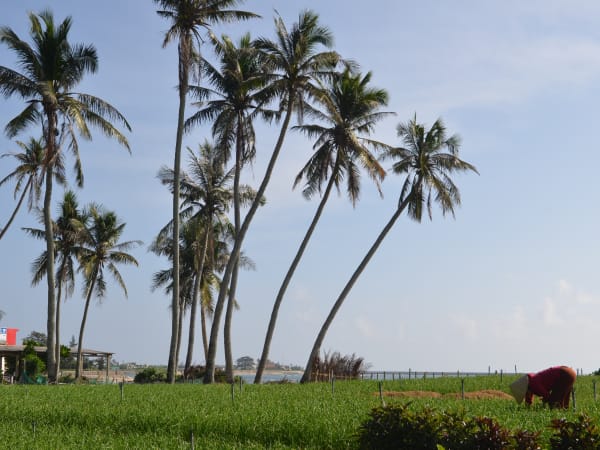
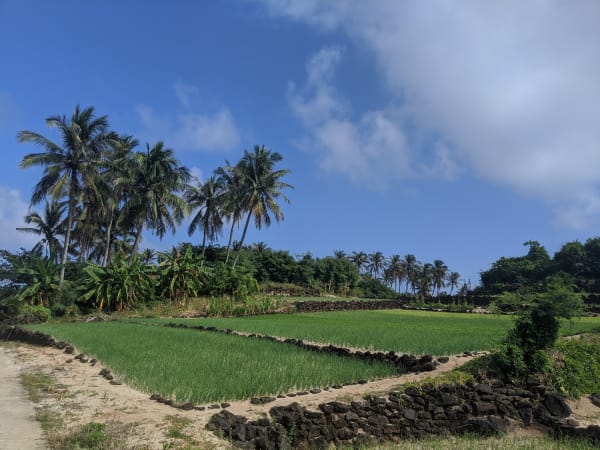
The fields are small family plots worked individually, interspersed with the island's residential areas and coconut and areca palm groves. During harvest season (Feb - Mar), farmers are active in the fields from early morning, cutting and bundling garlic before the midday heat. Dried garlic bulbs spread across every available flat surface give the island a distinctive visual and aromatic quality that is unlike anywhere else in Vietnam. The rows of dark volcanic soil against green plants against open sea make for strong photography at any time of day, from any direction. Outside the growing season (roughly April to August), the fields are bare or being prepared for the September planting.

🧳 Tips

The garlic fields are not a destination on their own but an atmospheric layer woven through the whole island experience - you encounter them constantly while visiting other sites. The best standalone views are from Núi Thới Lới, where the summit puts the entire field patchwork in context with the sea surrounding the island. If visiting during harvest season, the morning market near the ferry port is worth a stop to see fresh-harvested garlic and to buy dried stock to take home. Respect the crops - stay on paths between plots and do not walk through or damage the rows.

Based on real traveler experiences and commonly mentioned advice from multiple visitors.

Feb - Mar for harvest season - the most photogenic window with drying garlic and active farming
Nov - Jan for young green fields and fewer tourists
Climb Núi Thới Lới or Núi Giếng Tiền for the best elevated view over the full field patchwork
Buy dried Lý Sơn garlic (tỏi khô) at the ferry market - best souvenir from the island
Stay on paths between plots - active family farmland
Garlic fields are visible almost everywhere on both Đảo Lớn and Đảo Bé - you don't need to hunt for them. On Đảo Bé, the fields start right at the ferry pier.
Feb - Mar is peak season: the garlic is fully grown, farmers are harvesting, and dried garlic bulbs are spread out to cure everywhere. The whole island smells of it.
Nov - Jan is the quieter window: young green shoots cover the dark volcanic soil, tall areca palms line the field edges, and the island is less crowded than harvest season.
Two ways to see the fields: ride along the road with fields stretching on both sides, or climb to any high point (Núi Thới Lới, Núi Giếng Tiền) and look down over the patchwork from above.
The light changes the fields dramatically throughout the day - morning dew makes everything fresh and cool; midday sun turns the rows gold; at sunset the whole field shifts to warm orange and red.
Garlic is planted in September and harvested in February to March - if you visit in planting season you can watch farmers working the volcanic soil.
Walk between the rows slowly - the faint smell of garlic drifts in the sea breeze, and farmers are usually happy to talk about the growing process.
Dried Lý Sơn garlic (tỏi khô) is one of the island's best souvenirs - smaller and more pungent than mainland garlic, sold at the market near the ferry port and at stalls throughout both islands.
Stay on the paths between plots - these are active family farms, not a tourist installation.

Common questions from travelers who've visited this place.

When is the best time to visit the Lý Sơn garlic fields?
Two good windows: February to March for harvest season - garlic fully grown, drying scenes everywhere, active farming atmosphere. November to January for young green shoots against dark volcanic soil - quieter, less crowded, still beautiful. Avoid April to August when the fields are bare after harvest.
Are the garlic fields on Đảo Lớn or Đảo Bé?
Both. Fields cover the flat land across both islands. On Đảo Bé, the fields are visible immediately from the ferry pier. On Đảo Lớn, they're most concentrated in the An Hải area but visible throughout the island.
What makes Lý Sơn garlic special?
The soil - a combination of volcanic ash and white sand unique to the island. This gives Lý Sơn's purple garlic a stronger, more pungent flavour than mainland garlic. The island's reputation as 'Vương Quốc Tỏi' (Kingdom of Garlic) is built on this soil chemistry and the farming tradition that has developed around it.
Can I participate in the harvest?
Informally yes - farmers are generally welcoming if you approach respectfully. The harvest runs February to March; early morning is when most activity happens before the heat builds. Walking between the rows and chatting with farmers is part of the experience. Do not walk through crops or pick anything without being invited.
Where is the best viewpoint over the garlic fields?
Núi Thới Lới summit on Đảo Lớn gives the widest overview - the full patchwork of fields with the sea surrounding the island. Núi Giếng Tiền is a closer alternative. On Đảo Bé, the pier itself offers a straight-on view of the fields as you arrive by boat.

Explore more things to do like this around Vietnam

Explore more
ly son - Full Guide
View destination guide →