Overview
Things to Know
Gallery




About This Place
What Makes Mạc Dynasty Citadel Special
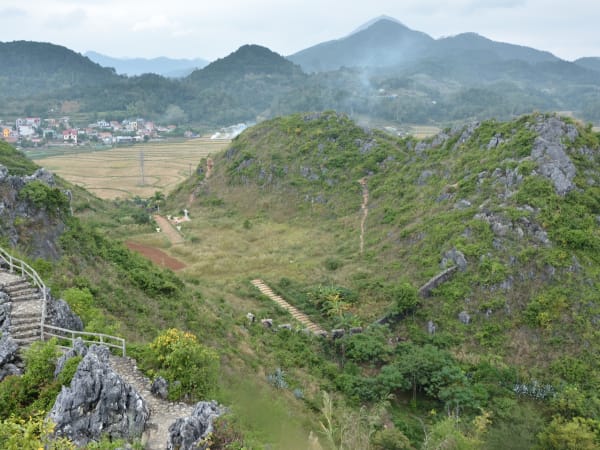
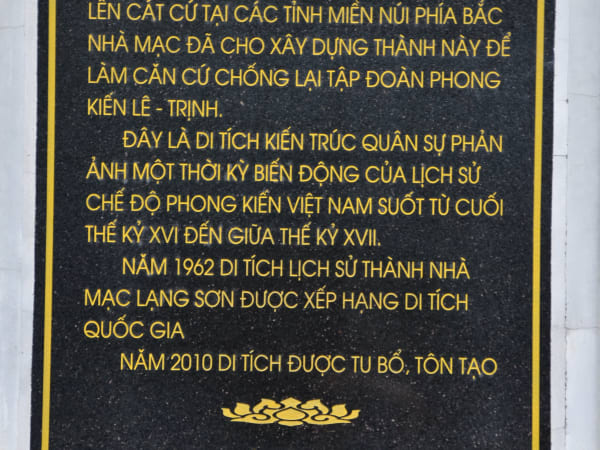
The Mạc Dynasty Citadel (Thành Nhà Mạc) sits on the hillside above Tam Thanh ward, built between the 16th and mid-17th centuries as the Mạc lords extended their northern stronghold following their retreat from Thăng Long. The fortification was constructed against three mountains - Tô Thị, Lô Cốt, and Mạc Kính Cung - using large stone blocks bonded with sugarcane and honey, a technique that has held for four centuries. Walls stand 4 meters high with loopholes and gated entrances still intact. Designated a National Special Relic in 2013, the citadel is one of the few surviving examples of feudal military architecture in northern Vietnam and the most accessible historical site in Lạng Sơn city.
How to Get There
Getting There
Lạng Sơn city is approximately 150km from Hanoi, reachable by train or bus in around 3 hours. From the city center, the citadel in Tam Thanh ward is under 2km - easily reached by motorbike taxi or a short ride along Tam Thanh road. The site is walkable from the city center for those who prefer it.
What to Expect
On the Ground
The visit involves climbing around 100 stone steps up the mountainside to reach the main citadel structures. At the top, the preserved stone walls, gate foundations, and loopholes give a clear picture of the original defensive layout. The practical reward for the climb is a panoramic view over Lạng Sơn city and the surrounding limestone hills. Allow 1-2 hours including the ascent, time at the top, and descent. The site is maintained but not heavily interpreted - a basic knowledge of the Mạc dynasty adds considerably to the visit.
Travel Tips
Tips
The citadel sits in the same area as Tam Thanh Cave and Nhị Thanh Cave, making it a natural half-day circuit through Tam Thanh ward. Most visitors to Lạng Sơn focus on the caves and the Kỳ Lừa market, leaving the citadel relatively quiet - an advantage for those who want to move at their own pace. The steps are manageable but uneven; take them slowly on the descent.
Insider Tips
Based on real traveler experiences and commonly mentioned advice from multiple visitors.
FAQ
Common questions from travelers who've visited this place.
How long does it take to hike all the peaks?›
Do I need a guide or tour to visit?›
What are weather conditions like for visiting?›
Nearby Locations
Explore more things to do like this around Vietnam