Menu
DestinationsLocationsBlogMapAbout
📍 nature · sapa

Muong Hoa Valley

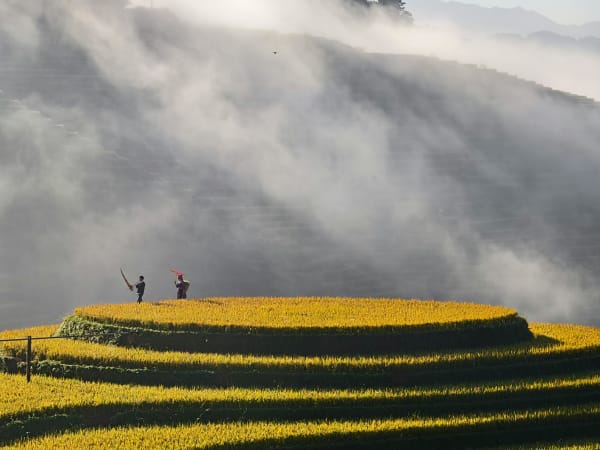
Muong Hoa Valley - Sa Pa's most iconic trekking corridor - stretches 15km through Vietnam's largest rice terrace system (2,200+ hectares), H'Mông and Giáy villages, and the 3,000-year-old Ancient Rock Field. 8-10km from Sa Pa town, changes colour with every season.

🌾 Rice Terraces🥾 Trekking📸 Photography🏡 Homestay
🧭 Get Directions
Best Time to Visit
📅 Late Aug - mid Sep (golden harvest, peak season). Mar - May (flooded mirror terraces). Dec - Feb for winter mist and occasional snow.
Entry Fee
🎟️ 150,000 VND adults / 100,000 VND children 6-12 / Free under 6
Opening Hours
🕐 Open daily. Best light: 6:30 - 7:30 AM (fog lifting off terraces).
Address
📌 Hậu Thào – Tả Van – Lao Chải, Sa Pa, Lào Cai
👥Crowds
Peak season late Aug-Sep brings significant crowds, especially weekends. Tả Van and Lao Chải are quieter than the trailheads. Overnight stays give access to the valley before day visitors arrive.
🥾Difficulty
Moderate - relatively flat valley floor, some climbing between villages. Slippery and muddy in wet season (Jun-Jul especially). Good trekking shoes essential.
⚠️Safety
Trails have no signs in places - a local guide is helpful for first-timers. Wet season trails are genuinely slippery. Ask permission before photographing villagers.
🚶Accessibility
Ticket checkpoint: 150,000 VND adults, 100,000 VND children 6-12, free under 6. Motorbike, xe ôm, or mountain train from Sa Pa. Not suitable for wheelchairs or strollers.
🌤️Seasonal
Late Aug-mid Sep: golden harvest - peak season, most photogenic, book early. Mar-May: flooded terraces, mirror reflections. Jun-Jul: heavy rain, muddy trails - avoid. Dec-Feb: winter mist, possible frost/snow.

What Makes Muong Hoa Valley Special

Muong Hoa Valley is Sa Pa's most iconic landscape - a 15km corridor of terraced rice fields stretching from Sa Pa town to Bản Hồ, home to Vietnam's largest terrace system covering over 2,200 hectares. Recognised by the Vietnam Guinness Book of Records, the valley is home to four ethnic groups - Black H'Mông, Red Dao, Giáy, and Tày - each with distinct textiles, architecture, and customs visible in the villages along the route. The valley changes completely with the seasons: flooded silver terraces reflecting the sky in March to May, lush green through summer, gold during harvest in late August to September, and misty bare fields under occasional frost or snow in winter. Running through everything is the 15km Muong Hoa Stream, fed by 22 mountain streams, passing through every village from the highland edge to the valley floor. Near Hậu Thào, the Ancient Rock Field - nearly 200 carved megalithic stones believed to date back thousands of years - adds an archaeological dimension that most visitors overlook entirely.

🚗 Getting There

Muong Hoa Valley starts 8-10km southeast of Sa Pa town centre, along Provincial Road 152 toward Lao Chải and Tả Van. There is a ticket checkpoint before the valley villages. From Sa Pa: motorbike rental (100,000-150,000 VND/day), xe ôm (~12,000 VND/km), or trek on foot (1.5-2 hours to Lao Chải). Mountain train (tàu hỏa leo núi Mường Hoa) runs 6 minutes with panoramic valley views, 180,000 VND return. From Hanoi to Sa Pa: limousine bus 5-6 hours (300,000-800,000 VND), or overnight train to Lào Cai then bus/taxi to Sa Pa (total ~8 hours).

👀 On the Ground

The main trekking route passes through Cat Cat, Y Linh Ho, Lao Chải, and Tả Van. Lao Chải is predominantly Black H'Mông with the famous bamboo bridge across the stream. Tả Van is Giáy, quieter, with the most homestay options. The Ancient Rock Field near Hậu Thào contains nearly 200 carved stones believed to be thousands of years old - a national monument and one of Vietnam's most mysterious archaeological sites. The valley floor is relatively flat for walking; trails between villages involve some climbing. Weather and season define the experience: flooded terraces in spring, green in summer, gold in harvest season, misty in winter. Avoid June-July peak rain when trails become slippery and muddy.

🧳 Tips

The valley is best experienced over two days rather than a rushed day trip. Stay overnight in a Tả Van or Lao Chải homestay, have dinner with a local family, and wake up to the valley empty of day visitors. The morning light on the terraces from a homestay balcony is one of the most memorable scenes in northern Vietnam. If limited to one day, prioritise the Lao Chải to Tả Van section - most varied and least crowded. Check weather forecasts before visiting. Bring a windproof jacket regardless of season - valley temperatures drop significantly in the morning and evening.

Based on real traveler experiences and commonly mentioned advice from multiple visitors.

Late Aug-Sep for golden harvest; book homestays 2 weeks ahead
Stay overnight in Tả Van or Lao Chải - morning valley before day visitors is the best version
Don't skip the Ancient Rock Field near Hậu Thào - most visitors do
6:30-7:30 AM for fog lifting off the terraces
Good trekking shoes essential - terrain is consistently uneven
Late August to mid-September is the golden harvest window - the entire valley turns gold. Book homestays in Tả Van or Lao Chải at least 2 weeks ahead for this period.
Four seasonal faces: Mar-May (flooded terraces reflecting sky like mirrors), Jun-Aug (lush green), late Aug-Sep (golden harvest), Dec-Feb (winter mist and occasional frost or snow).
Avoid June-July heavy rain season - trails become slippery and muddy, making trekking difficult and less enjoyable.
Trek from Cat Cat → Lao Chải → Tả Van for the classic full-valley route (about 10km, 4-5 hours with stops). The Lao Chải to Tả Van section is the most scenic and least crowded.
The Ancient Rock Field (Bãi Đá Cổ Mường Hoa) near Hậu Thào is often skipped - don't. Nearly 200 carved megalithic stones dating back thousands of years, recognised as a national monument.
Muong Hoa Stream runs 15km through the valley past every village. The bamboo bridge section near Tả Van is the most photogenic.
Early morning fog lifting off the terraces is the signature Sa Pa shot - be in position by 6:30-7:30 AM.
Overnight in Tả Van or Lao Chải homestay to experience the valley before day visitors arrive. Waking up on a homestay balcony with the terraces below is one of the most memorable scenes in northern Vietnam.
Getting there from Sa Pa town (8-10km): motorbike rental 100,000-150,000 VND/day, xe ôm ~12,000 VND/km, or trek down on foot (1.5-2 hours to Lao Chải). Mountain train (tàu hỏa leo núi Mường Hoa): 6 minutes, 180,000 VND return, good for aerial overview.
Ticket checkpoint before the valley villages: 150,000 VND adults, 100,000 VND children 6-12, free under 6.
Café Sailing Sa Pa is a popular stop with valley views - good for sunrise or sunset watching.
Dress modestly and ask permission before photographing villagers. Respect local customs in the ethnic minority villages.
Good trekking shoes are essential - terrain is muddy and slippery in wet season, uneven throughout.

Common questions from travelers who've visited this place.

When is the best time to visit Muong Hoa Valley?
Late August to mid-September for golden harvest - the whole valley turns gold and this is peak season. March to May for flooded terraces that reflect the sky like mirrors. December to February for misty winter atmosphere and occasional frost or snow. Avoid June-July heavy rain when trails are slippery and muddy.
How long does the trek take?
The classic Cat Cat to Tả Van route covers about 10km and takes 4-5 hours with stops. The Lao Chải to Tả Van section alone is 2-3 hours. A full 15km valley traverse is a full day. Many visitors combine trekking one way with motorbike or xe ôm transport the other.
Is a guide necessary?
Not essential but helpful for first-timers - the trail has unmarked junctions and a local guide adds cultural context to the H'Mông and Giáy villages. Guides also help navigate vendor interactions in the busier sections. For experienced trekkers with good navigation, the main route is manageable independently.
What is the Ancient Rock Field?
Bãi Đá Cổ Mường Hoa - a field of nearly 200 carved megalithic stones near Hậu Thào with mysterious engravings believed to be thousands of years old. Recognised as a Vietnamese national monument. Often skipped by day visitors but worth the stop - one of the most unusual archaeological sites in the northern highlands.
Explore more
sapa - Full Guide
View destination guide →