Overview
Things to Know
Gallery




About This Place
What Makes Ben Thanh Market Special
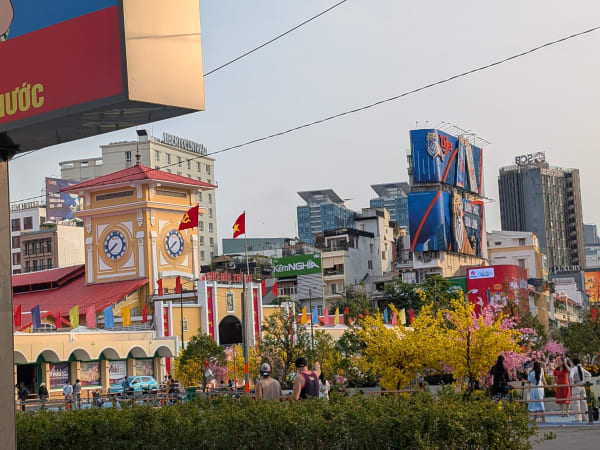
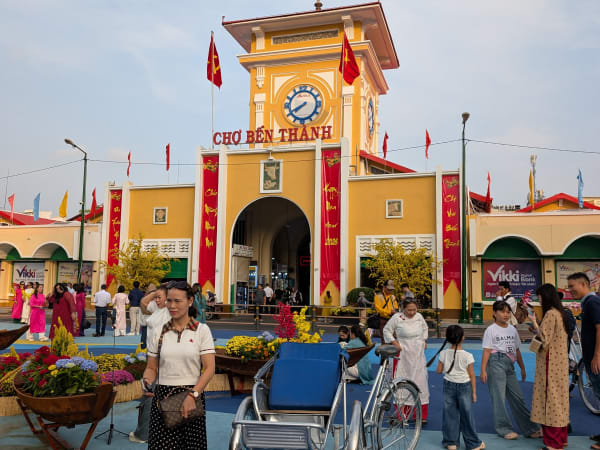
Ben Thanh Market has occupied its current site at the centre of District 1 since 1914. The market's name dates back much further, to 1788-1790, when Nguyễn Vương (later Emperor Gia Long) built the Bát Quái citadel after retaking Gia Định from Tây Sơn forces - a riverside dock (bến) near the citadel (thành) served soldiers and visitors, and a market that grew up beside it took the name 'Chợ Bến Thành' (Dock-Before-the-Citadel Market). That original market burned down when French and Spanish forces attacked Gia Định in 1859 and was rebuilt nearby; by 1911 the rebuilt structure had become structurally unsound, and French authorities relocated it again to its current site, filling in a swamp called Ao Bồ Rệt. The current building - a large covered hall with a central clocktower entrance that has become the primary visual symbol of Ho Chi Minh City - was built by French contractor Brossard et Maupin from 1912 to 1914, opening with a three-day festival (28-30 March 1914) called 'Tân Vương Hội' that drew over 100,000 visitors. It covers approximately 13,000-13,056 square metres and houses hundreds of stalls selling food, clothing, textiles, souvenirs, and household goods. A 1952 renovation added 12 ceramic relief panels by the Biên Hòa workshop at the four gates, and a major restoration took place in 1985. The market functions simultaneously as a working local market and one of the most visited tourist destinations in southern Vietnam - though many Vietnamese now half-joke that it's 'only for foreigners', since locals tend to shop elsewhere for better prices. Yet almost everyone in Ho Chi Minh City still uses the clocktower as a landmark when giving directions - proof that the market's role as an orientation point has outlasted its role as a place locals actually shop. The surrounding traffic roundabout and the adjacent Ben Thanh metro station (terminus of HCMC's first metro line) have made the market's clocktower the default orientation landmark for central District 1.
How to Get There
Getting There
Ben Thanh Market is located at the heart of District 1, at the intersection of Lê Lợi, Trần Hưng Đạo, and Lê Lai streets. It is visible from most points in central District 1 and within walking distance of the majority of hotels in the area. The Ben Thanh metro station (Line 1) is immediately adjacent. From Bùi Viện street, the market is a 10-minute walk north. By bus, numerous routes (01, 02, 03, 04, 18, 19, 28, 36, 45, 52, 53, 56, 65, 93, 109, 152, and others) serve the area for around 6,000 VND. By motorbike, car, or ride-hailing app (Grab, Gojek, Be), the location is easy to find via GPS, with paid parking available nearby.
What to Expect
On the Ground
The market interior is divided by gate and section: food and produce toward the interior, clothing and textiles around the perimeter, souvenirs and handicrafts concentrated near the main tourist entrances. Each of the four cardinal gates specializes differently - East for cosmetics and sweets, West for shoes and handicrafts, South (the iconic clocktower entrance) for dry goods and textiles, North for flowers and fruit. The food section is the most authentic part of the market - fresh produce, dried goods, and a cluster of food stalls serving cooked Vietnamese dishes from multiple regions, including some long-running stalls with 50+ years of history. The souvenir and clothing sections are heavily oriented toward tourist trade, with English commonly spoken by vendors. The outside perimeter hosts additional stalls and, from around 6 PM, a livelier night market with street food, grilled dishes, seafood, and beer that many visitors prefer to the interior.
Travel Tips
Tips
Ben Thanh Market is worth visiting once for orientation and atmosphere even if serious shopping isn't the goal - the building itself, the clocktower, and the energy of a large covered market are interesting independently of whether anything is purchased. For buying souvenirs, the market is convenient but not the best value in the city - the same lacquerware, silk items, and coffee that sell here are available for less at wholesale areas near Bình Tây Market in Chợ Lớn, or from street vendors elsewhere. The food stalls inside are consistently good value and represent one of the most straightforward ways to sample a range of Vietnamese regional dishes in one place. Combine with nearby District 1 landmarks - Independence Palace, Notre-Dame Cathedral, the War Remnants Museum, and Nguyễn Huệ walking street are all within easy reach.
Insider Tips
Based on real traveler experiences and commonly mentioned advice from multiple visitors.
FAQ
Common questions from travelers who've visited this place.
Is Ben Thanh Market a tourist trap?›
What should I buy at Ben Thanh Market?›
Ben Thanh Market vs Bình Tây Market - what's the difference?›
Is Ben Thanh Market cash only, or can I pay by card?›
Where does the name 'Ben Thanh' come from?›
When was the current Ben Thanh Market building built?›
Do locals still shop at Ben Thanh Market?›
What's the difference between the day market and night market?›
Nearby Locations
Explore more things to do like this around Vietnam