Overview
Things to Know
Gallery




About This Place
What Makes Kho Muong Cave Special
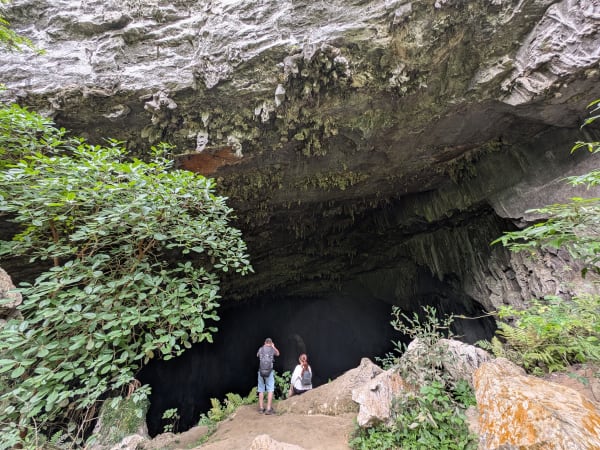
Kho Muong Cave - known locally as Hang Dơi ('Bat Cave') as often as by its village name, Hang Kho Mường - sits at the head of the closed valley that holds Kho Muong Village in Pù Luông Nature Reserve, roughly 130km from Thanh Hóa city and about 2km from the village itself. Important update: as of September 2026, the Pù Luông Nature Reserve management has formally requested that local authorities suspend organised tourist access to the cave, citing rockfall danger, and has noted that the fee collection run by the Kho Mường community was never officially licensed. Treat any information here about visiting the cave as provisional until you've confirmed the current status - this section is preserved for reference, but the situation may have changed by the time you're planning a trip. Even setting the 2026 suspension aside, the cave's lower sections have loose, bare rock with no netting or reinforcement, so rockfall is a standing risk here rather than a problem specific to this one incident - worth keeping in mind whenever the cave is open. Geologically, the cave formed in limestone roughly 250 million years ago, part of the ancient karst system of the Phu Kho Muong mountain range - among the oldest formations in the reserve. The entrance is a wide arch, reported at just over 10 metres high, dropping into darkness below. Stone steps take you about a third of the way down; after that it's bare rock, and from around the halfway point it's close to completely dark. At the bottom is an inner chamber with the sound of running water somewhere beyond. The full cave extends roughly 2.5km heading north and connects to an underground river system that channels water from Kho Muong through to Pốn Village in Lũng Cao commune. At least four bat species have been recorded living in the upper roof.
How to Get There
Getting There
The cave is in Kho Muong Village, Thành Sơn commune, about 130km from Thanh Hóa city. The road in from the main Pù Luông route is the steepest in the reserve - take a manual (số) motorbike if you can manage it (150,000 VND/day rental), not an automatic. If the gradient isn't something you want to deal with, hire a driver for around 400,000 VND/day. From the village, the cave entrance is roughly 2km, a walk uphill through farmland and rice terraces. Given the current access situation flagged above, confirm locally whether the route and cave are open before setting out.
What to Expect
On the Ground
Under normal (pre-suspension) circumstances: the entrance arch is large enough to feel exposed before you even start descending. Stone steps take you about a third of the way in - manageable and reasonably well-worn. After the steps, the path becomes bare rock. Around the halfway point the last natural light from the entrance fades and you're navigating by torch. The floor is uneven with loose rock and damp sections in the lower half - the same loose rock that has prompted the reserve management's current rockfall concerns, and a standing feature of the cave rather than something a reopening will have fixed. At the bottom, an inner chamber opens up with the sound of running water audible from somewhere further in. The passage appears to dead-end but the cave continues - finding the way through in near-total darkness is part of the experience. The accessible section takes around 1 hour at a relaxed pace.
Travel Tips
Tips
Given the current safety flag on this cave, the most important travel tip is simply to verify its status before making the trip - ask at your homestay in Pù Luông, check recent local news, or contact the reserve management directly. If and when visits resume, the cave rewards visitors who come prepared and penalises those who don't: a phone torch is genuinely not enough for the lower sections, bring a headlamp or a dedicated flashlight. The cave is self-guided and has no infrastructure below the steps, which is most of what makes it worth doing - though this same lack of infrastructure is also the source of the standing rockfall risk, not just a 2026-specific issue. Afternoon visits work best for photography: the light through the entrance arch creates a strong shot looking upward from the bottom. Pair the cave with an overnight in Kho Muong Village if it reopens - the road in is the main barrier, and once you're there the cave is the obvious reason to stay.
Insider Tips
Based on real traveler experiences and commonly mentioned advice from multiple visitors.
FAQ
Common questions from travelers who've visited this place.
Is this cave currently open to visitors?›
Is the rockfall risk something that gets fixed once the cave reopens?›
Will I actually see bats?›
How do I get there?›
Nearby Locations
Explore more things to do like this around Vietnam