Menu
Destinations→Locations→Blog→Map→About→
Village · pu luong

Kho Muong Village

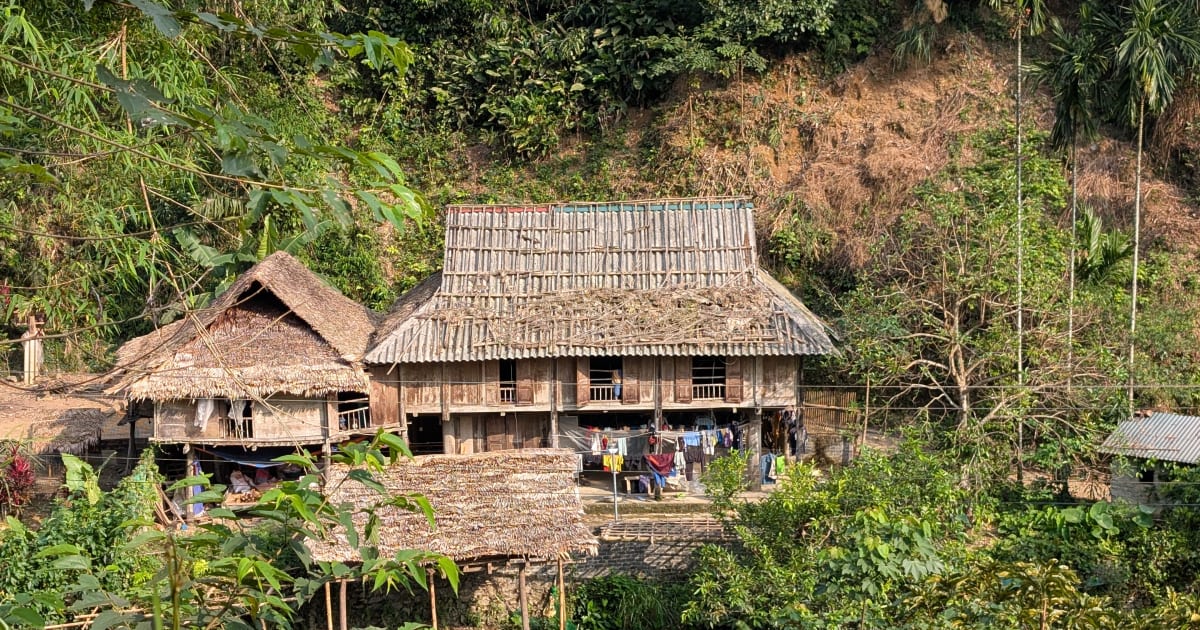
Kho Muong Village (Bản Kho Mường) is the most remote Thai village inside Pù Luông Nature Reserve - a small settlement at the bottom of a narrow karst valley, accessed by a steep mountain road, with traditional family-run homestays and the entrance to Kho Muong Cave at the valley head.

Remote Valley · Thai Stilt Houses · Rice Terraces · Cave Access · Thái (Tai) Culture

Kho Muong Village
Best months
Best time of day
Roughly 6-9 AM shows the village at its best, while 3-4 PM is the recommended window specifically for visiting Hang Dơi (Kho Muong Cave)
Entry fee
Free
Opening hours
Open 24/7
Address
Thành Sơn, Bá Thước, Thanh Hóa
Crowds
Genuinely quiet - far fewer visitors than Don Village or Hieu Village, thanks largely to the demanding access road
Difficulty
The access road itself is the main challenge - steep, narrow, and switchback-heavy; walking within the village is easy and flat
Accessibility
Best reached by 4WD transfer or confident motorbike riding; a guided 4-5 hour trek in from Don Village is an alternative for hikers
Seasonal
Rice terraces are green in late May-early June and golden at harvest in late September-early October, matching the wider Pù Luông rice calendar

What Makes Kho Muong Village Special

Kho Muong Village (Bản Kho Mường), also known as Hua Mường, is a small Thai village in Thành Sơn commune, hidden at the bottom of a narrow karst valley on the western side of Pù Luông Nature Reserve, roughly 130km (about 3 hours) from Thanh Hóa city. In the Thai language, 'Kho' means root or origin and 'Mường' means village - fitting, since local history holds that around 300 years ago, hunters from Lũng Cao commune came across this flat, water-rich valley while hunting in the surrounding hills and decided to settle and farm here, making it the founding village of the area.

A Remote Thai Village

It is widely considered the most remote and least developed of the main villages inside the reserve, reached by a steep, twisting mountain road that descends sharply into the valley floor. Around 60 households and 225 people, mostly White Thai farmers, live in traditional stilt houses arranged along the valley bottom, with rice terraces stepping up toward the surrounding limestone walls.

The village sits directly beneath the mouth of Kho Muong Cave (also known locally as Hang Dơi, or Bat Cave), a large karst cave that gives the valley its closed, basin-like character.

Homestays and Why Visit

Tourism here is small in scale and largely centred on a handful of family homestays - there are no retreats, no large lodges, and no infrastructure beyond what the village itself uses. For travellers who specifically want to experience Pù Luông without the photography crowds of Don Village, Kho Muong Village is the standard recommendation.

How to Get to Kho Muong Village

By Road

Kho Muong Village is approximately 12km from Don Village, but the road takes around 45 minutes due to its steep gradient and switchbacks. From Cành Nàng town (the Bá Thước district centre), the route heads northwest around the base of the mountains for roughly 30km. The drive is genuinely demanding - one of the steepest sections in the reserve, with a cliff face on one side and a deep valley drop on the other.

Most travellers arrange a 4WD or xe ôm transfer through their homestay; if self-driving, rent a manual/semi-automatic motorbike rather than a scooter given the terrain (around 200,000 VND/day) and only attempt it with confidence on steep, narrow surfaces. From Phố Đoàn the distance is around 20km.

On Foot

Some hikers walk in from Don Village over a 4 to 5 hour mountain trail with a local guide, which is the most rewarding way to arrive but should not be attempted without a guide. A separate, easier option is a short village walk starting from QL15C (also marked CT02), following local paths about 3km into Kho Muong - a gentle, 40-minute to 1-hour walk suited to anyone wanting a slower, low-effort way to see the valley.

What to Expect at Kho Muong Village

The village is genuinely small and a single afternoon is enough to walk its full length. The valley floor is given to rice farming, with terraces stepping up the slopes and water buffalo grazing between paddies. Homestay life is the main cultural experience - shared meals, rice wine, and conversations with Thai families who have lived here across generations.

The Cave and Trekking Routes

The cave (Kho Muong Cave) is at the valley head, a 15-minute walk from the village core, and is the natural day-trip from any homestay. Trekking routes lead from Kho Muong Village to other villages including Don Village and Bản Pồn - a 1 to 2 day guided trek is one of the more rewarding ways to see the inner reserve, and this trekking-hub role is one of the things Kho Muong is best known for locally. Outside of these activities the rhythm is genuinely slow and the village is quiet from sunset onward.

Travel Tips for Kho Muong Village

Kho Muong Village is the recommended counterpoint to Don Village for travellers staying multiple nights in Pù Luông - one night in Don Village for the wide rice bowl and easy access, one night in Kho Muong Village for the remoteness and quieter homestay scale. The village is not a good fit for travellers who need reliable internet, charging-heavy equipment, or rapid logistics.

Expect 24/7 access to nature and limited access to comfort. The road in is the single largest filter for visitors and keeps the village protected by default - this is also its main appeal.

Based on real traveler experiences and commonly mentioned advice from multiple visitors.

  • Book your homestay in advance, since options are limited to a handful of family-run houses
  • Arrange the Kho Muong Cave visit through your homestay - it's usually included as a guided walk for overnight guests
  • Bring enough cash for your whole stay, since there are no ATMs and homestays don't take cards
  • Time needed: 45-90 minutes to walk through the village itself, though an overnight homestay is strongly recommended over a same-day visit to get the most out of it
  • The road into Kho Muong Village is the steepest in Pù Luông - confident motorbike riders only, or arrange a 4WD transfer through your homestay
  • Stay overnight rather than visit as a day trip - the valley is quiet, the homestays are family-scale, and the early morning mist on the rice fields is the main draw
  • Kho Muong Cave is a 15-minute walk from the village and is included in most homestay overnight stays as a guided visit
  • The village is significantly less developed than Don Village or Hieu Village - expect basic amenities, intermittent electricity, and no cafes or shops outside homestays
  • Named homestays in the village include Nhà Bác Nêch (Mr. Nech's), Nhà Anh Nam (also known as Lò Văn Nam's), and Homestay Quân Huyền - dorm-style beds typically run around 50,000 VND/person/night, with meals arranged separately
  • Bring cash from Phố Đoàn - there are no ATMs and homestays accept cash only
  • Phố Đoàn market, a hill-tribe market with local produce and goods, runs only on Thursday and Sunday mornings - time your visit around one of these days if you want to see it
  • For a gentler alternative to the full drive-in, a signed walking route starts from QL15C (marked CT02) and follows village paths about 3km into Kho Muong - a relaxed 40-minute to 1-hour walk through rice terraces, streams, and limestone scenery, suited to those who'd rather not tackle the steep road. Bring 1-1.5L of water per person, though snacks and drinks can also be bought in the village itself; a tracklog helps avoid wrong turns onto small local paths
  • The valley has a noticeably moderated microclimate - cooler than the surrounding lowlands in summer and milder in winter

Common questions from travelers who've visited this place.

How do I get to Kho Muong Village?
By 4WD or motorbike via a steep 45-minute mountain road from Don Village (about 12km), or by a guided 4-5 hour trek on foot. The road is the steepest in the Pù Luông reserve, so many travellers arrange a transfer through their homestay rather than self-driving.
Is it better to visit for the day or stay overnight?
Overnight is strongly recommended. The village itself only takes an afternoon to see, but the homestay experience, the early morning mist over the rice terraces, and the guided cave visit are the main reasons to come, and they're best experienced by staying the night.
What facilities are available?
Very basic - a handful of family homestays with shared meals, intermittent electricity, and no cafes, shops, or ATMs outside of what the homestays themselves provide. Bring cash from Phố Đoàn.

Explore more things to do like this around Vietnam

Explore more

pu luong - Full Guide

View destination guide →