Menu
DestinationsLocationsBlogMapAbout
📍 nature · attraction

Mũi Điện (Cape Varella)

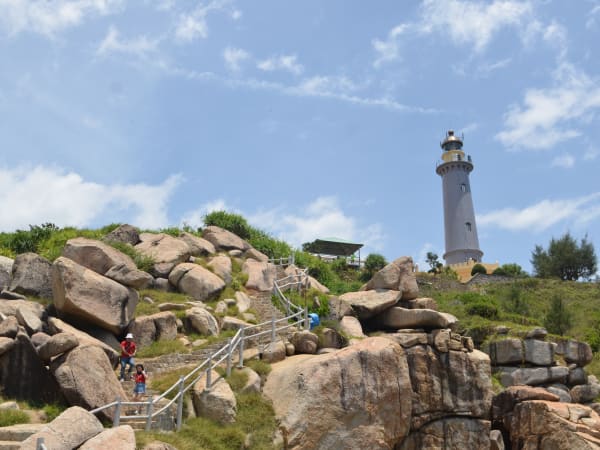
Mũi Điện (Cape Varella) in Phú Yên is a dramatic 110-metre headland crowned by a working lighthouse - traditionally regarded as the easternmost accessible point of mainland Vietnam, and one of the first places on the country's coastline to receive sunrise.

🏮 Lighthouse🌅 First Sunrise🌊 Easternmost Cape📸 Photography
🧭 Get Directions
Best Time to Visit
📅 Apr - Sep (warm sunny weather, sea breeze, best for lighthouse and swimming)
Entry Fee
🎟️ 30,000 VND
Opening Hours
🕐 Morning: 7:30 - 11:30. Afternoon: 13:30 - 17:00.
Address
📌 Mũi Điện, Đại Lãnh, Vạn Ninh, Phú Yên
🥾Difficulty
Walk of about 1.5km uphill to the lighthouse with some steep sections. Motorbike taxi available at base (~50,000 VND/trip). Rocky cliff areas near viewpoints require care.
⚠️Safety
Hot and exposed with no shade on the upper sections - hat and sunscreen essential. Watch footing near cliff edges when photographing. The path can be slippery after rain.
🚶Accessibility
Motorbike to the base, then 1.5km walk uphill to the lighthouse. Motorbike taxi available for ~50,000 VND per trip. Lighthouse open 7:30-11:30 and 13:30-17:00 - closed midday.
🌤️Seasonal
Jan-Aug dry season gives the clearest conditions. Best light: early morning for sunrise and the first hour after. Afternoon for sunset from the cape.

What Makes Mũi Điện (Cape Varella) Special

Mũi Điện, known historically as Cape Varella after the Portuguese name given by early maritime navigators, is a bold headland rising 110 metres above the East Sea at the northeastern corner of Phú Yên province. A working lighthouse has stood here since the French colonial period, and the cape remains an active navigation point for shipping moving along Vietnam's central coast. Mũi Điện is traditionally described as the easternmost point of mainland Vietnam - a title that modern geographic surveys now assign to Mũi Đôi in Khánh Hòa - but what it offers is what Mũi Đôi cannot: a fully accessible cape by road, with panoramic sea views, a lighthouse with a history, and the adjacent Bãi Môn beach below. For the Vietnamese long-distance riding community, Mũi Điện remains the standard reference for the eastern extreme - accessible, dramatic, and at the furthest eastern reach of the main coastal highway.

🚗 Getting There

Mũi Điện is reached via the coastal road from Đại Lãnh village, itself on Highway 1 between Nha Trang (60km south) and Tuy Hòa (40km north). From Đại Lãnh, the road to the cape runs 8km through increasingly dramatic coastal scenery before reaching the lighthouse access gate. Motorbike is the standard approach. Đại Lãnh is served by intercity buses on the Nha Trang-Tuy Hòa route.

👀 On the Ground

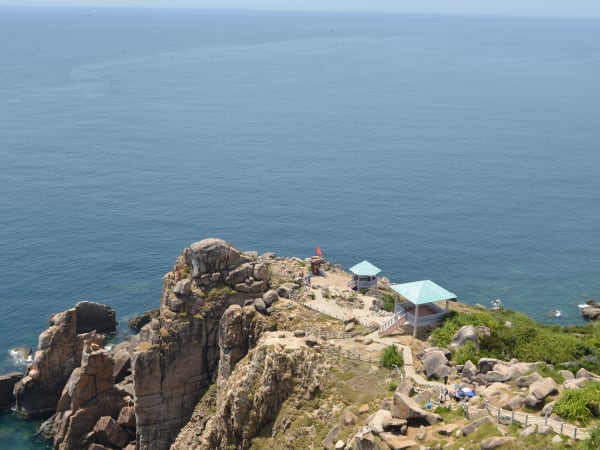
The road to Mũi Điện climbs steadily from Đại Lãnh village along the base of the headland, with the bay visible to the left and the cliffs rising to the right. The lighthouse compound sits at the top of the cape, and walking the surrounding area reveals views north toward the mountains of Phú Yên and south down the coast toward Đại Lãnh and eventually Nha Trang. The sea below the cape is deep and exposed - on windy days the surf against the rock base is considerable. The cape walk takes 30-45 minutes to cover properly, with rest points at the lighthouse and at the various viewpoint spurs. Bãi Môn beach is accessible by a trail descending from near the lighthouse - this hidden beach directly below the cape is the natural complement to the cliff-top experience.

🧳 Tips

Mũi Điện is a natural stop on any coastal motorbike route between Nha Trang and Quy Nhơn or Đà Nẵng. The half-day structure works well: arrive early for sunrise or morning light, walk the cape, descend to Bãi Môn for a swim, and return to Đại Lãnh for lunch before continuing north or south. The fishing village of Đại Lãnh below has some of the freshest and cheapest seafood on this stretch of coast - the local tuna and barracuda caught just offshore are a reason to extend the stop by an afternoon.

Based on real traveler experiences and commonly mentioned advice from multiple visitors.

Leave Tuy Hòa city by 4 AM to catch sunrise at the cape - one of the first points on mainland Vietnam to receive light
Wear proper shoes - uphill walk and rocky cliff areas; sandals are not suitable
Bring hat and sunscreen - no shade on the exposed upper sections
Camping at Bãi Môn beach overnight then climbing up for sunrise is one of the better experiences in Phú Yên
Lighthouse closes midday: open 7:30-11:30 and 13:30-17:00
The lighthouse is still operational - you can walk up to the lighthouse compound and the views from 110m above sea level cover the full arc of coast in both directions
Traditionally regarded as the easternmost point of mainland Vietnam, though modern geographic surveys place that distinction at Mũi Đôi in Khánh Hòa. What Mũi Điện offers that Mũi Đôi cannot: full road access, a historic lighthouse, and the adjacent Bãi Môn beach below
The cape marks the geographic boundary between Phú Yên and Khánh Hòa provinces and the point where Vietnam's coastline turns sharply south - the view from the top makes this visible
To reach the lighthouse you need to walk about 1.5km uphill - allow 20-30 minutes. Motorbike taxis are available at the base for around 50,000 VND per trip if you'd rather not walk.
Wear proper shoes - the walk involves uphill sections and rocky cliff areas. Sandals are not suitable.
It gets hot and sunny with no shade on the exposed sections - bring a hat and sunscreen. Dress light but respectably; this is a national landmark.
For sunrise: leave Tuy Hòa city by 4 AM to arrive in time. The light on the cliffs in the first hour is exceptional.
Camping option: set up at Bãi Môn beach below in the evening, then wake early and climb up to the lighthouse for sunrise. One of the better overnight experiences in Phú Yên.
Watch your footing near the cliff edges when taking photos - the rock faces are dramatic but exposed.
Combine with Bãi Môn beach directly below the cape for a full half-day - beach swimming after the lighthouse visit.
The lighthouse has a midday closure: open 7:30-11:30 AM and 13:30-17:00 PM. Plan around this if you want to enter the compound.

Common questions from travelers who've visited this place.

Is Mũi Điện really the easternmost point of Vietnam?
Traditionally yes - it has long been described as the easternmost point of mainland Vietnam. Modern geographic surveys now place that title at Mũi Đôi in Khánh Hòa. What Mũi Điện offers is the most accessible eastern cape in the country - fully reachable by road, with a working lighthouse and a beach below.
What is the entrance fee?
30,000 VND per adult. Parking fee applies separately.
How do I reach the lighthouse?
Walk the 1.5km uphill path from the gate - about 20-30 minutes with some steep sections. Motorbike taxis are available at the base for around 50,000 VND per trip. Wear proper shoes - rocky sections near the cliff viewpoints require grip.
When is the best time to visit?
April to September for the best weather - warm, sunny, with sea breeze. For sunrise, leave Tuy Hòa city by 4 AM. Note the lighthouse has a midday closure: open 7:30-11:30 AM and 13:30-17:00 PM.

Explore more things to do like this around Vietnam