Menu
ProvincesLocationsExperiencesBlogMap
📍 museum · cultural · heritage · ha noi

Vietnam Museum of Ethnology

The Vietnam Museum of Ethnology in Hanoi documents all 54 officially recognised ethnic groups through indoor galleries and a 2-hectare outdoor village of full-scale reconstructed traditional houses - the most comprehensive ethnology museum in Vietnam, with a water puppet show on weekends.

🏛️ Best Museum in Vietnam🎎 54 Ethnic Groups🌿 Outdoor Village📷 Photography
🧭 Get Directions
Best Time to Visit
📅 Oct - Apr (cool dry season; outdoor exhibits are best explored outside of summer heat and rain)
Entry Fee
🎟️ 40,000 VND adults / free for children under 6. Water puppet show: 50,000 VND extra.
Opening Hours
🕐 Tue - Sun: 8:30 AM - 5:30 PM. Closed Mondays. Hours may vary on public holidays.
Address
📌 Nguyễn Văn Huyên, Cầu Giấy, Hà Nội
👥Crowds
Weekday mornings are quietest. Weekends attract school groups; outdoor section gets crowded. Water puppet show at 11 AM on weekends draws additional visitors.
🥾Difficulty
Easy walking throughout. Outdoor section involves uneven ground between structures. Full visit covers a large area - wear comfortable shoes.
⚠️Safety
No touching displays. No flash photography. No drones or flycams permitted.
🚶Accessibility
Mostly flat and accessible. Some outdoor paths between traditional houses are unpaved.
🌤️Seasonal
Oct-Apr is the most comfortable period for the outdoor section. Summer heat and rain make the outdoor village less pleasant to explore at length.

What Makes Vietnam Museum of Ethnology Special

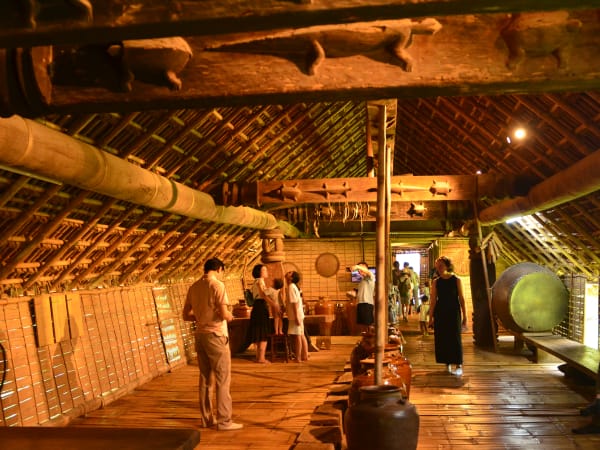
The Vietnam Museum of Ethnology (Bảo Tàng Dân Tộc Học Việt Nam) in Hanoi's Cầu Giấy district is widely regarded as the best museum in Vietnam. Opened in 1997 and developed in partnership with the Musée de l'Homme in Paris, it documents all 54 officially recognised ethnic groups in Vietnam - from the Kinh majority to the smallest highland minority communities. The building was designed by Tày architect Hà Đức Lịnh in a shape referencing the Đông Sơn bronze drum; the interior layout was handled by French architect Véronique Dollfus. The site covers 4.4 hectares total: three indoor buildings and a 2-hectare outdoor garden with 10 full-scale reconstructed traditional dwellings. There are three main areas worth your time: the main ethnology galleries (bronze drum hall, indoor permanent collection), the outdoor house village, and the water puppet performance on weekend mornings. The Southeast Asia building at the outer edge - covering Korean, global, and other cultures - is loosely connected to the main theme and can be skipped.

🚗 Getting There

The museum is in Cầu Giấy district, about 8km west of Hoàn Kiếm Lake. From the Old Quarter, Grab or taxi takes 20-25 minutes depending on traffic. City buses 14, 16, and 45 stop on Nguyễn Văn Huyên street nearby. Cycling from the Old Quarter takes around 35-40 minutes via Đội Cấn and Hoàng Quốc Việt streets.

👀 On the Ground

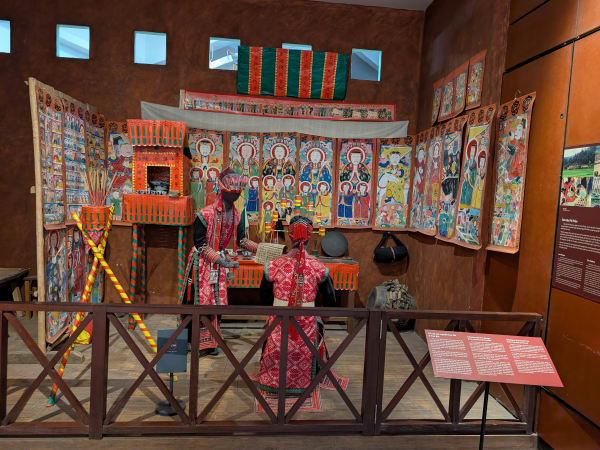
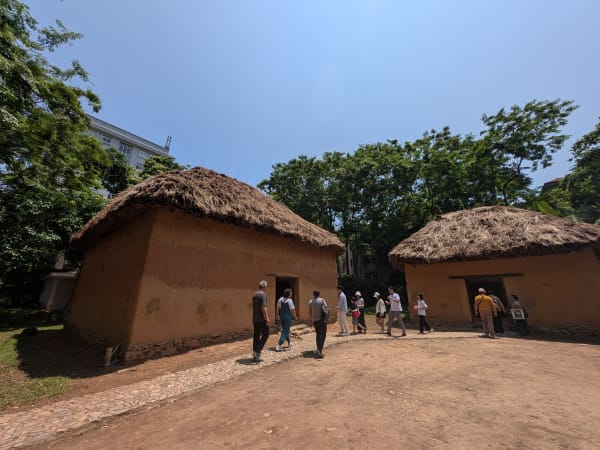
Three main indoor buildings: the permanent ethnology collection covering clothing, tools, musical instruments, ceremonial objects and daily implements across all 54 groups; the bronze drum gallery; and the Southeast Asia building (skippable). The outdoor section has 10 full-scale reconstructed traditional houses - longhouses, stilt houses, communal halls - from groups including the Tày, Việt, Chăm, Ede, Jarai, Bahnar, and Hmong. Several can be entered. The grounds are well-maintained and significantly cooler than the streets outside. One honest note: some individual object labels inside are vague - a knife or drum with no ethnic attribution or context. The broader room narratives are well-written; the item-level labelling is inconsistent. English signage throughout is thorough enough to follow without a guide.

🧳 Tips

The Museum of Ethnology is one of the most worthwhile half-days in Hanoi and is frequently passed over by visitors who stay around the Old Quarter. The documentation on ethnic minority cultures - particularly the highland groups of the north and central highlands - provides context that makes travel to those regions considerably more meaningful. If the itinerary includes Sa Pa, Hà Giang, or the central highlands, this museum before or after those trips is worth the 8km trip out to Cầu Giấy.

Based on real traveler experiences and commonly mentioned advice from multiple visitors.

Prioritise the outdoor traditional house village and the main indoor galleries - budget at least 1 hour each. The Southeast Asia building at the outer edge can be skipped.
If visiting on a weekend, time arrival for the 11 AM water puppet show (50,000 VND extra) - adds 30 minutes and gives context on a Vietnamese tradition most visitors encounter without background.
The museum shop near the exit has authentic ethnic handicrafts and textiles at fair prices - one of the better souvenir options in Hanoi.
Budget your time across three areas before you start: the main indoor gallery (1 hour), the outdoor traditional house village (1 hour), and the water puppet show if you're timing it (30 minutes). Total with everything: about 2.5 hours. The Southeast Asia building at the far end covers Korean and global cultures too - fairly disconnected from the main theme, skip it unless you have specific interest.
The outdoor section - 10 full-scale reconstructed traditional houses from ethnic groups across Vietnam, including longhouses, stilt houses, and communal halls - is the highlight. Spend more time here than the indoor gallery if you have to choose. Several structures can be entered.
The water puppet show runs in the outdoor garden at 11 AM on Saturdays and Sundays - 50,000 VND extra. It's a traditional Vietnamese art form that pre-dates the 10th century. Without context it can feel slow and unclear; with a bit of background it's more interesting. Worth seeing once.
Don't touch the displays - clearly signed but worth reinforcing. No flash photography inside. Drones and flycams not permitted.
One genuine weakness: some of the object labels inside are vague - 'knife' or 'drum' with no ethnic group, no function, no context. Don't expect every item to be fully explained. The broader narratives are well-done; the individual object labels are inconsistent.
The museum shop near the exit has one of the best selections of quality handicrafts and ethnic textiles in Hanoi - prices are fair and items are authentic.
Visit on a weekday morning for the quietest experience - weekends attract school groups and the outdoor section gets crowded.
The building itself was designed by Hà Đức Lịnh, a Tày ethnic architect - the shape references a Đông Sơn bronze drum. The interior was designed by French architect Véronique Dollfus.

Common questions from travelers who've visited this place.

How long should I spend here?
About 2.5 hours covers everything: 1 hour in the main indoor galleries, 1 hour in the outdoor traditional house village, and 30 minutes for the water puppet show if visiting on a weekend. Skip the Southeast Asia building unless specifically interested - it covers Korean and global cultures and is loosely connected to the main ethnology theme.
Is the water puppet show worth it?
Yes, once. It runs at 11 AM on Saturdays and Sundays and costs 50,000 VND extra. Water puppetry is a Vietnamese performance tradition dating back over 1,000 years - without context it can seem slow, but understanding what you're watching makes it more interesting. It's included in the same visit rather than a separate trip.
Do I need a guide?
Not essential. The English signage is thorough enough to follow the main narratives independently - one of the few Vietnamese museums where this is true. Audio guides are available at the entrance and add detail to the indoor displays if you want more depth.

Explore more things to do like this around Vietnam

Explore more
ha noi - Full Guide
View destination guide →