Menu
DestinationsLocationsBlogMapAbout
lake · nature · river

Búng Bình Thiên Lake

Búng Bình Thiên, the largest natural freshwater lake in the Mekong Delta, is a peaceful border-district lake in An Giang known for its year-round clear water, a striking two-toned confluence at C3 bridge, surrounding Cham Muslim villages, and a flood-season lotus bloom - a quiet cultural and nature stop for travellers who don't need a dramatic 'wow' view to feel it was worth the trip.

Lotus LakeBoat TourPhotographyCham Culture
Get Directions
Best Time to Visit
Roughly Aug - early Nov (flood season, following the lunar calendar so exact dates shift year to year) is when the lake is at its fullest and the lotus blooms. The Búng Bình Thiên flood-season culture festival runs August 30-31 every year. Outside flood season the lake shrinks substantially and the lotus disappears - still peaceful, but a noticeably smaller and less scenic version of the place
Entry Fee
Free; boat hire is informal, run by local residents rather than a company - roughly 150,000-300,000 VND per person, or around 300,000 VND for a whole boat (4-10 people) if arranged as a group through guides connected to the Cham mosque. Agree the price before boarding either way
Opening Hours
Open daily; best visited at dawn
Address
Khánh Bình, An Phú, An Giang
Crowds
Underdeveloped tourism infrastructure with minimal crowds; busiest during the flood-season culture festival (Aug 30-31) and other Cham festivals
Safety
Located close to the Vietnam-Cambodia border (around 4km away) - a normal border-area destination, not a restricted zone, but worth being aware of
Accessibility
Limited dining and parking facilities; basic tourist services available mainly through informal local guides rather than a company
Seasonal
Water levels fluctuate dramatically by season - roughly 220-300 hectares in the dry season, expanding to 600-900 hectares during the Mekong flood (Mùa nước nổi), which is also when the lake is most scenic and when the lotus blooms

What Makes Búng Bình Thiên Lake Special

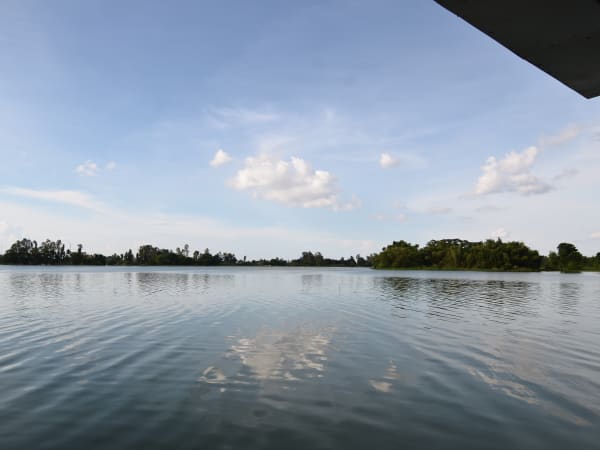
Búng Bình Thiên is the largest natural freshwater lake in the Mekong Delta, in An Phú district, the northernmost district of An Giang province, at the junction of Khánh An, Khánh Bình, Nhơn Hội, and Quốc Thái communes, close to the Cambodian border (about 4km away). Locally it's also called the 'Heaven Lake' (hồ Nước Trời), and local legend explains why: a Tây Sơn dynasty general is said to have used the area as a supply base in the late 18th century, and when the land proved too dry, he prayed to Heaven and Earth for water, then plunged his sword into the ground - fresh water is said to have sprung up from that spot and, over time, filled into the lake seen today. That story is offered as the origin of the name 'Búng Bình Thiên' - 'búng' (lake/pond), 'bình' (peaceful), 'thiên' (heaven) - though a more prosaic historical account, based on the Nguyễn dynasty's 1832 land registry, suggests the name instead evolved from an earlier place name, 'Bình Tiên,' gradually shifting in pronunciation over time. The lake actually comprises two connected bodies of water: Búng Lớn, the larger at around 193 hectares and up to 6 metres deep, and the smaller Búng Nhỏ, around 10 hectares and up to 5 metres deep - when people say 'Búng Bình Thiên,' they usually mean Búng Lớn. Its size shifts a great deal with the seasons, roughly 220-300 hectares in the dry season (estimates vary by source) and expanding to 600-900 hectares during the Mekong flood. The lake's mouth connects to the Bình Di River, and during flood season the reddish, silt-heavy river water entering at C3 bridge stays visibly separate from the lake's clear water for a stretch, rather than blending - a phenomenon locals attribute to underwater plants that slow the current and filter the water, keeping the lake clear year-round even as the river beside it runs muddy.

Getting There

Búng Bình Thiên is located in Khánh Bình commune, An Phú district, roughly 35km north of Châu Đốc city (about 40-50 minutes by motorbike, taxi, or local bus). From Hồ Chí Minh City or Hà Nội, the most practical approach is to fly to the nearest airport (Cần Thơ is the closest with regular service) and continue overland to Châu Đốc, or take a direct long-distance bus to Châu Đốc. From Châu Đốc, follow the road north along the Mekong toward the border - the lake is signposted from the main road, passing a series of Cham villages and C3 bridge along the way. It's worth double-checking directions with Google Maps or asking locally, since the final stretch isn't always obvious. Small wooden boats are available for hire at the lake edge, arranged informally with local residents. The area is also accessible as part of organised day tours from Châu Đốc.

On the Ground

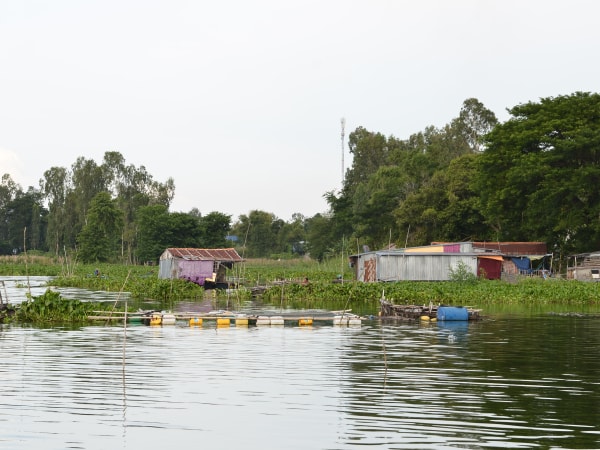
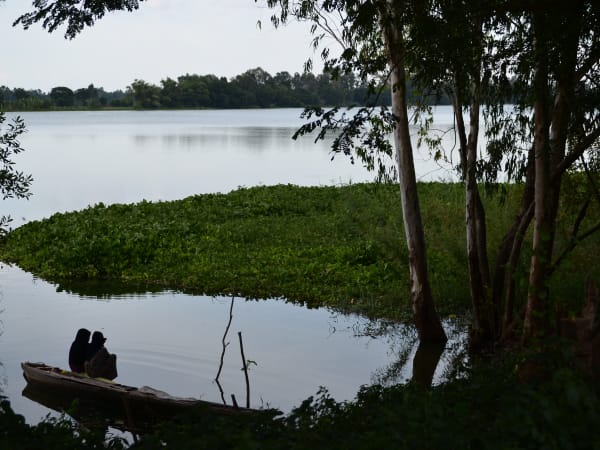
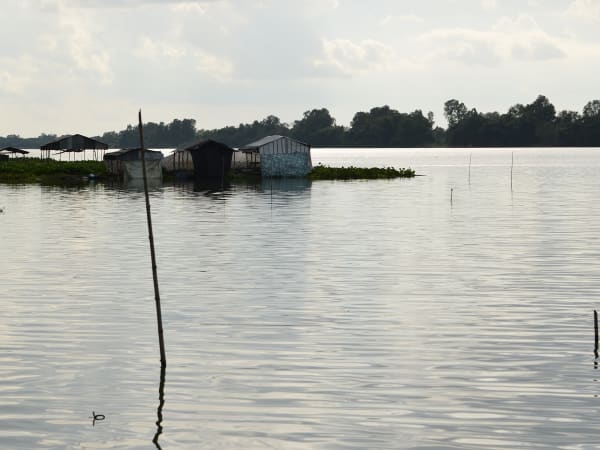
At peak flood season the lake is a wide expanse of water, with lotus blossoms covering parts of the surface and no visible far shore from some points on the boat. Boatmen pole or motor through open channels, and the atmosphere is quiet - rustling lotus leaves, waterbirds calling from the reeds, and, at C3 bridge, the visibly two-toned water where the Bình Di River meets the lake. Beyond the boat trip, visitors can join in with more hands-on activities the local community does regardless of tourists - netting cá linh (a small Mekong fish), catching frogs, picking sesbania flowers, or having a look at the floating houses and fish cages along the shore. The surrounding Cham villages are visible from the water - mosque domes and stilt houses along the shoreline - and walking through them, especially around prayer times, gives a glimpse of daily Cham Muslim life that's genuinely distinct from the rest of the Mekong Delta. It's worth being honest about the overall impression, though: this isn't a dramatic, jaw-dropping landscape. It's calm, plain in a good way, and rewards people who come specifically for the pace of life and the Cham culture rather than expecting a single spectacular view.

Tips

Búng Bình Thiên is best suited to travellers specifically curious about rural Mekong Delta life and Cham Muslim culture, or those who enjoy a slow, quiet destination without needing a dramatic payoff - it's not the right stop for anyone expecting the kind of view that makes people gasp. The lotus and the expanded lake are strongly seasonal, so visiting outside flood season (roughly Aug-early Nov) means a smaller, less visually striking lake. This is also a fairly undeveloped destination - services are limited, boat trips are arranged informally rather than through a proper tour operator, and there isn't much in the way of restaurants or facilities beyond a handful of simple food stalls in the Cham village. Combine the lake with time in the villages, a stop at a local mosque if you're respectful about it, and a proper meal of local Cham and Mekong Delta specialties (lẩu mắm with cá rô đồng, bông súng, bông điên điển, chả cá linh) rather than treating it as a quick photo stop. Pack a hat, sunglasses, sunscreen, a light jacket for the boat, and insect repellent if you're out at dusk.

Based on real traveler experiences and commonly mentioned advice from multiple visitors.

Boats can often be arranged through guides connected to the Cham mosque, or informally with local residents at the lake edge; group rates run roughly 300,000 VND for up to 10 people, with individual travellers paying a higher per-person rate
Visit during early morning or flood season for the best scenery and experience, and go in with modest expectations - this is a quiet, pleasant place rather than a spectacular one
Arrange boat rentals in advance if travelling in a group that wants meals or other activities on the water included
Set expectations honestly before you go: this is a calm, unspectacular landscape rather than a jaw-dropping one - one visitor's own summary was 'don't expect the scenery to make you go wow.' It rewards people specifically curious about Cham Muslim culture and slow, rural Mekong Delta life more than travellers chasing a single dramatic photo
Visit during flood season (roughly Aug - early Nov, following the lunar calendar) for the fullest lake and the lotus bloom; outside that window the lake contracts significantly and loses much of its visual appeal
Stop at C3 bridge, where reddish, silt-heavy water from the Bình Di River meets the lake - the two colours stay visibly separate rather than blending, an effect locals attribute to underwater plants that slow the current and filter the water as it enters the lake
'Búng Bình Thiên' actually comprises two connected lakes - Búng Lớn (the larger one, around 193 hectares, up to 6m deep) and Búng Nhỏ (around 10 hectares, up to 5m deep) - almost all boat trips and photos are of Búng Lớn
Boat trips are informal, arranged on the spot with local residents rather than a tour company - bring a dry bag for your phone and wallet, and wear a life jacket if you can't swim. Groups of 5-10 should hire a boat together to split the cost
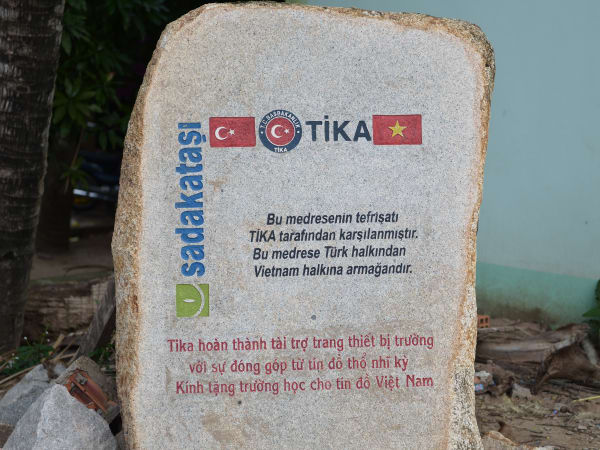
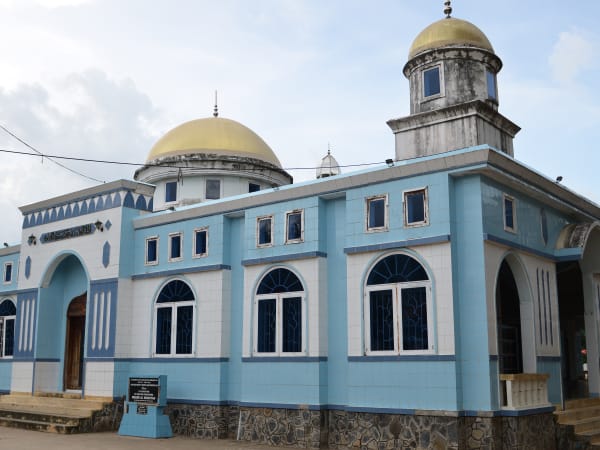
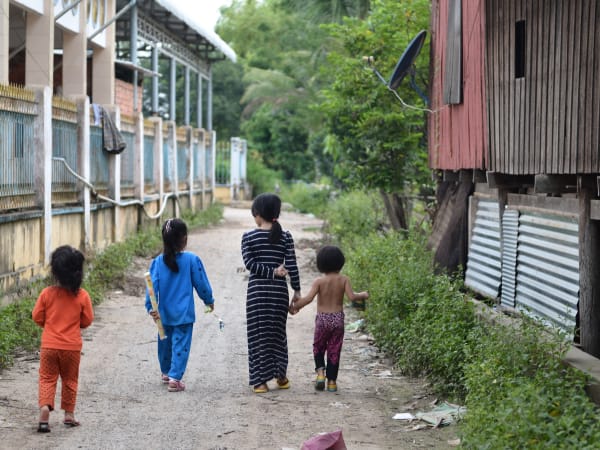
The Cham Muslim villages around the lake - particularly in Nhơn Hội, Khánh Bình, and Quốc Thái communes - are the other reason to visit: mosques with distinctive Southwest Asian-influenced architecture (rounded, pointed domes, upside-down U-shaped doorways), stilt houses over 100 years old, and a handful of simple stilt food stalls selling bún nước lèo cá lóc, bánh khọt, and bánh xèo with sesbania flower filling
Dress modestly and ask permission before photographing people if you visit a mosque or walk through the Cham village
If your timing lines up, the Búng Bình Thiên flood-season culture festival (Liên hoan Văn hóa mùa nước nổi) runs August 30-31 every year, with boat races, traditional costume shows, swimming and sports competitions, folk games, and a water-stage performance of Mekong Delta daily life - one of the more distinctive local festivals in this part of An Giang
Búng Bình Thiên is roughly 35km from Châu Đốc (40-50 minutes by motorbike) - combine with the Sam Mountain temples and the Châu Đốc floating villages for a full An Giang border district day. On its own, plan for 1-1.5 hours here, including a full loop of the lake by boat (about 40 minutes) and something to eat

Common questions from travelers who've visited this place.

What is the best time to visit Búng Bình Thiên?
Flood season (Mùa nước nổi), roughly August to early November (dates shift slightly year to year with the lunar calendar), offers the most impressive scenery, when the lake expands to its largest size and the lotus blooms. The flood-season culture festival runs August 30-31 every year. Early morning visits are recommended for the best light.
How do I hire a boat and what are the costs?
Boat trips are informal, arranged with local residents or through guides connected to the Cham mosque rather than a set tour company. Expect roughly 150,000-300,000 VND per person, or around 300,000 VND for a full boat (4-10 people) as a group rate - agree the price before boarding.
Is Búng Bình Thiên worth visiting if I want a dramatic landscape?
Probably not as your main reason to go. Visitors who've been there are fairly consistent that it's a calm, pleasant, but not particularly dramatic place - 'don't expect the scenery to make you go wow' is a fair summary. It's much more rewarding for travellers interested in Cham Muslim culture, rural Mekong Delta life, and a slow-paced few hours than for those chasing a single spectacular view.