Menu
DestinationsLocationsBlogMapAbout
📍 forest · nature · river · mekong delta

Trà Sư Cajuput Forest

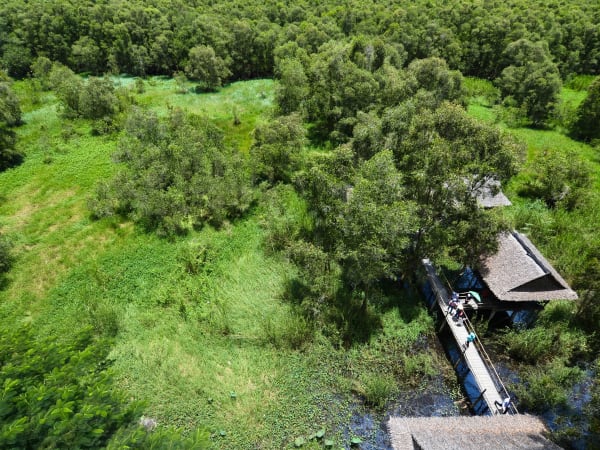
Trà Sư Cajuput Forest is an 845-hectare flooded cajuput woodland in An Giang - navigated by rowboat through mirror-flat green waterways, with over 70 bird species, a 10km bamboo walkway through the forest, and an observation tower over the canopy. Best September to November.

🌿 Flooded Forest🚣 Boat Tour🦅 Birdwatching📸 Photography
🧭 Get Directions
Best Time to Visit
📅 Sep - Nov (flood season; forest fully inundated, green reflection at its most vivid). Morning before 11 AM or late afternoon to avoid midday heat.
Entry Fee
🎟️ 120,000 VND entrance + 70,000 VND boat (rowing or motorized, different routes). Observation tower: 5,000 VND.
Opening Hours
🕐 6:00 AM - 5:00 PM
Address
📌 Văn Giáo, Tịnh Biên, An Giang
👥Crowds
Morning before 11 AM and late afternoon (3-4 PM onward) are quietest. Midday brings tour groups and heat simultaneously. Weekdays less crowded than weekends.
🥾Difficulty
Easy. Rowboat is fully passive. Bamboo walkway is flat and accessible. Observation tower has stairs.
⚠️Safety
Bring mosquito repellent - present year-round, more abundant in rainy season. Cajuput forest water can carry organic smell at midday. Snakes and wildlife present in the forest.
🚶Accessibility
Rowboat and main paths accessible for most visitors. Bamboo walkway is flat. Observation tower requires stairs. Wheelchair access limited beyond the main entrance area.
🌤️Seasonal
Sep-Nov: flood season, peak water level, strongest reflection, most birds. Dec-Aug: water drops significantly, visual impact reduced. Midday in any season is hot and potentially smelly - go early or late.

What Makes Trà Sư Cajuput Forest Special

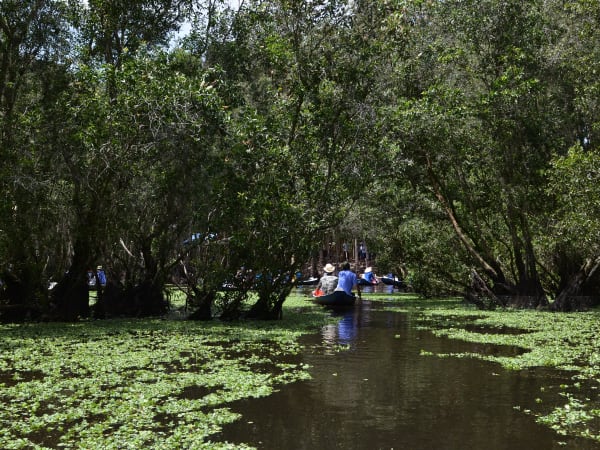
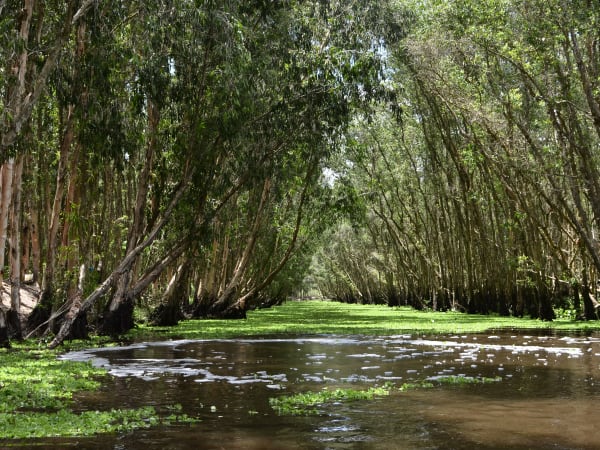
Trà Sư Cajuput Forest covers 845 hectares of seasonally flooded wetland in Tịnh Biên district, An Giang province. The land was heavily acidic soil before reforestation began in 1983 - the cajuput planting was originally intended to stabilise the floodplain and prevent upstream flooding, not to create a tourist destination. The trees took hold, the birds followed, and now over 70 species nest and feed here, led by large colonies of herons and night herons whose calls hit you before you've even paid for your ticket. During flood season from September to November, the Mekong's rising waters inundate the forest floor and the trees stand in still green water that mirrors the canopy overhead - the image most people associate with Trà Sư. Step into a rowboat and within minutes the cajuput trunks close in on both sides, the light filters green through the canopy, the duckweed covers the water surface, and the noise of the outside world disappears entirely.

🚗 Getting There

Trà Sư is in Văn Giáo commune, Tịnh Biên district, approximately 30km southwest of Châu Đốc city - about 45 minutes by motorbike. From Châu Đốc, follow the road toward the Cambodian border at Tịnh Biên; the forest entrance is signposted. Organised day tours from Châu Đốc are available and include transport, entrance, and boat. The entrance area has a ticket office, boat dock, observation tower, and food stalls.

👀 On the Ground

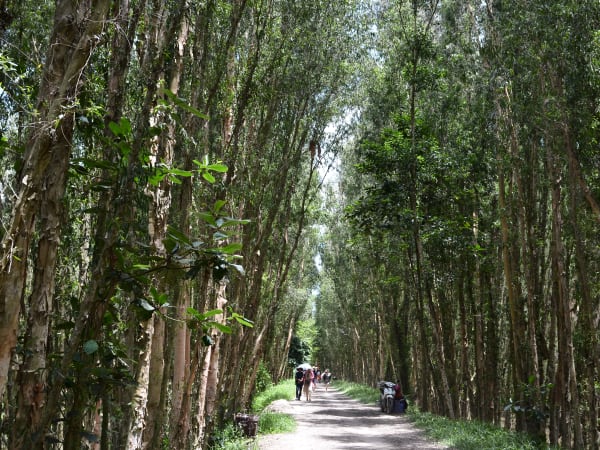
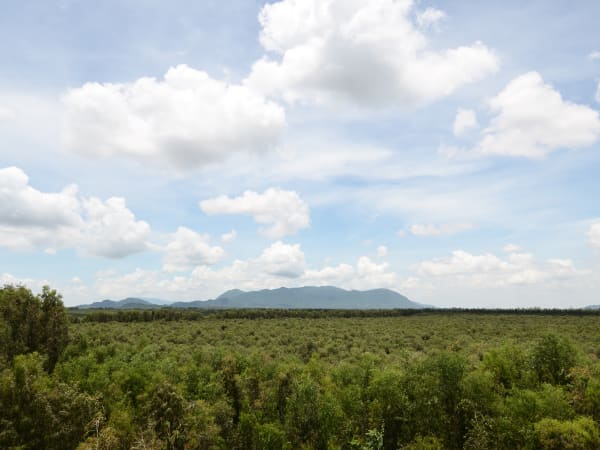
The visit has three main components. The rowboat tour (recommended over the motorized option) takes about 30 minutes through narrow channels between cajuput trunks - slow, quiet, and close to the forest. The Cầu Tre Vạn Bước bamboo walkway runs 10km through the forest on foot - the longest bamboo bridge in Vietnam. The observation tower (5,000 VND) gives a full canopy view over the forest and the surrounding floodplain. Bird colonies are audible from the entrance - herons and night herons in large numbers, most active at dawn and from around 5 PM as they return from feeding. Food and drinks are available inside the forest. Midday can be hot and the water occasionally carries an organic smell - early morning or late afternoon visits are significantly more comfortable.

🧳 Tips

Trà Sư is one of the Mekong Delta's most visually distinctive natural sites and genuinely matches its photographs during flood season - the flooded cajuput forest is as green and mirror-flat in person as in the images online, provided the visit falls between September and November. Outside flood season the water drops, the reflection disappears, and the forest becomes drier cajuput woodland that is pleasant but lacks the visual drama. Châu Đốc makes the natural base - a river town with Cham Muslim communities, floating fish farms, and Bà Chúa Xứ temple on Sam Mountain - and Trà Sư fits naturally into a broader An Giang day rather than requiring a standalone trip.

Based on real traveler experiences and commonly mentioned advice from multiple visitors.

Choose the rowing boat over the motorized option - slower, quieter, and through the best channels
Tip the rower 30,000-40,000 VND per boat - they receive very little from ticket sales and do physically demanding work
Stay until 5-6 PM if possible to watch the bird colonies return from feeding - one of the better wildlife moments in the Mekong Delta
Take the rowing boat, not the motorized one. The rowboat moves slowly through narrow channels between the cajuput trunks - you have time to look, photograph, and actually absorb where you are. The motorboat covers a different route faster but misses most of what makes Trà Sư worth visiting.
If you can, tip the rower 30,000-40,000 VND per boat at the end. The older local men and women who row these boats receive only around 10,000 VND per passenger from ticket sales - roughly 50,000 VND maximum per trip. It's a physical job and the tips make a real difference.
Go in the morning before 11 AM or wait until late afternoon. Midday is hot and the water in the cajuput forest can smell unpleasant - not always, but often enough to mention.
Around 5-6 PM birds return from feeding in large numbers - if you're still in the area at that time, it's worth staying for.
Walk the Cầu Tre Vạn Bước (Bamboo Bridge of Ten Thousand Steps) - at 10km it's the longest bamboo bridge in Vietnam, running through the forest on foot.
Climb the observation tower (5,000 VND) for a full canopy view over the forest.
Dress light - midday gets hot and the forest is humid. Bring mosquito repellent, especially in rainy season. Dry season has fewer insects.
The forest has food and drink available inside - no need to carry supplies.
September to November is flood season when the forest is fully inundated and the mirror reflection is at its strongest. Outside this window the water drops and the visual impact decreases significantly.

Common questions from travelers who've visited this place.

Rowing boat or motorized boat - which should I choose?
Rowing boat. It takes a different route through narrow channels between the cajuput trunks, moves slowly, and gives you time to look and photograph properly. The motorized boat is faster and covers a wider area but misses the intimate forest experience. Both cost 70,000 VND.
Should I tip the boat rower?
Yes - 30,000-40,000 VND per boat is reasonable and makes a real difference. The older local men and women who row these boats receive only around 10,000 VND per passenger from ticket revenue - roughly 50,000 VND maximum per trip for physical work in the heat.
When is the best time to visit?
September to November for flood season when the forest is fully inundated and the green mirror reflection is at its most vivid. Morning before 11 AM or late afternoon for cooler temperatures and less smell from the water. Around 5-6 PM birds return to roost in large numbers - worth timing if you're staying late.
Explore more
mekong delta - Full Guide
View destination guide →