Menu
DestinationsLocationsBlogMapAbout
📍 heritage · history · cultural · landmark · ha giang loop

Hmong King Palace

The Hmong King Palace (Dinh thự họ Vương) in Sà Phìn, Đồng Văn is the former residence of the Vương clan - the most powerful Hmong family in colonial-era Hà Giang - a stone compound built 1898-1907 that blends Hmong, Chinese, and French architectural traditions, funded by control of the plateau's opium trade.

🏛️ Hmong Royal Residence📸 Architecture🧭 Đồng Văn Plateau🏍️ Ha Giang Loop
🧭 Get Directions
Best Time to Visit
📅 Sep - Nov (buckwheat flower season; best weather for the Ha Giang loop overall)
Entry Fee
🎟️ 20,000-25,000 VND/adult, free for children under 1.2m
Opening Hours
🕐 7:30 AM - 5:00 PM daily
Address
📌 Sà Phìn, Đồng Văn, Hà Giang, Vietnam
👥Crowds
Can get busy with tour groups especially around midday; some longtime visitors note the atmosphere has become more commercial and less solemn than in earlier years. Early morning or late afternoon are quieter.
⚠️Safety
Don't touch artifacts on display. Keep noise levels respectful given the site's heritage status. Ask permission before photographing local residents nearby.
🚶Accessibility
Large parking area for cars and motorcycles near the site, though parking directly at the gate can be pricier than parking near the local market a short walk away.

What Makes Hmong King Palace Special

The Hmong King Palace (Dinh thự họ Vương, also called Nhà Vương or Dinh Vua Mèo) is the former residence of the Vương clan in Sà Phìn commune, Đồng Văn district, Hà Giang - a powerful Hmong family that controlled the opium-producing plateau region under French colonial administration. Construction ran from 1898 to 1907 under Vương Chính Đức, popularly known as 'Vua Mèo' - the 'Hmong King' (often translated from the Vietnamese nickname; he wasn't a sovereign monarch in the formal sense, but a regional clan leader whose authority over the plateau's Hmong communities and opium trade earned him that title locally) - who funded the project with 150,000 Indochinese silver piastres - equivalent to roughly 150 billion VND today - earned through control of the regional opium trade. Before building, he sent for a Chinese geomancer, Trương Chiếu, who selected the Sà Phìn valley for its turtle-shaped hill formation, believed under feng shui principles to bring lasting prosperity and natural defensive protection from the surrounding mountains. The architecture is a deliberate three-way synthesis: the courtyard layout, curved rooflines, and Han-character plaques follow Chinese tradition; fireplaces, chimneys, and iron railings reflect French colonial influence; and rammed earth sections and local bluestone and pine materials carry Hmong building traditions. The compound covers nearly 3,000 square metres (with the walled grounds extending to roughly 4,800-4,876 square metres), comprising 64 rooms across 4 horizontal and 6 vertical two-storey buildings, enclosed by a defensive stone wall 60-70cm thick and 265m long with gun ports and two bunkers. It was officially designated a national heritage site in 1993. The family's later history adds another layer: Vương Chí Sình, the original builder's son, became a National Assembly delegate after 1945 and was posthumously awarded Vietnam's National Unity Medal in 2006, his tomb now standing in front of the palace gate.

🚗 Getting There

The Hmong King Palace is in Sà Phìn commune, roughly 125-131km north of Hà Giang city and about 15km from Đồng Văn town on the Ha Giang loop road. From Hà Giang city, the standard route follows National Highway 4C through Quản Bạ Heaven's Gate and the Yên Minh pine forest before reaching Sà Phìn - about 3-4 hours of riding. From Đồng Văn, it's a short 20-30 minute ride. Hà Giang city itself is about 320km from Hanoi via National Highway 2, roughly 6-8 hours by car or bus. The Ha Giang loop is almost exclusively done by motorbike; easy rider tours and self-guided rental are both common. Park near the local market rather than directly at the palace gate to avoid inflated parking charges.

👀 On the Ground

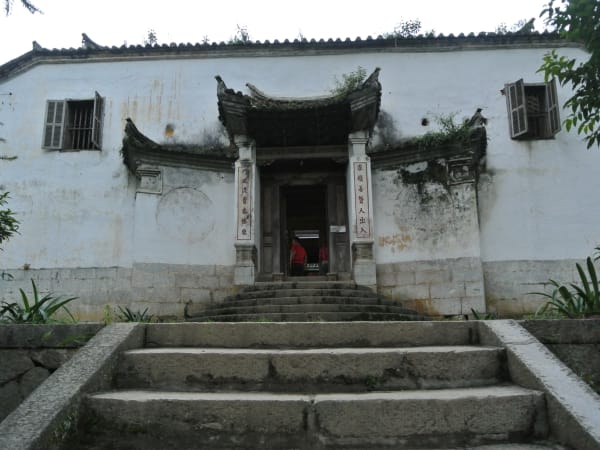
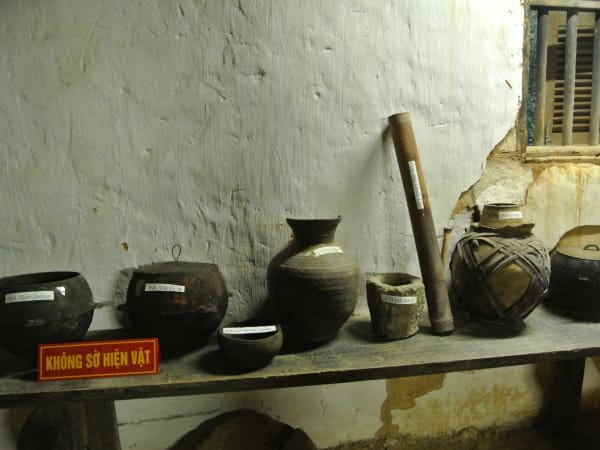
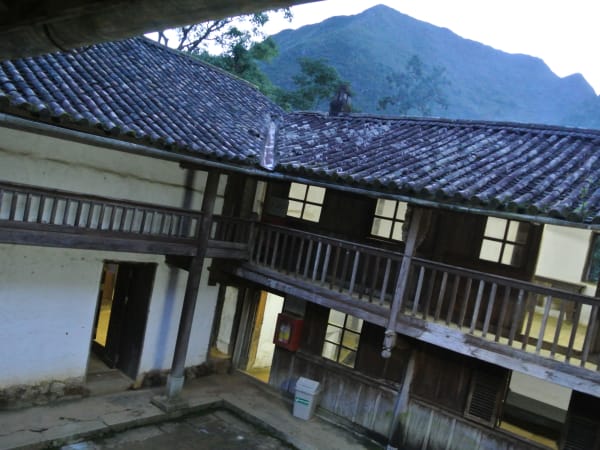
Despite its reputation as a 'palace', don't expect a sprawling royal complex - the experience is intimate rather than monumental, and many first-time visitors are surprised by how compact it feels in person. The compound is entered through a stone gate with rounded steps (a feng shui design choice) into a series of stone courtyards surrounded by residential and ceremonial buildings. The layout divides into Tiền Dinh (front, for guards and servants), Trung Dinh (middle, for receiving guests and ancestral worship), and Hậu Dinh (rear, the family's private quarters) - 64 rooms total across two-storey stone buildings with carved window frames and wooden interior fittings. Look closely at the column bases for carvings shaped like opium poppy pods, and at the granite-paved walkways and courtyards. A large stone rainwater cistern behind the compound still supplies water to the local area today. Original artifacts on display include wooden furniture, stone grinding tools, cooking equipment, and the 1923 imperial plaque gifted by Emperor Khải Định. The compound is well-maintained and the stonework is in good condition. A visit takes 30-60 minutes depending on how much time you spend with the exhibits and a guide.

🧳 Tips

The Hmong King Palace is one of the few sites on the Ha Giang loop that provides historical and cultural context for the landscape you're riding through. The plateau's dramatic scenery is the main draw of the loop, but understanding that this was an opium-producing region controlled by a single powerful clan under a colonial arrangement - and that the architectural evidence of that history is sitting right there in Sà Phìn - makes the visit significantly richer. Most loop riders stop here for 30-45 minutes and move on; combining it with the nearby Sà Phìn market, the Yên Minh pine forest along the approach road, and (in October) nearby buckwheat fields makes for a fuller half-day rather than a quick photo stop.

Based on real traveler experiences and commonly mentioned advice from multiple visitors.

Hire an on-site guide to fully understand the architectural fusion and family history - much of the context isn't obvious from signage alone
Visit in October for nearby buckwheat flower fields, or anytime for the Yên Minh pine forest along the approach road
Go early morning for the best light on the carved stone facades and to avoid tour group crowds
Park near the local market rather than right at the gate for cheaper parking
Combine with Sà Phìn market and Đồng Văn old town for a fuller half-day stop on the loop
The palace is in Sà Phìn commune, on the Ha Giang loop between Yên Minh and Đồng Văn town - every rider doing the loop passes within a few kilometers. It's a 30-45 minute stop that adds significant historical depth to what is otherwise a landscape-focused itinerary.
Built 1898-1907 under Vương Chính Đức ('Vua Mèo' / 'Hmong King'), funded by 150,000 Indochinese silver piastres - roughly equivalent to 150 billion VND today - earned through control of the plateau's opium trade.
Site selection followed feng shui consultation: Vương Chính Đức sent for a geomancer from China, Trương Chiếu, who chose Sà Phìn valley specifically for a turtle-shaped hill formation believed to bring prosperity and protection - the surrounding mountain range was seen as forming a protective 'turtle shell' shape around the site.
64 rooms across 4 horizontal and 6 vertical buildings, divided into Tiền Dinh (front - guards and servants), Trung Dinh (middle - reception and ancestral worship), and Hậu Dinh (rear - private family quarters), all two storeys.
Defensive stone perimeter wall: 60-70cm thick, over 2m high, 265m long, with gun ports and two fortified bunkers - giving the compound a fortress character alongside its residential role.
Architectural fusion is the highlight: Chinese influence in the courtyard layout, curved rooflines, Han-character inscribed plaques, and yin-yang roof tiles; French influence in fireplaces, chimneys, and iron railings; Hmong influence in rammed earth wall sections and local materials like bluestone and pine.
Look for the carved stone column bases shaped like opium poppy pods - a subtle but direct architectural reference to the source of the family's wealth.
A large stone rainwater cistern (about 300 cubic metres) sits behind the compound - still a key water source for Sà Phìn locals today, given the area's frequent dry spells.
A carved wooden plaque reading 'Biên chấn vĩ nghi' ('guarding the frontier with might'), gifted by Emperor Khải Định in 1923, is on display - a rare direct link between the Nguyễn imperial court and a Hmong leader.
The family story extends beyond the building: Vương Chí Sình (later Vương Chí Thành), son of the original builder, became a National Assembly delegate and was posthumously awarded the National Unity Medal in 2006 for his role bridging Hmong and Vietnamese national interests after 1945. His tomb sits in front of the palace gate.
The compound's ownership has been the subject of a long-running dispute between the Vương family descendants and local authorities since being designated a national heritage site in 1993 without the family's agreement - worth knowing as context, though not something that affects a visit.
Photography is best in the morning when light hits the carved stone facades from the east - by midday the main courtyard is in harsh overhead light.
Nearby Sà Phìn market and the Yên Minh pine forest along the approach road are worth combining with the palace visit. October buckwheat flower fields are also nearby.
Park motorbikes near the local market area rather than directly at the gate to avoid inflated parking fees.
Don't touch artifacts inside - this is a protected national heritage site. Keep noise down out of respect for other visitors.
From Hà Giang city: follow QL4C through Quản Bạ Heaven's Gate and Yên Minh pine forest - about 125-131km, 3-4 hours. From Đồng Văn town: only about 15km, 20-30 minutes.

Common questions from travelers who've visited this place.

Who was the Hmong King?
Vương Chính Đức (also written Vương Chính Đứ) was a Hmong clan leader who rose to dominate the Đồng Văn plateau in the late 19th and early 20th centuries, primarily through control of the regional opium trade. Locals and the Vietnamese nickname 'Vua Mèo' gave him the title 'Hmong King', but he wasn't a sovereign monarch in the formal sense - there was no Hmong kingdom with a throne or royal lineage. He was a powerful regional leader operating within (and partly enabled by) the French colonial administration, who used his wealth and authority to build this fortified residence as both a symbol of status and a practical defensive structure. His son, Vương Chí Sình, later shifted the family's political alignment after 1945, becoming a National Assembly delegate in independent Vietnam.
When was the Hmong King Palace built and how much did it cost?
Construction ran from 1898 to 1907 under Vương Chính Đức, known as 'Vua Mèo' (Hmong King). The project cost 150,000 Indochinese silver piastres - equivalent to roughly 150 billion VND today - funded through the family's control of the regional opium trade. (Some sources cite a 1919-1928 construction window, but the majority of credible sources, including Vietnamese government heritage records and the Vương family's own fourth-generation descendants, confirm 1898-1907.)
Why does the palace blend Chinese, French, and Hmong architectural styles?
It reflects the Vương clan's position at the intersection of three cultures and powers. Chinese influence shows in the courtyard layout, curved rooflines, and Han-character plaques - the family employed craftsmen with ties to Yunnan and consulted Chinese geomancy for the site selection. French colonial influence appears in fireplaces, chimneys, and iron railings, reflecting the era's administrative reality. Hmong building traditions appear in the rammed earth wall sections and use of local bluestone and pine. The result is a structure that is simultaneously a fortress, a family residence, and a physical record of the political and cultural pressures the Vương family navigated.
How long does a visit to the Hmong King Palace take?
30-60 minutes for most visitors, depending on whether you explore independently or with a guide. A guide adds meaningful context about the architecture, the opium economy, and the Vương family's later history that isn't fully conveyed by on-site signage alone.
Is the Hmong King Palace worth stopping at on the Ha Giang Loop?
Yes, especially since it's directly on the standard loop route between Yên Minh and Đồng Văn - no detour required. The plateau's scenery is the main reason most people do the loop, but the palace is one of the only stops that explains the human history behind that landscape: a single Hmong family's rise to regional power through the opium trade, and the complicated colonial-era position they occupied. A 30-45 minute stop fits easily into a loop itinerary without disrupting the day's riding plan.
Explore more
ha giang loop - Full Guide
View destination guide →