Menu
DestinationsLocationsBlogMapAbout
waterfall · nature · forest

Đa Ploa Stream

Đa Ploa Stream in Đạ Huoai district of Lâm Đồng is a multi-tier stream in the transitional forest zone between the southern highlands and the lowlands - much of the wider Đạ Huoai stream area remains genuinely undeveloped, though at least one organised camping site with basic facilities has emerged nearby in recent years.

Multi-tier StreamRemote JungleCampingPhotography
Get Directions
Best Time to Visit
Roughly December-May has less rain and the clearest, coolest water; June-October brings heavy rain and real flash-flood risk, so visit after rain has cleared rather than during it if you're there in the wetter months
Entry Fee
Free if you bring and pitch your own tent. Locals nearby also rent tents for those who'd rather not bring their own gear, priced around 150,000 VND/person (as of 2026) - a helpful middle option between fully self-sufficient wild camping and a full-service commercial site.
Opening Hours
Open daily
Address
Đạ Ploa, Đạ Huoai, Lâm Đồng
Difficulty
Road conditions vary by exact route and destination - some sections are rough and better suited to cars, while others are the kind of narrow track motorbikes handle more easily. Expect some walking from parking or drop-off points to the water.
Safety
No lifeguards at any of these sites. Some sections of the stream are deep enough to need adult supervision for children. Camp on higher ground well back from the water rather than right beside the stream, given the real risk of flash flooding, particularly in the rainier months (roughly June-October). Take extra care around the water at night, especially if drinking.
Accessibility
Varies by specific site - organised camping spots tend to have easier, more managed access, while wilder stretches require more self-sufficiency and local knowledge to reach.
Seasonal
Historically cited as best visited roughly December-April for easier access and calmer water, though heavy rain (notably around September) can bring strong flow and murkier water; conditions clear again once rain subsides.

What Makes Đa Ploa Stream Special

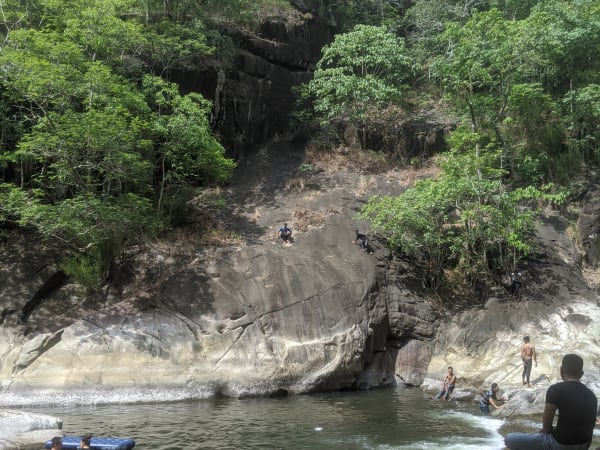
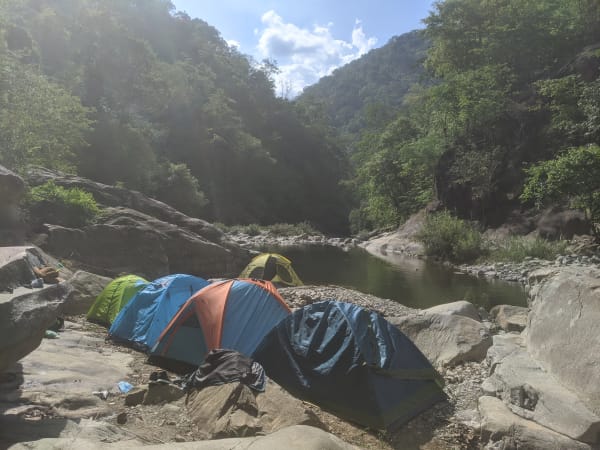
Đa Ploa Stream (also referred to more generally as Suối Đạ Huoai) runs through Đạ Huoai district in the southernmost part of Lâm Đồng province, in the transitional zone where the Central Highlands begin to drop toward the lowland forests of Đồng Nai and Bình Phước. The stream is multi-tiered, fed by smaller streams draining the highland plateau, with flat sandbanks along its course and large rocks that split the flow into smaller channels and natural pools - good for wading, swimming, and light kayaking where the water is calm. Much of the area has historically been genuinely undeveloped: no hotels, guesthouses, or shops, and visitors bringing their own tents and supplies for a weekend by the water. More recently, at least one organised camping site has appeared nearby, offering tent rental, SUP boards, and barbecue packages alongside more basic self-catering camping - so the specific experience you get depends heavily on exactly where along the stream you end up. Either way, this remains one of Lâm Đồng's less-visited corners, well off the Đà Lạt tourist circuit.

Getting There

Đạ Huoai district is in southern Lâm Đồng, approximately 150-160km south of Đà Lạt and roughly 130-160km northeast of Ho Chi Minh City depending on the exact route and destination within the district. From HCMC, the most direct route is via Highway 20 through Đồng Nai into Lâm Đồng - a journey of around 2.5-3.5 hours by motorbike or car. From Đà Lạt, Highway 20 south covers the distance in about 3 hours. Đạ Huoai town is the last reliable point for fuel, food, and phone signal before heading to the more remote sections of the stream; if you're heading to a specific organised camping site instead, it likely has its own address and directions worth confirming in advance.

On the Ground

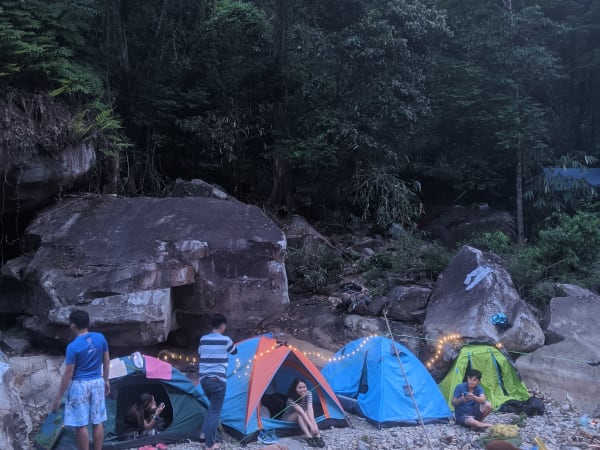
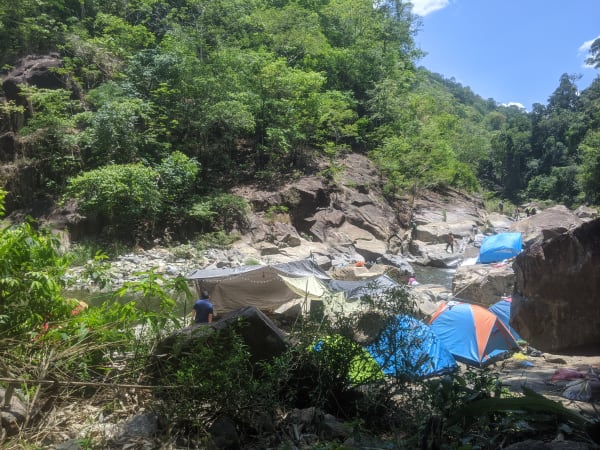
The approach to the camping area involves a motorbike ride to a local household near the trailhead, followed by a roughly 15-20 minute trek upstream along the water, navigating through forest, walking along the stream, and climbing over rocks - humid and physically engaging, but rewarded with lush jungle scenery and plenty of butterflies along the way. Once there, campers typically pitch their tents wherever suits them along the bank (on higher ground, away from the water), spend the afternoon swimming in the clear pools, fish with a net or rod, and cook meals together over a campfire in the evening - a genuine break from phone signal and social media. Heading further upstream toward the source brings even more scenic stretches, with wild orchids, forest flowers, and birdsong along the way. In the more remote sections, expect no signage, no ticketing, and no food vendors - possibly no other visitors on weekdays. A simpler, locally run tent-rental option also exists nearby for those who'd rather not carry in a full camping setup.

Tips

Đa Ploa/Suối Đạ Huoai is worth knowing about for travellers who've already done the well-known Đà Lạt circuit waterfalls and want a more physical, less curated stream experience - though it's worth being upfront with yourself about which version of that you're actually booking or heading to, since the area now spans both genuinely wild stretches and at least one organised camping operation. If you're routing through southern Lâm Đồng between HCMC and Đà Lạt, Đạ Huoai district makes a logical stopover either way - just confirm in advance whether you're aiming for a self-sufficient wild camp or a serviced site with amenities.

Based on real traveler experiences and commonly mentioned advice from multiple visitors.

If heading to an organised camping site, bring cash, since many of these operations run on a cash basis
If heading to a more remote stretch, bring your own seating, food, and full camping gear, since nothing may be available on-site
Pack out all your own rubbish regardless of which type of spot you visit
Time needed: 1 day and 1 night if camping overnight, which is how most visitors do it
⚠️ Pitch your tent on higher ground, well back from the stream - never camp right next to the water, given the real risk of flash flooding, especially in the rainier months
To reach the camping area, park your motorbike at a local household near the trailhead, then trek upstream along the stream for about 15-20 minutes - once there, you can pitch your tent wherever you like along the bank
There's no phone signal once you're in past the trailhead - let someone know your plans before you lose reception
If GPS coordinates alone don't get you there precisely, try searching the Google Plus Code '9M8R+XW Đạ Ploa, Đạ Huoai, Lâm Đồng' directly in Google Maps
The access road has been under construction in places and can be rough going - allow extra time and ride carefully
Bring a proper camping kit: a two-layer tent that's waterproof and keeps insects out, a sleeping bag and insulating mat for the cold at night, lighting for both inside and outside the tent, a handheld flashlight for moving around after dark, high socks or gaiters against leeches, and basic insect repellent and medicine
Net fishing and rod fishing are both popular activities here alongside swimming and a campfire in the evening
This area has a mix of genuinely wild, undeveloped stretches and a simple tent-rental service from locals nearby - confirm which specific option you're going for before you go, since the experience differs a lot depending on how you set up
The trail to the more remote sections involves river crossings that become impassable during heavy rain - check conditions locally before setting out in the peak wet season (August-October)
Roads into Đạ Huoai district are paved but narrow; a motorbike is the most flexible way to reach the trailhead, though some sources suggest a car may cope better with certain access roads - conditions vary
Bring water shoes or sandals with grip for rocky sections - rocks near the water are often wet and mossy
If heading to an undeveloped stretch, pack food, water, and a tent from Đạ Huoai town, since there may be no facilities of any kind nearby
The swimming in the stream's pools is the main reward - the water is generally cool and clear outside of heavy rain, when it can run faster and murkier

Common questions from travelers who've visited this place.

Is this a developed campsite or a wild area?
Both exist in the general Đạ Huoai stream area. Some stretches remain genuinely undeveloped, with no facilities and self-sufficient camping only, while at least one organised site nearby offers tent rental, food, and activities for a fee. Confirm which specific spot you're booking or heading to.
Is it safe for children?
Some sections of the stream are quite deep, so children need constant adult supervision. This applies whether you're at an organised site or a wilder stretch.
What is the best time to visit?
Roughly December to April tends to offer easier access and calmer, clearer water. Heavy rain, particularly around September, can bring strong currents and murkier conditions - visit after the rain has cleared for the best water clarity.

Explore more things to do like this around Vietnam