Menu
DestinationsLocationsBlogMapAbout
📍 forest · nature · mountain

Cát Tiên National Park

Cát Tiên National Park - established 1992, 71,920 hectares (larger than Singapore), UNESCO Biosphere Reserve. Over 1,610 plant species, 1,568 animal species, 300+ bird species (nearly 50% of Vietnam's total). Once the last mainland Asian refuge of the Javan rhinoceros, declared extinct here in 2010. Winner of 4 awards at the 2025 AEN International Ecotourism Awards including top prize for Biodiversity Conservation.

🌿 UNESCO Biosphere🦎 Wildlife Sanctuary🥾 Jungle Trek🦧 Primate Centre
🧭 Get Directions
Best Time to Visit
📅 Nov - May (dry season, easiest trails). Dec - Mar is the sweet spot (cool, dry, clearest conditions). Jun - Oct rainy season has lusher forest and 20% off accommodation, but Bàu Sấu and longer treks become harder.
Entry Fee
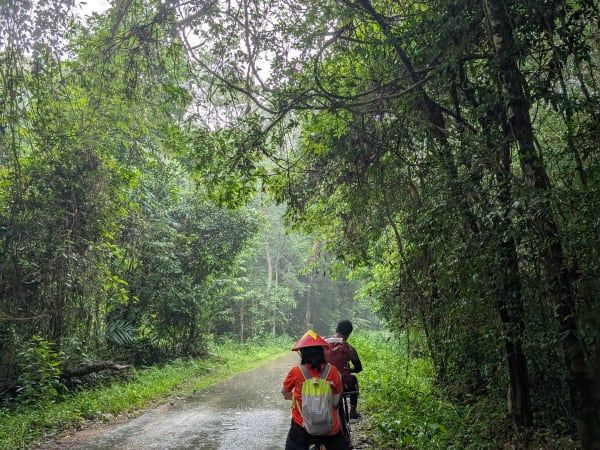
🎟️ 60,000 VND adult (includes ferry), 20,000 VND student, 10,000 VND child (under 16). Museum: 20,000 VND. Bear Rescue Center: 30,000 VND. Night safari: 145,000 VND/person. Bàu Sấu trek: 250,000 VND/person (excludes guide/transport). Guide: 350,000-450,000 VND/5 hours. Bicycle: 30,000 VND/hour or 150,000 VND/day (or 100,000 VND for a 4-hour combo if doing a day trip).
Opening Hours
🕐 Park open daily. Archaeological site (Thánh Địa Cát Tiên): 7:20-11:20 AM and 1:00-5:00 PM, Mon-Sun. Night safari: 6:30-9:00 PM departures, up to 12 trips/night. Activity bookings through park HQ: (+84) 2513 669 228 / cattienvietnam@gmail.com.
Address
📌 Tân Phú, Đồng Nai
👥Crowds
Weekends and holidays busier - book accommodation ahead. Night safari limited to 12 trips/night - book early. Gibbon/primate center tours have limited daily spots.
🥾Difficulty
Center trails are easy, well-marked, 1-5km options. Bàu Sấu requires 5km forest walking each way - not suitable for children under 8. Overall accessible for moderate fitness.
⚠️Safety
Leeches and mosquitoes serious in rainy season (Jun-Oct) - bring repellent and long clothing. Do not enter forest independently after 6 PM. Follow ranger guidance near large animal habitats (bears, gaur). No ATMs - bring cash.
🚶Accessibility
Ferry crossing required (included in 60,000 VND entrance). Bicycle rental 30,000 VND/hour or 150,000 VND/day. No ATMs in park. Phone signal weak in deep forest - get a paper map at reception.
🌤️Seasonal
Dec-Mar: best - cool, dry, clearest. Nov & Apr-May: dry but warmer. Jun-Oct: rainy season, lush green forest, 20% off accommodation, but Bàu Sấu and longer treks more difficult - check forecast, bring rain gear and waterproof shoes.

What Makes Cát Tiên National Park Special

Cát Tiên National Park protects approximately 71,920 hectares of lowland rainforest - larger than Singapore - across the border zone of Đồng Nai, Lâm Đồng, and Bình Phước provinces, 160km north of Ho Chi Minh City. Established January 13, 1992 by merging three separate reserves (Nam Cát Tiên forest reserve, Tây Cát Tiên nature reserve, and the Cát Lộc rhino sanctuary), it is recognised by UNESCO as a Biosphere Reserve and is the most ecologically significant protected area within practical range of Saigon. The numbers are substantial: over 1,610 plant species, 1,568 animal species, 300+ bird species (nearly half of all bird species recorded in Vietnam), 450+ butterfly species (over half of Vietnam's total), 80% natural forest cover, and 90km of the Đồng Nai River flowing through the park. Forty animal species and 34 plant species here are globally threatened. The Cát Lộc sector of the park carries a particularly sobering history: in 1988, a small population of Javan rhinoceros was rediscovered here after the species was believed extinct on mainland Asia - the only such population left on the continent. Despite conservation efforts through the 1990s and 2000s, the last individual was poached for its horn and found dead in April 2010, confirmed by WWF genetic analysis to be the final rhino in Vietnam. The extinction marked the end of the species on mainland Asia entirely, leaving only one small population on the island of Java, Indonesia. It remains one of the most cited cautionary stories in Southeast Asian conservation - a reminder of what protection failure costs, and part of why Cát Tiên's current conservation programmes (gibbon and crocodile reintroduction, the primate rescue centre, anti-poaching patrols) are taken so seriously today. In 2025, the park won 4 awards at the AEN International Ecotourism Awards, including the top prize for Biodiversity Conservation - confirming its position as one of Asia's leading sustainable ecotourism destinations. The Dao Tien Endangered Primate Species Centre, on an island in the Đồng Nai River, runs a rehabilitation programme for confiscated and injured primates that provides one of the most intimate wildlife encounters in Vietnam.

🚗 Getting There

By car or motorbike from HCMC: Xa lộ Hà Nội → QL1A toward Đồng Nai → Dầu Giây junction (67km) → left onto QL20 → 58km to Tà Lài junction → left, 24km to the park entrance. Total around 3 hours. By bus: Xe Kim Hoàn runs directly from Bến xe Miền Đông mới to the park gate (110,000 VND, no transfer). Phương Trang or Thành Bưởi (HCMC-Đà Lạt route, 80,000-120,000 VND) drop passengers at Tà Lài junction or Tân Phú station, 24km from the gate - continue by Grab, taxi (~150,000-200,000 VND), or the park's own shuttle service (book ahead: 0251 366 9227). A ferry crossing connects the highway-side car park to park headquarters on the opposite bank of the Đồng Nai River.

👀 On the Ground

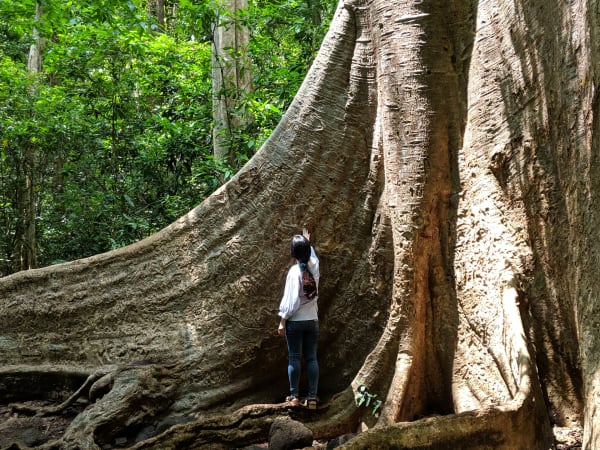
Six trekking routes cover the accessible forest, passing landmarks like the 400-year-old Cây Tung tree, Gõ Bác Đồng, Thác Trời waterfall, and Hồ Cây Si Trăm Thân (the only swimming spot in the park). Bàu Sấu (Crocodile Lake) is the signature activity: 9km by vehicle/bike plus 5km on foot through primary forest, about 7 hours round trip, leading to a Ramsar-listed wetland with 60+ reintroduced Siamese crocodiles. The Dao Tien Primate Centre requires a boat trip to observe gibbons and langurs in rehabilitation. Night safari (145,000 VND, up to 12 trips nightly) covers a 12km loop spotting deer, civets, and occasionally gaur or sambar. The Bear Rescue Center and Natural History Museum (20-30 min, family-friendly) house rehabilitated bears. The Thánh Địa Cát Tiên archaeological site - Hindu temple ruins called 'the Mỹ Sơn of the South' - sits an hour away in the Tây Cát Tiên zone. Tà Lài Community Village offers Mạ and Stiêng ethnic cultural exchange in the buffer zone.

🧳 Tips

Cát Tiên is the clearest answer to where to see serious wildlife near Ho Chi Minh City. Budget for at least 2 nights to cover the highlights properly: Day 1 - arrive, center trail trek, night safari. Day 2 - dawn birdwatching, full-day Bàu Sấu trek. Day 3 (optional) - cycle to Tà Lài village, kayaking on the Đồng Nai River (confirm availability with park management), stop at Trọng Đức Cacao Farm (30km away) on the return to HCMC. Self-guided 2D1N budget: roughly 1,000,000 VND (basic/camping) to 1,500,000-2,000,000 VND (comfortable) per person, covering transport, entrance, accommodation, food, night safari, and bicycle/guide fees. Book accommodation, night safari, and the Bàu Sấu trek in advance, especially for weekends and holidays.

Based on real traveler experiences and commonly mentioned advice from multiple visitors.

Xe Kim Hoàn runs direct from Bến xe Miền Đông mới to the park gate - no transfer needed
Bicycle rental after the ferry: up the slope, turn left, ~100m. 4-hour combo (100,000 VND) best value for day trips
Book Bàu Sấu trek and night safari in advance through park management
Bring cash (no ATMs), insect repellent, rain gear in wet season, paper map for deep trekking
Budget at least 2 nights to properly cover center trails + night safari + Bàu Sấu
Established January 13, 1992 by merging three reserves: Nam Cát Tiên forest reserve, Tây Cát Tiên nature reserve, and Cát Lộc rhino sanctuary. Total core area ~71,920 hectares - larger than Singapore.
In 2025, Cát Tiên won 4 awards at the AEN International Ecotourism Awards, including the top prize for Biodiversity Conservation - international recognition as a leading sustainable ecotourism destination in Asia.
Dec-Mar is the sweet spot: cool, dry, least rain. Nov and Apr-May still dry season but warmer. Jun-Oct rainy season: forest is lusher and greener (good for photography) but Bàu Sấu access and some trekking routes become difficult. Accommodation drops 20% in rainy season.
From HCMC by car/motorbike: Xa lộ Hà Nội → QL1A toward Đồng Nai → Dầu Giây junction (67km) → turn left onto QL20 → 58km to Tà Lài junction → turn left, 24km to the park.
By bus: Xe Kim Hoàn runs directly from Bến xe Miền Đông mới to the park gate (110,000 VND) - no transfer needed, the most convenient option. Phương Trang or Thành Bưởi (HCMC-Đà Lạt route, 80,000-120,000 VND) drop at Tà Lài junction, then Grab/taxi/park shuttle covers the remaining 24km (taxi ~150,000-200,000 VND).
Park shuttle service (4/7/16-seater) available - book ahead at (0251) 366 9227, good for families/groups, can pick up from bus station or Tà Lài junction.
Bicycle rental after the ferry: go up the slope, turn left, about 100m ahead. For a day-trip, the 4-hour combo package (100,000 VND) is the best value.
6 trekking routes available, each with optional stops: Cây Tung (400-year-old tree) - Ghềnh Bến Cự - Cây Gõ Bác Đồng - Cây Đa Lộc Giao - Thác Trời - Rừng Bằng Lăng Đà Cộ - Hồ Cây Si Trăm Thân (the only swimming spot in the park) - ethnic village - Tà Lài rice fields. Get a trail map before setting off - the park is large.
Bàu Sấu (Crocodile Lake): 9km by car/bicycle + 5km on foot through forest, about 7 hours total. Home to 60+ crocodiles and one of Vietnam's 9 Ramsar wetland sites. Overnight version available: depart by 1 PM (bike) or 2 PM (car), return by 9:30 AM next day, stay in park lodging (no camping at the lake itself). Book in advance with park management.
Night safari: 6:30-9 PM departures, up to 12 trips/night, 12km loop by vehicle (45min-1hr), 145,000 VND/person. Regularly spots deer, porcupines, civets, rabbits; occasionally gaur or sambar deer with luck. Book early - limited spots.
Bear Rescue Center + Natural History Museum combo: 20-30 minutes, 20,000-30,000 VND adult (half price for children). Bears here are rehabilitated and friendly with visitors - good for families with kids.
Thánh Địa Cát Tiên (Cát Tiên archaeological site): hidden Hindu temple ruins in Tây Cát Tiên zone, called 'the Mỹ Sơn of the South' - Linga-Yoni, statues of Shiva, Brahma, Ganesha. About 1 hour by car from the main park area, in Lâm Đồng province. Open 7:20-11:20 AM and 1-5 PM, busiest around 9 AM and 3 PM.
Tà Lài Community Tourism Village: in the park's buffer zone, home to Mạ and Stiêng ethnic communities who have lived with this forest for centuries. Longhouse visits and cultural exchange available.
No ATMs inside the park - bring cash. Phone signal is weak throughout most of the forest; the central area has WiFi and better signal. Get a paper map at reception rather than relying on phone data for deep trekking.
Do not enter the forest after 6 PM independently. Follow ranger guidance around large animal habitats (bears, gaur). No loud noise or speakers.
Accommodation: two zones - park center and Bàu Sấu (14km away). 400,000-1,600,000 VND/night for 2-4 person rooms; 8-person dorm ~800,000 VND. Breakfast and entrance fees not included. 20% discount Jun-Oct. WiFi available in rooms.

Common questions from travelers who've visited this place.

How do I get to Cát Tiên National Park from Ho Chi Minh City?
Easiest: Xe Kim Hoàn bus runs directly from Bến xe Miền Đông mới to the park gate (110,000 VND, no transfer). Alternative: Phương Trang or Thành Bưởi (HCMC-Đà Lạt route) to Tà Lài junction (80,000-120,000 VND), then Grab/taxi (~150,000-200,000 VND) or park shuttle (book at 0251 366 9227) for the remaining 24km. By car/motorbike: QL1A to Dầu Giây junction (67km), QL20 to Tà Lài junction (58km), then 24km to the park. Total drive about 3 hours.
Is the Bàu Sấu (Crocodile Lake) trek worth it?
Yes - it's the park's signature activity. 9km by vehicle/bicycle plus 5km on foot through primary forest, about 7 hours round trip. Bàu Sấu is a Ramsar-listed wetland home to 60+ reintroduced Siamese crocodiles plus other rare wildlife. Cost: 250,000 VND/person (excludes guide and transport). An overnight version is available - depart 1-2 PM, stay in park lodging, return by 9:30 AM. Not recommended for children under 8 due to the 5km forest walk.
What is Thánh Địa Cát Tiên?
A hidden archaeological site in the Tây Cát Tiên zone, often called 'the Mỹ Sơn of the South' - a complex of ancient brick and stone temple structures with Hindu artifacts including Linga-Yoni and statues of Shiva, Brahma, and Ganesha. About 1 hour by car from the main park area, on a hill surrounded by bamboo forest in Lâm Đồng province. Open 7:20-11:20 AM and 1-5 PM daily, with a small exhibition hall and reconstructed longhouse nearby.
How many days should I spend at Cát Tiên?
Minimum 2 nights to properly experience the park: Day 1 arrival + center trekking + night safari, Day 2 dawn birdwatching + full Bàu Sấu trek. A 3-day version adds Tà Lài village cultural visits, Đồng Nai River kayaking, and a stop at Trọng Đức Cacao Farm on the way back. A rushed single-day trip from HCMC is possible (depart 6 AM, return by 4 PM) but only covers short trails and the rescue center.
Did Cát Tiên once have wild rhinoceroses?
Yes - and the story is one of the most significant conservation cases in Southeast Asian history. In 1988, a small population of Javan rhinoceros was rediscovered in the park's Cát Lộc sector after the species was believed extinct on mainland Asia. It was the last known mainland population on earth. Despite conservation programmes through the 1990s and 2000s, poaching and habitat loss continued, and the last individual was shot for its horn, found dead in April 2010. WWF genetic analysis of dung samples confirmed it was the final rhino in Vietnam - the extinction of the species' annamiticus subspecies and the end of Javan rhinos on mainland Asia entirely. Only one small population now survives, on the island of Java, Indonesia. The loss is still cited today as a turning point that intensified Vietnam's approach to wildlife protection, including the anti-poaching and reintroduction programmes now active in Cát Tiên (gibbon rehabilitation, Bàu Sấu crocodile reintroduction).
Is Cát Tiên suitable for families with children?
Yes, especially the Bear Rescue Center and Natural History Museum (20-30 minutes, engaging for kids) and short center trails (1-3km, manageable difficulty). The Bàu Sấu trek (5km forest walking each way) is not recommended for children under 8. Rooms come with basic amenities and WiFi.