This trip meant something a little extra to me. Hai Phong - and specifically Cat Ba Island - was the last of all 63 provinces in Vietnam I had yet to visit.
I went during Hung Kings Festival - a national public holiday held on the 10th day of the third lunar month, commemorating the Hung Kings who are credited with founding the first Vietnamese state. It's one of the few holidays with an official day off, which means everyone and their family heads to the nearest beach destination. Cat Ba, being just a few hours from Hanoi, gets hit hard.
Visiting Cat Ba during Hung Kings Festival, April 30, or September 2? Brace yourself for extreme crowds - packed boats, jammed ferry terminals, fully booked tours. Or just go anyway, but don't say you weren't warned.
I booked the flight last minute. Around 110 USD. Threw my bag together and got moving.
Before the Island: The Broken Plane
5:30 AM, I scrambled onto the plane. By 6:00, the captain announced a technical issue. Everyone off.
The final leg of my 63-province journey across Vietnam, opening with a 6 AM wait at the airport. Fitting.
8:00, the airline found a replacement plane. 10:30, I landed at Cat Bi Airport in Hai Phong - the last province in Vietnam I'd ever set foot in for the first time.


Getting There: Cat Bi Airport to Cat Ba by Cable Car
GrabBike doesn't work right outside the terminal - you need to walk about 500 meters to the main road before the app will let you book. I took a Xanh SM ride, around 102,000 VND for 17 kilometers to the Sun World cable car station.
When I arrived, the place looked empty. I thought: "Great, no one here today." I was wrong. It was noon - everyone was napping. By 1 PM, the crowd appeared out of nowhere.
The cable car operates on fixed departure times, with the next slot to the island at 1:30 PM. I used the wait to grab lunch and sort out my ticket.
Klook sells a combo ticket covering both the cable car and the electric bus into town - total 110,000 VND (cable car 70k, bus 40k). Buy the combo, it's easier. Buying separately at the counter works too but takes more time.
The Sun World Cat Ba cable car holds a Guinness World Record for the tallest cable car pylon in the world - tower number three reaches 214.8 meters above ground, roughly equivalent to a 48-story building. At 1:30 on the dot, the gates opened and the crowd filed in. "Right, this is what a national holiday feels like," I thought.
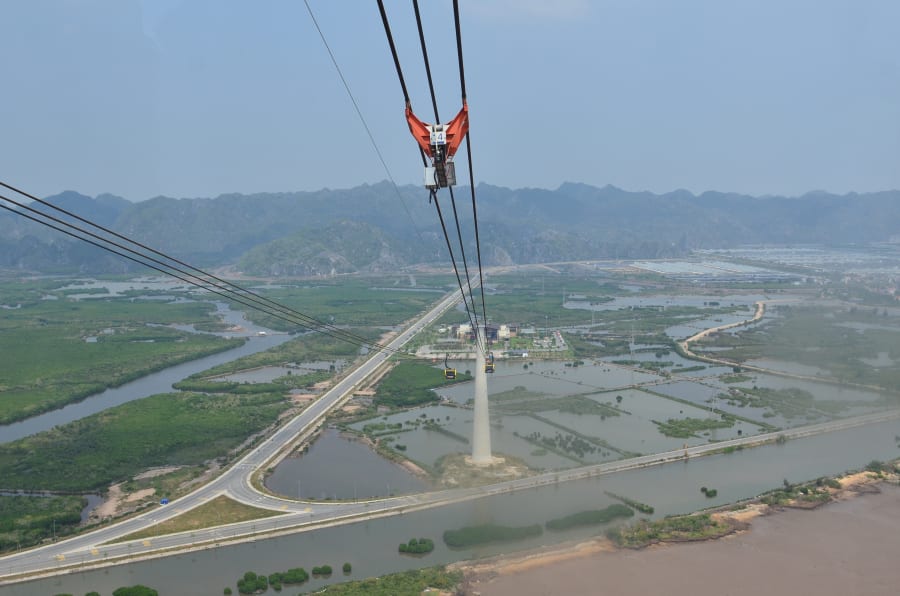
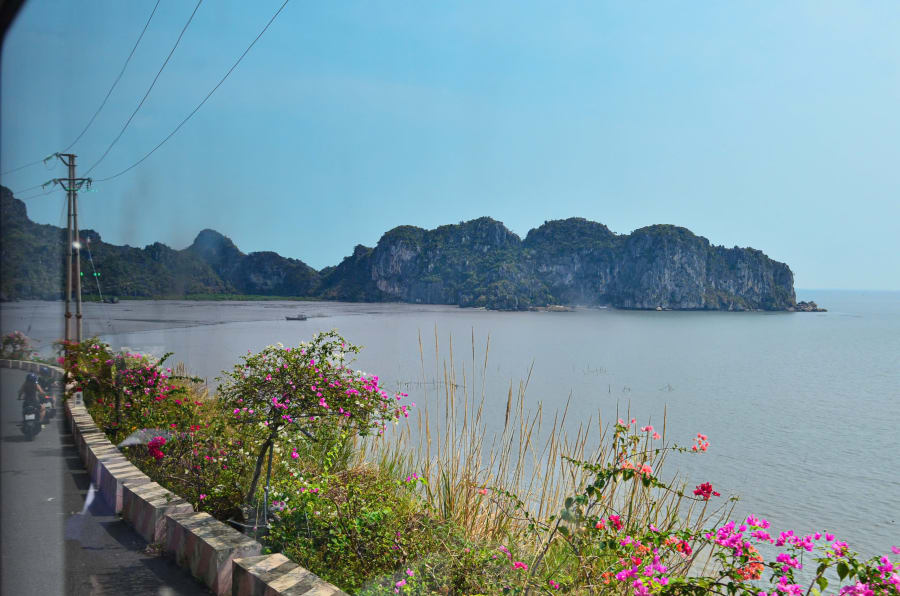
The crossing takes about 15 minutes. Coming out the other side, there was a bus waiting on the right. I climbed on, planning to sleep - I'd been up since 5, bounced between two planes, I was done. But the coastal road into Cat Ba town had other plans. I spent the entire 40-minute ride pressed against the window, shooting with my phone, then switching to the camera, back and forth.
Day 1: Cat Co Beaches and Bioluminescent Plankton Kayaking
Afternoon: Check-in and Cat Co Beach
The bus dropped us in the town center around 2:30 PM. My hostel was 200 meters away on foot - perfect timing to check in.
I stayed at The 1 Hostel - central location, rooftop bar, popular with Western travelers. 550,000 VND for two nights in a dorm, which is almost unreasonably cheap. While checking in and chatting with the owners, I found out they offer a night kayaking tour to see bioluminescent plankton in Lan Ha Bay - 900,000 VND. (The hostel calls it a "plankton tour" - same thing.) I'd seen bioluminescence before, plenty of times. But kayaking at night through limestone karsts? That was new. 900k is steep for one evening - but when you're already there, you commit. I booked it on the spot.
Settled in, rested. Around 5 PM when the heat backed off, I went out.
The first stop for anyone visiting Cat Ba is the Cat Co beach cluster - Cat Co 1, 2, and 3. Cat Co 1 is the closest and the most well-known, less than a kilometer on foot from the hostel. And because it's the most well-known, especially on a national holiday, it was wall-to-wall people. The beach is genuinely pretty - good but not mind-blowing. Crowds are just part of the deal; that's what photo editors are for.
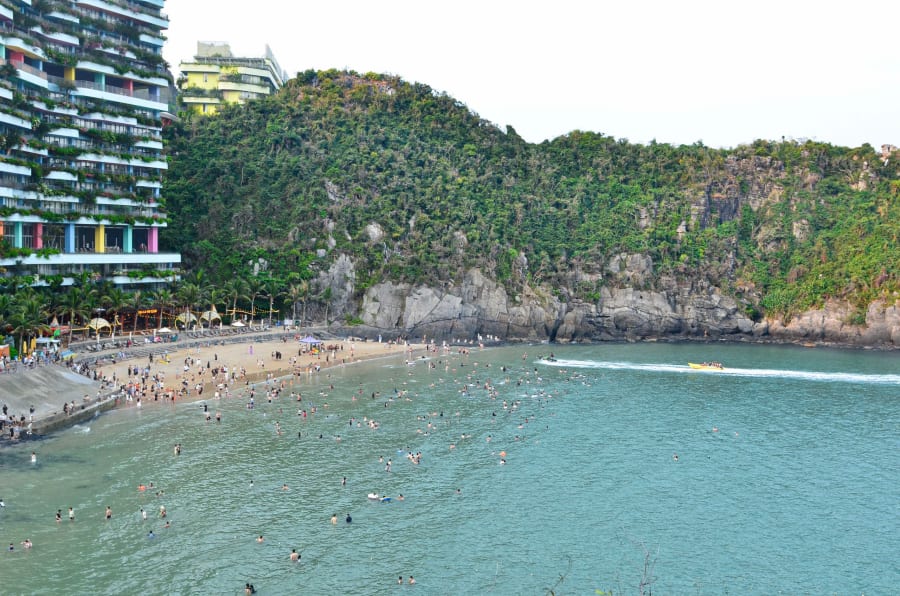
From Cat Co 1, a renovated clifftop path runs across to Cat Co 3 - easy walking, safe, well-maintained. From up there, looking out over part of the bay, the view felt instantly familiar. It looks exactly like Ha Long Bay - which makes sense, because geographically they're the same place. Humans just drew a line and gave each side a different name.
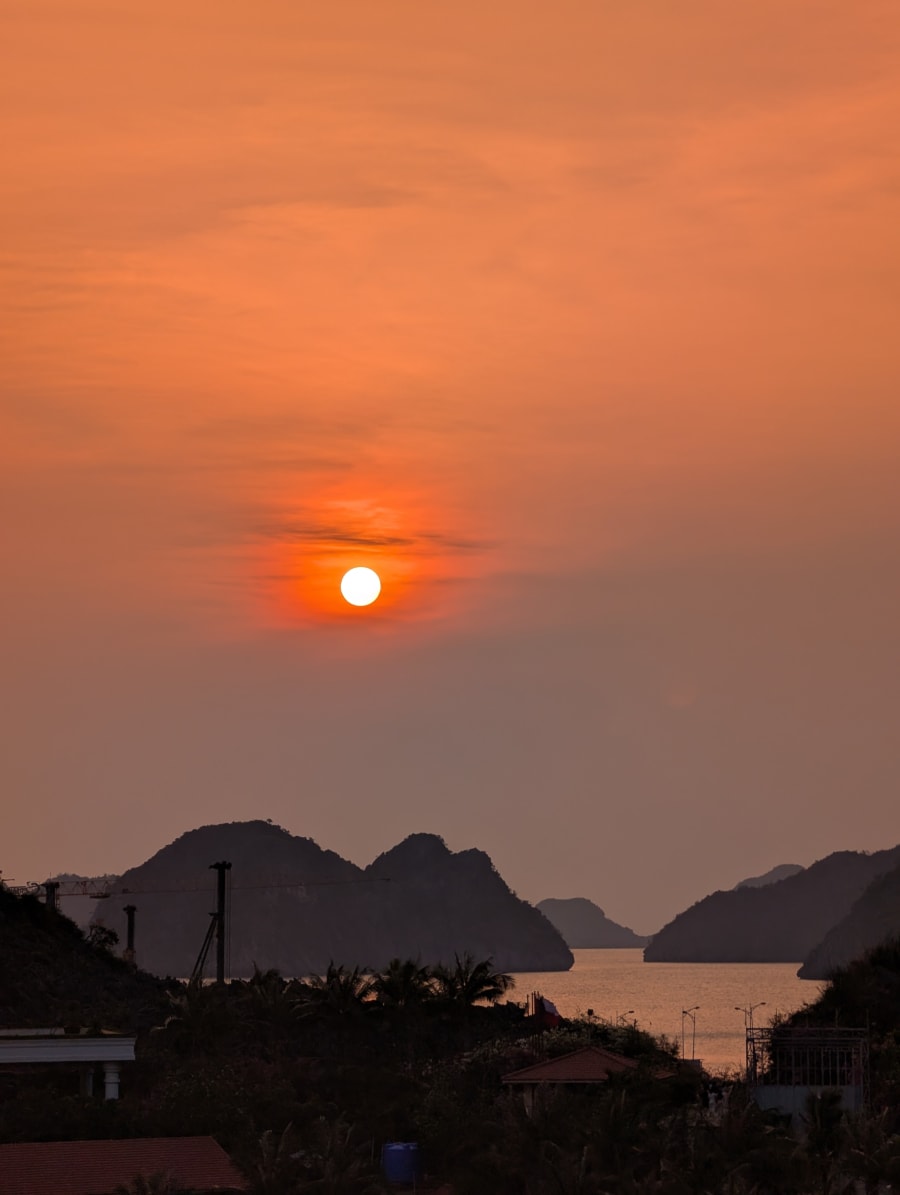
The sunset over the bay was excellent. My old D7000 couldn't quite capture it. Some things you just have to store in memory.
I thought about looping over to Cat Co 2, but the route goes the wrong way and the light was fading. Time to eat something and get ready for the night tour.
Evening: Bioluminescent Plankton Kayaking in Lan Ha Bay
6:30 PM, the tour pickup arrived at the hostel. By 7:00, we'd assembled at Ben Beo pier.
Our group that night: about 10 Vietnamese travelers and one guy from the Philippines. The Vietnamese group would go squid fishing; the Filipino and I would kayak to see bioluminescent plankton. The guide mentioned he was surprised - first time he'd had a Vietnamese person choose the kayaking option over squid fishing.
I'd swum at midnight in Cambodia before, specifically to see bioluminescence. But kayaking at night was a first.
Around 8:00, the boat brought us out to a floating platform in the middle of Lan Ha Bay. From there, we got into kayaks and started paddling.
Limestone walls rising straight up on both sides. Moonlight above. Below - every stroke of the paddle disturbed the water, and the bioluminescence lit up underneath, blue-green streaks flaring and fading with the current. It looked like a scene from Final Fantasy. Or Avatar. Or something I don't actually have a reference for.
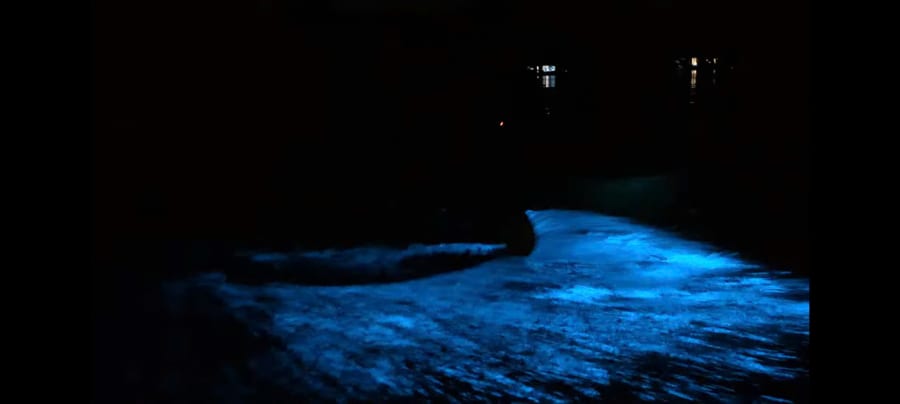
I tried to photograph it several times. Couldn't get it. Some things the camera just refuses to hold onto. I left it alone and let my eyes do the work instead. How often does a moment like this actually happen?
The full breakdown - logistics, what the experience is actually like, and whether 900,000 VND is worth it - is in a separate article. [LINK PLACEHOLDER - bioluminescence Lan Ha Bay]
By 9:00, we were back at the platform. A message came in from the squid fishing group - they were done, wanted to head back. I asked if "done" meant they'd caught enough. The guide translated: "They said they've had enough. Just want to go home." Not enough squid - enough boat. I laughed.
Lan Ha Bay is calm and relatively shallow - but staying stationary on a boat for squid fishing is a different kind of problem. If you get seasick easily, think carefully before picking that option.
On the way back, I asked the Filipino how much his hostel had charged him for the same tour. 28 USD - a little over 100,000 VND cheaper than mine. Losing on home turf genuinely stings. But that's the game.
Back at the hostel by 10, I showed everyone my photos. Nobody seemed particularly impressed.
Day 2: Lan Ha Bay - Lagoon, Beach, and Viet Hai Village
The day tour of Lan Ha Bay costs 700,000 VND and covers three stops: SUP paddling into a hidden lagoon, swimming at Ana Beach, and visiting Viet Hai ancient village. Pickup at 6:30 AM.
The guide told me I'd be joining a group of Western tourists only. That turned out not to be true - the holiday crowd was too big, so they mixed Vietnamese and Western travelers together on the same boat. I figured I could manage both directions of conversation. That's the advantage of being a reasonably open person.
By 7:00 AM, we'd gathered at Ben Beo pier. Public holiday. People everywhere. After 45 minutes of waiting and shuffling, we finally boarded at 9:00.
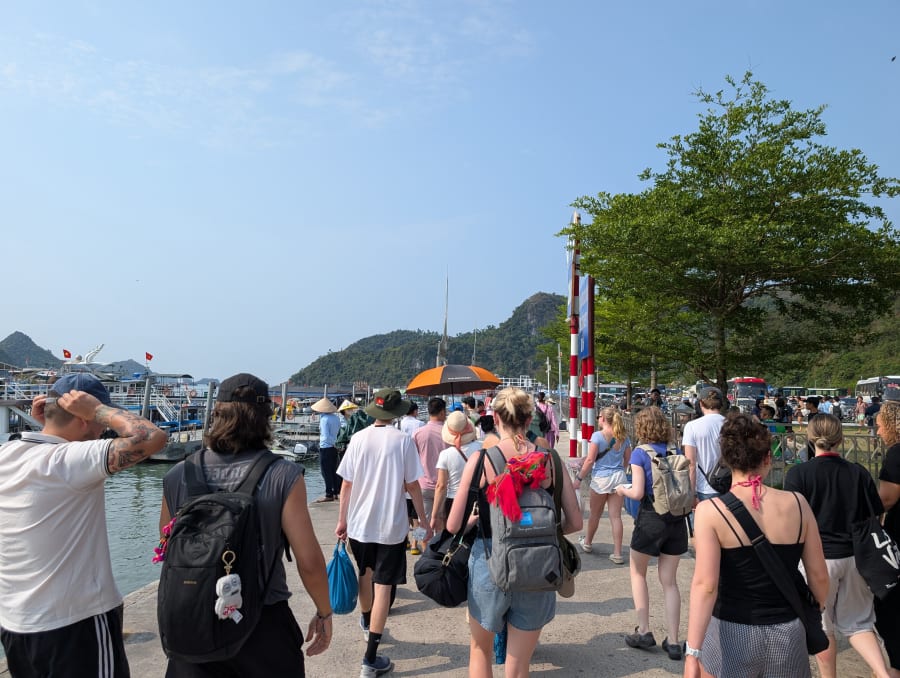
My boat was one of the smaller wooden ones - I looked at the massive vessels around us with mild envy. But you get what you pay for. About 30 passengers total, a mix of Vietnamese and Western travelers - small enough that you could remember everyone's face by end of day. And forget them all by the next morning.
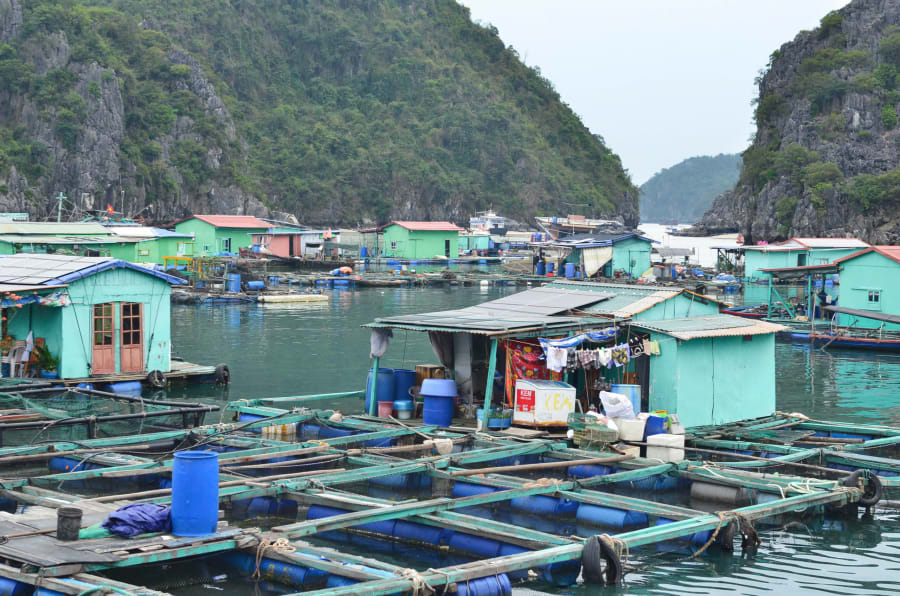
As we left the pier, we passed Cai Beo floating village. I climbed up to the roof of the boat and started shooting. This village was the reason I first heard of Lan Ha Bay - Leonardo DiCaprio posted an aerial photo of it in 2020 that went viral across Vietnam, and I'd been meaning to see it ever since. It took me until now.
It looks exactly like Ha Long Bay. If Ha Long has started to feel overcrowded and overrated to you, Lan Ha is the answer. My ancient DSLR clicked away continuously. Wind, scenery, the works. As younger Vietnamese people like to say when something exceeds expectations: "Even kings had it no better than this."
The Lagoon
About 30 minutes out, the boat stopped at the first destination - a lagoon accessible only by SUP through a narrow cave entrance.
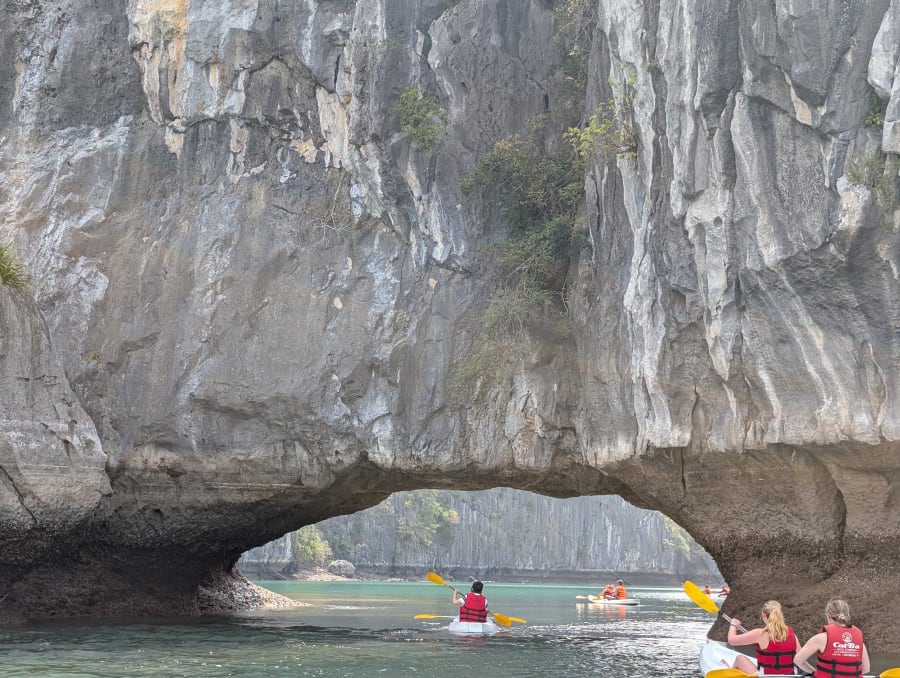
Paddle about 100 meters, duck through the cave, and you emerge into a still body of water roughly 300 meters across, completely enclosed by limestone walls 20 to 30 meters high, with a single way in and out. Sound bounces off everything - laughter, a child crying somewhere, voices carrying across hundreds of meters of water.
There are jellyfish in the lagoon. The guide said not to swim. They're not dangerous, but the sting is painful and uncomfortable. Take the advice.
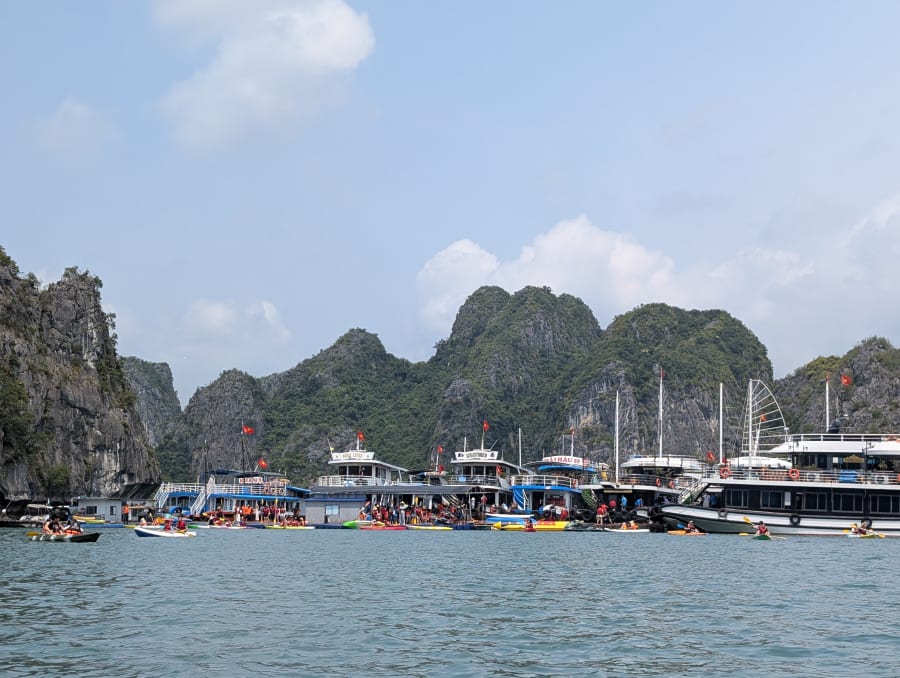
Coming back out, the bay had filled with tour boats while we were inside. The French woman paddling beside me had no idea what was happening. I explained it was the second-biggest public holiday in Vietnam - the local joke being: "You're very lucky to be this unlucky." The boats were packed so tightly together it looked like something out of a naval battle scene. One small boat even clipped a tourist who was still on their SUP. Everyone was fine, but we moved quickly back to our vessel.
Ana Beach
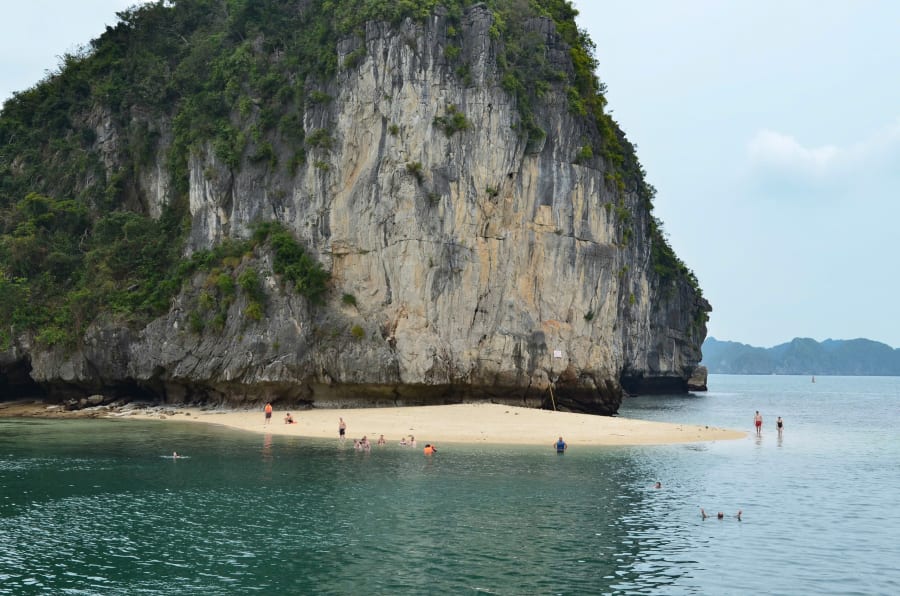
At 11:00, the next stop: Ana Beach. I have no idea why it has a Western name. We swam, jumped off the boat, waded to a nearby sandbar, then came back for lunch on deck.
I started to feel the sunburn developing on my arms. I was fine with that.
The beach is nice, water is clear - but growing up near the sea in southern Vietnam sets a high baseline. Worth the stop, but not worth building a trip around. It would be better on a fully sunny day. The clouds were rolling in by the time we arrived.
After lunch and a nap on deck, we moved on at 1:00 PM.
Viet Hai Village
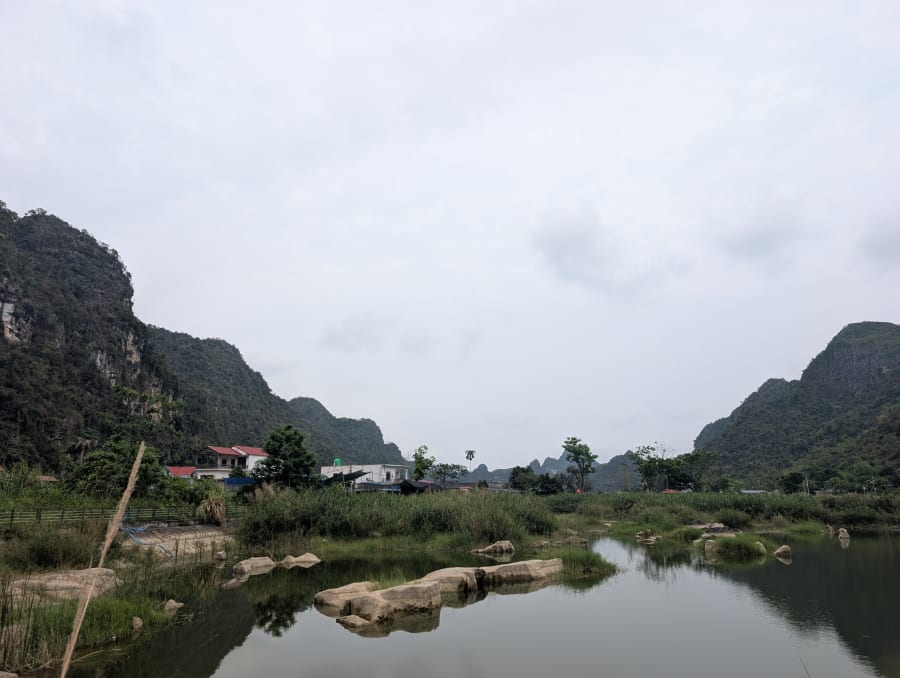
The last stop of the day: Viet Hai Village - a fishing settlement over a hundred years old, tucked deep inside Cat Ba National Park, covering only about 150 hectares. It was once almost completely cut off from the outside world. These days, the residents have traded fishing nets for homestays, electric carts, and bicycle rentals - new livelihoods, with the usual trade-offs that come with them.
We arrived by boat, transferred to an electric cart for the ten-minute ride into the village center, then cycled a loop around the settlement.
You can try fish massage here - feet in a tank, small fish picking off dead skin, surprisingly ticklish, seems to work. The guide also brought me over to try the snake wine. Hmm. Whatever was ever in that bottle had long since been diluted past the point of meaning anything. Just rice wine that had been cut twice. No further comment.
The village is beautiful in its setting. My main issue: it's been heavily commercialized. Worth a visit as part of the day tour, but don't go in expecting too much.
We left at 3:45 PM. Back at the pier by 4:30, tour done.
That Evening
I thought day two was finished. But that night, sitting alone on the hostel rooftop with a soda, looking out at the bay -
Boom. Boom. Boom.
Fireworks going up from somewhere across the water. Lighting up the sky above the bay. Right. April 30th.
HAPPY REUNIFICATION DAY, VIETNAM.


Day 3: Hospital Cave, Trung Trang Cave, and Ngu Lam Peak
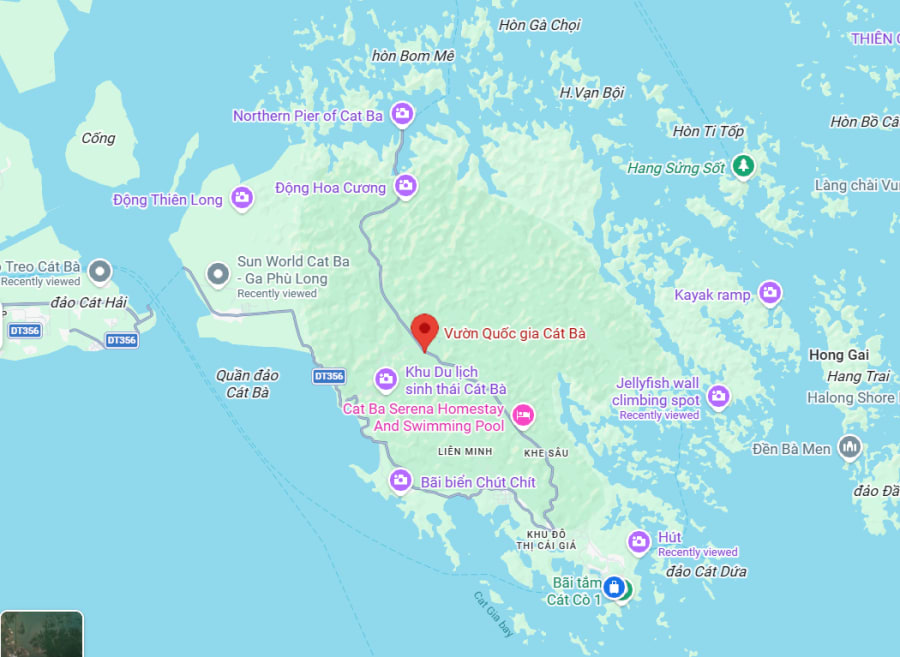
After two days pointing toward the sea, today I let myself be lazy. No tour, no schedule. I didn't get down to rent a motorbike until 9:30 AM - 150,000 VND for the full day, fuel included.
Hospital Cave
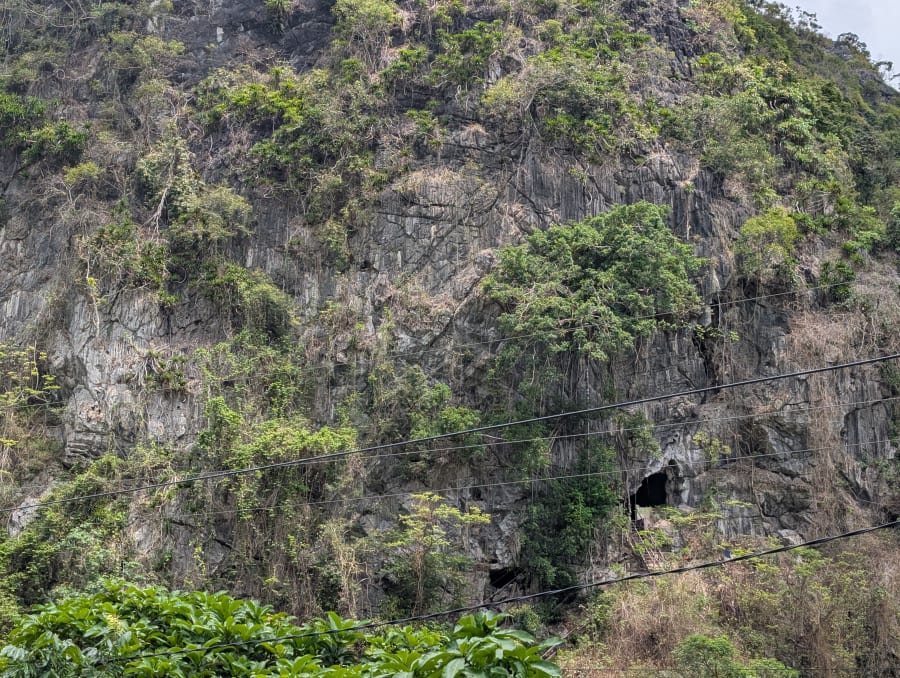
First stop: Hospital Cave. You can spot it from the road - a large dark opening carved into the limestone cliff face, about 20 meters up.
During the Vietnam War, the island's residents converted this natural cave into a hidden field hospital, using the mountain itself as shelter from American bombing raids. Patients and medical staff operated inside the rock. Since 1963, it's been known as Hospital Cave.
Leave the bike at the bottom and walk up. According to locals, the tunnel used to run all the way through the mountain, connecting both entrances. That section has since been sealed. Visitors can now only access each side separately: front entrance, 69 steps; rear entrance, 43 steps. Walk back out to the road to get between them. About 20 minutes total.
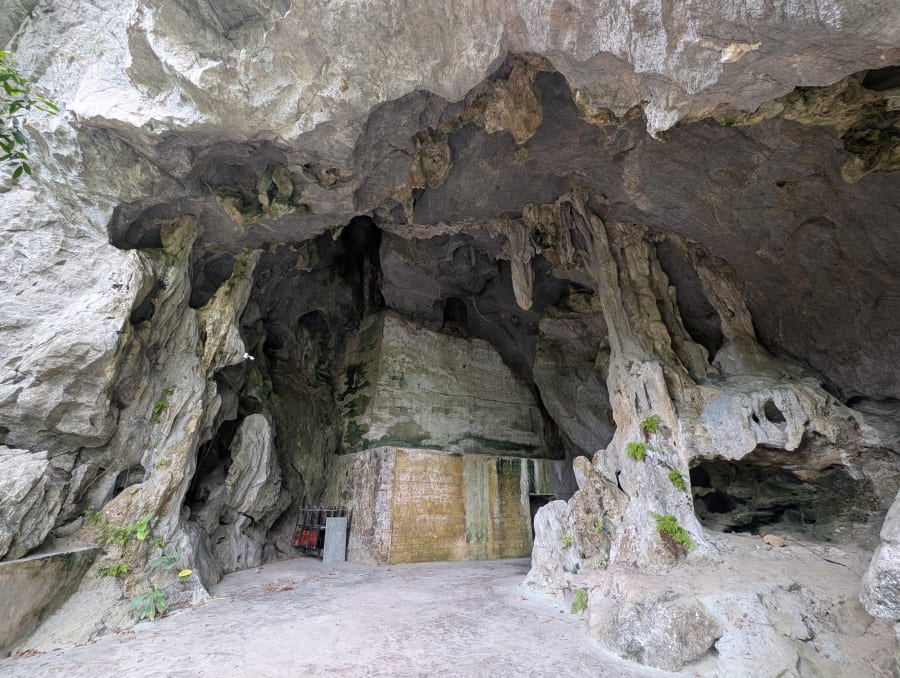
Trung Trang Cave
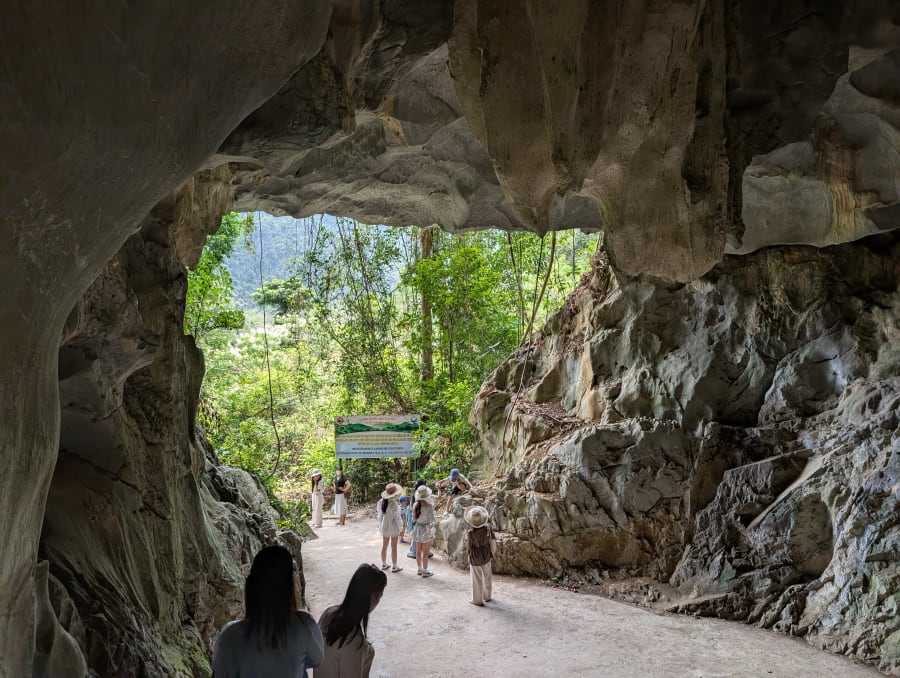
A few kilometers further is Trung Trang Cave - the main cave on the island, around 300 meters long. Entry is 120,000 VND, which includes access to Cat Ba National Park - keep your ticket.
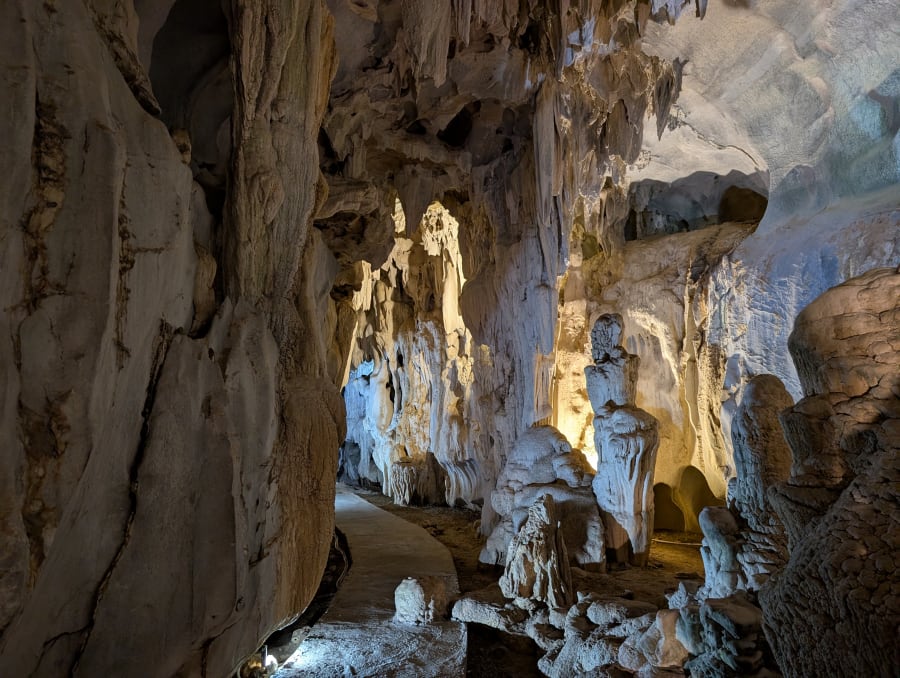
There's a shortcut sign on the left as you enter. Ignore it - it's labeled as a shortcut but doesn't actually save much time, and the wording confuses people. I watched a foreign woman stop and stare at it for a solid minute trying to figure out what it meant. Keep right and walk straight through.
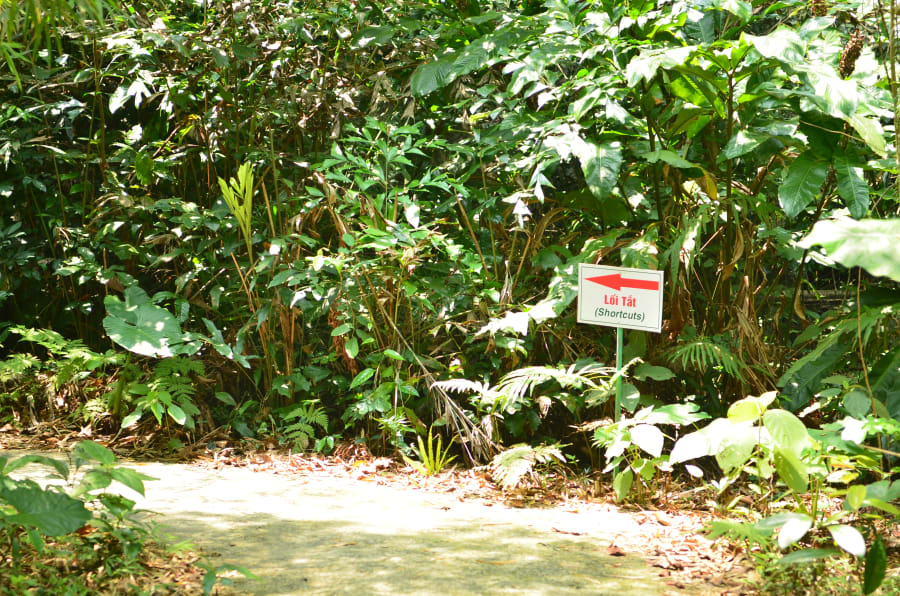
On the way out, the road was too sunny to bother with, so I just walked back through the cave in reverse. Technically I visited Trung Trang Cave twice. No regrets.
Cat Ba National Park - Ngu Lam Peak
The Cat Ba National Park entrance is about 1 kilometer from the cave. Park the motorbike outside the gate (5,000 VND), show your cave ticket at the entrance, then walk about 1 kilometer along the main path until you see the signs for Ngu Lam Peak.
There are two directions from the first junction - both eventually lead to Ngu Lam, just via different routes. I took the left fork thinking it might be quieter.
About 15 minutes up, you hit another fork: straight ahead goes directly to Ngu Lam, right goes up Kim Giao Peak and then loops around to Ngu Lam. I went right. Curiosity.
Reached the top of Kim Giao and...
Wait, this is the summit?
Turns out it's basically just a rocky outcrop in the middle of the forest with a sign on it. Not really a viewpoint or anything dramatic.
Nothing particularly special. Took a few photos and kept moving. From Kim Giao you can see Ngu Lam in the distance - still a fair way off. Had to pick up the pace or I'd miss checkout.
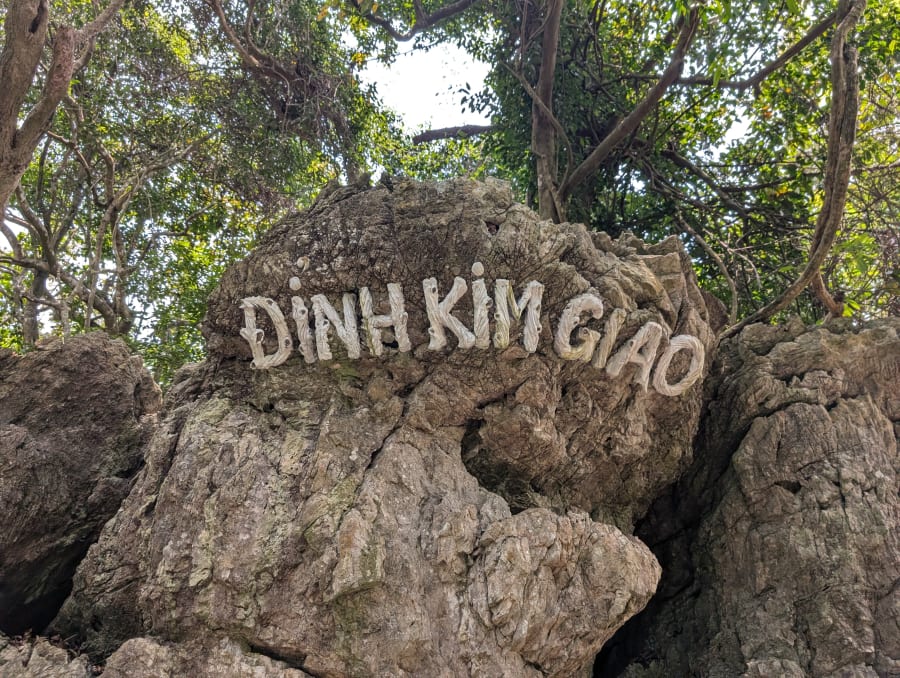
Another 20 minutes brought me to Ngu Lam - a small observation tower at the top lets you climb up for a full panoramic view of the bay and the national park canopy below. Then I noticed there was a second, higher peak further along the ridge. If you're already up there, you go. I kept going. The second peak was under construction, but accessible.
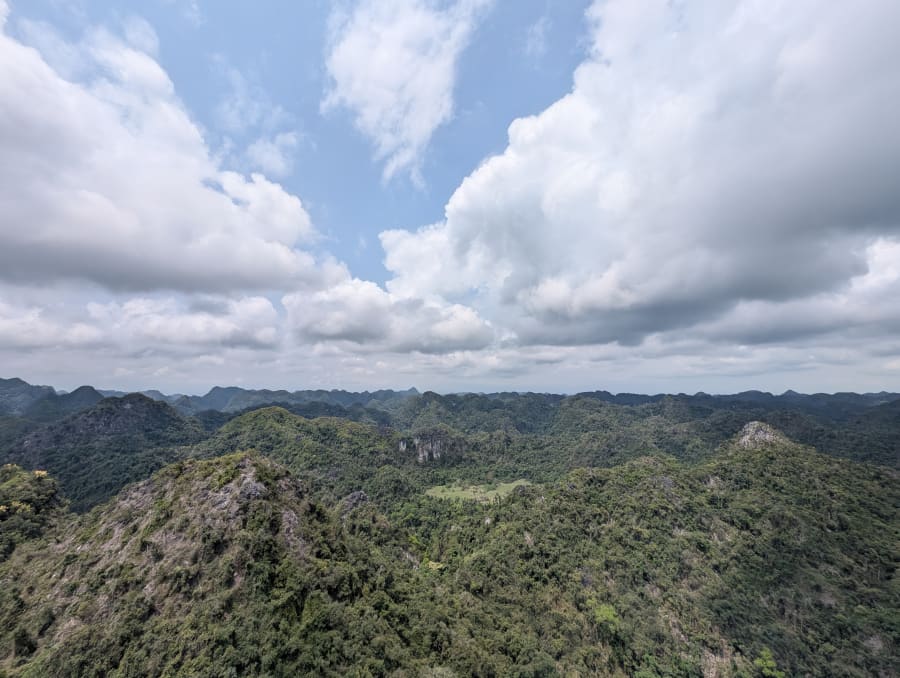
Once my breathing returned to normal, I rode the descent down.
Total: around 2 kilometers, 225 meters of elevation, comfortable at 1.5 hours. If you have a midday checkout, start no later than 9:00 AM.
I rode back, checked out - then decided to stay another night and switched to a private room.
Afternoon: The radio tower - A Sunset Spot Only Locals Know About
At 5:00 PM, I asked the hostel owner about the Cat Ba Cannon Fort viewpoint for watching the sunset over the bay. Closed to visitors now. But he mentioned the radio tower nearby - different angle, comparable view.
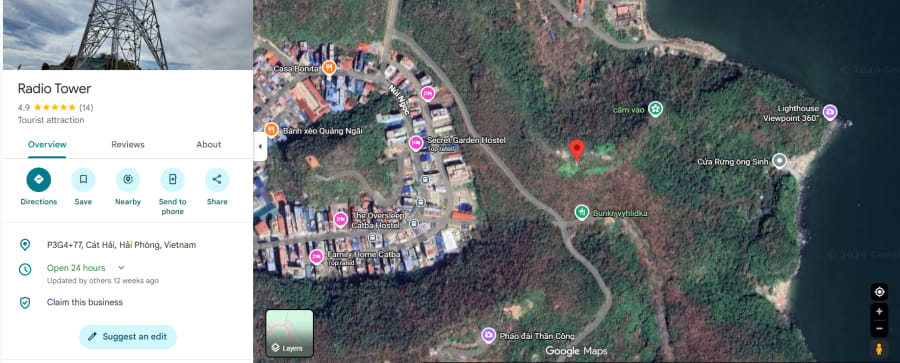
I rode up the old fortress road, reached the parking area, and found the fortress road blocked off as expected. Looking left from the parking area, there are three paths:
- Stone staircase on the far left: easy to walk but overgrown from disuse
- Gravel track in the middle: under construction, rideable if you're confident, but not recommended - especially in wet season. Walk this one instead
- Path on the right: leads down to Thoi Quyt beach
It was dry that day and I trusted my riding, so I went straight up the middle track on the bike.
Two viewpoints at the top: one facing back toward Cat Ba town, right next to the radio tower itself; the other a short walk further, looking directly out over Lan Ha Bay and Cai Beo floating village below. Both are excellent at golden hour. Mostly locals know this place - tourists rarely make it up here.
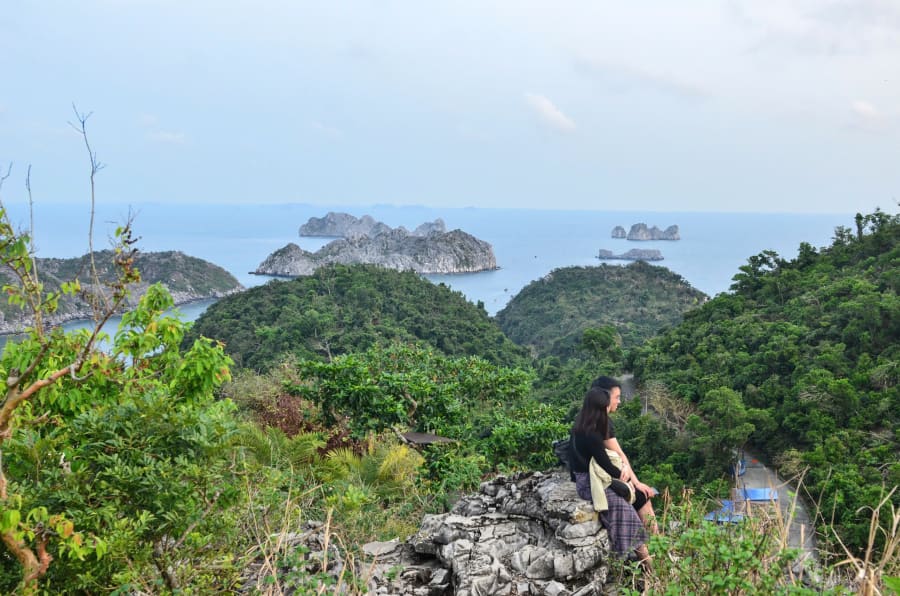
Shot what I needed, stored the rest in memory, then rode down to Cat Co 2 for a swim. End of day three.
Day 4: Back to Hanoi
Minivan pickup at the hostel at 3:00 PM, 320,000 VND. Drop-off near Hanoi Old Quarter, at the foot of Chuong Duong Bridge.
The route back: at 4:30 PM you reach Cai Vieng ferry terminal, get off the van, cross on the ferry (about 15 minutes), then board a different vehicle for the rest of the journey to Hanoi. Total trip: around 4 hours.
Practical Information
Getting from Cat Bi Airport to Cat Ba
- Walk about 500 meters from the terminal exit before booking a GrabBike (roughly 102,000 VND / 17 km to the cable car)
- Buy the combo ticket on Klook: cable car + electric bus into town, total 110,000 VND (cable car 70k, bus 40k)
- Cable car runs on fixed departure times - arrive early if visiting during a public holiday
- Total travel time from airport to town: around 2.5-3 hours
Getting from Cat Ba back to Hanoi
- Shared limousine minivan: around 320,000 VND, picked up at your accommodation, dropped near Hanoi Old Quarter
- Includes the Cai Vieng ferry crossing (about 15 minutes), then transfer to a second vehicle
- Total journey: around 4 hours
Accommodation
- The 1 Hostel: central, rooftop bar, popular with Western travelers. Dorm around 275,000 VND per night
Tours
- Bioluminescent plankton night kayaking: 900,000 VND (price varies by booking channel - shop around)
- Lan Ha Bay full-day tour: 700,000 VND
Motorbike rental
- 150,000 VND per day including fuel - available through most guesthouses in town
Cat Ba National Park
- Entry included with Trung Trang Cave ticket (120,000 VND) - keep the ticket
When to go
- Avoid major Vietnamese public holidays if you want smaller crowds: April 30 (Reunification Day) and September 2 (National Day) are the two biggest
- April-June and September-November offer the best balance of weather and visitor numbers
Want the full deep-dive on bioluminescent plankton kayaking in Lan Ha Bay - what to expect, best conditions, and whether it's worth it? Read the full guide here.