Menu
DestinationsLocationsBlogMapAbout
📍 cave · nature · cat ba

Trung Trang Cave

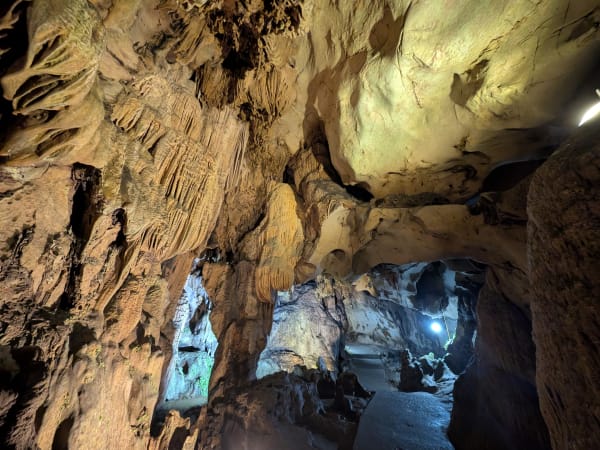
Trung Trang Cave is the largest accessible cave on Cát Bà Island - a 300-metre limestone grotto inside the national park with exceptional stalactite and stalagmite formations, a bat colony, and a history stretching from local legend to wartime military use.

🪨 Largest Cave on Cát Bà📸 Photography🦇 Bat Colony🥾 National Park
🧭 Get Directions
Best Time to Visit
📅 Apr – Sep (dry season, best weather for combining with outdoor activities)
Entry Fee
🎟️ 120,000 VND adults / 60,000 VND children (includes national park entry - not sold separately)
Opening Hours
🕐 7:00 AM – 4:00 PM
Address
📌 Cát Bà National Park, Hải Phòng
👥Crowds
Can get busy with tour groups moving through in single file. Visiting independently gives more time at each formation.
🥾Difficulty
Short, accessible walk with concrete paths and metal stairs throughout. Some low passages require ducking. Not recommended for claustrophobic visitors or those with significant mobility issues.
⚠️Safety
Keep noise down near the bats - don't shout or make sudden loud sounds. Cave floor can be slippery in wet conditions.
🚶Accessibility
Concrete flooring and metal stairs throughout. Not suitable for visitors with significant mobility issues due to stairs and narrow sections.
🌤️Seasonal
Apr–Sep is the best period - dry weather makes for better combined outdoor activities. Cave itself is accessible year-round and stays cool regardless of outside temperature.

What Makes Trung Trang Cave Special

Trung Trang Cave is the largest limestone cave on Cát Bà Island, sitting inside the national park 17km from Cát Bà town. The cave runs approximately 300 metres into the karst hillside with two main chambers connected by a passage, and it's dense with stalactite and stalagmite formations that have built up over thousands of years. The name and the history layered into the cave are both worth knowing before you walk in. The cave was originally called Hang Dơi - Bat Cave - for its resident colony. During the resistance wars it was used as a military base and became known as Hang Hải Quân (Navy Cave), with traces of that occupation still visible inside today. The name Trung Trang comes from an older local legend: Bà Chúa Trung Trang, a woman who rallied the island's young men to repel foreign invaders, then retreated to the cave to guard the island. The villagers named the cave after her in her honour.

🚗 Getting There

Trung Trang Cave is inside Cát Bà National Park, 17km from Cát Bà town on the main road toward the park interior - about 25 minutes by motorbike. The cave entrance is clearly signed from the road. Hospital Cave and the national park trailheads are on the same road, making a combined northern Cát Bà day straightforward.

👀 On the Ground

The path from the road to the cave entrance is short and clearly marked. A sign at the entrance points to a shortcut on the left - it's not meaningfully shorter, so follow the main path. Inside, the cave is cool and well-lit with concrete paths throughout. The stalactite and stalagmite formations are the centrepiece - dense, varied, and well-preserved. The bats are present but not in large numbers; keep noise down near them. The full cave is about 300 metres. On the way out, follow the main road back to the car park - or if the heat is unpleasant, simply retrace your steps through the cave.

🧳 Tips

Trung Trang is best as part of a combined northern Cát Bà day: the cave, Ngự Lâm viewpoint trek, and Hospital Cave are all on the same road and together cover the island's main historical and geological sites. The 120,000 VND ticket includes national park entry - keep it if you're continuing to the Ngự Lâm trail. On its own the cave is around an hour and doesn't justify the 17km drive from town, but as a component of a full day it fits naturally into the route.

Based on real traveler experiences and commonly mentioned advice from multiple visitors.

Keep your 120,000 VND ticket - it also covers national park entry and the Ngự Lâm viewpoint trek if you continue after the cave
Take your time with the formations rather than walking straight through - the cave is 300m and there's no rush
Keep your voice down near the bats inside the cave
The 120,000 VND ticket covers both the cave and national park entry - it's not sold separately for the cave alone. Keep your ticket if you plan to continue to the Ngự Lâm viewpoint trek afterward.
At the entrance there's a sign pointing to a shortcut on the left - it's not noticeably shorter. Just follow the main path.
After exiting the cave, follow the main road back to the car park. If the sun is too harsh and you don't feel like walking the road, you can simply walk back through the cave the way you came.
There are bats inside - not a massive colony, just a few. Keep your voice down and don't shout or make sudden loud noises near them.
The cave is noticeably cooler than outside - a welcome break from the heat, especially if you're visiting in the warmer months.
The stalactite and stalagmite formations are the main draw - take time with them rather than walking straight through. The cave is about 300 metres long so there's no need to rush.
Combine with the Ngự Lâm viewpoint trek and Hospital Cave on the same day - all are on the same road through the national park.

Common questions from travelers who've visited this place.

What does the ticket include and how much is it?
120,000 VND for adults, 60,000 VND for children. Includes both Trung Trang Cave and Cát Bà National Park entry - not sold separately for the cave alone. Keep your ticket if you plan to do the Ngự Lâm viewpoint trek afterward.
How long does a visit take?
About 1 hour at a relaxed pace. The cave is 300 metres with two main chambers. No need to rush - take time with the stalactite formations.
What is the history of the cave?
The cave has three names reflecting three eras. Hang Dơi (Bat Cave) was the original name for its bat colony. During the resistance wars it became Hang Hải Quân (Navy Cave) when used as a military base - traces are still visible inside. The name Trung Trang comes from a local legend about Bà Chúa Trung Trang, who defended the island from invaders and retreated to the cave afterward.

Explore more things to do like this around Vietnam

Explore more
cat ba - Full Guide
View destination guide →